58827d6a034da3fb17115d5d885e3419
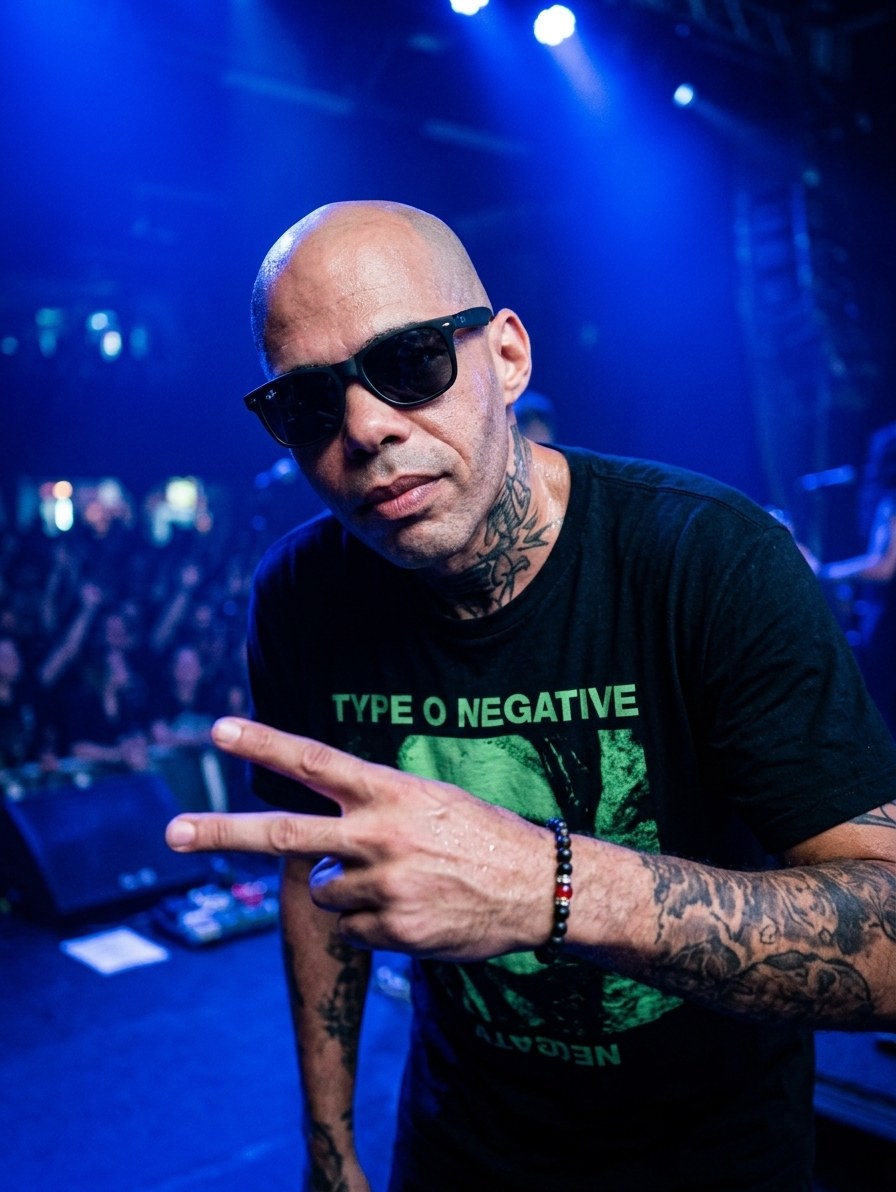
⚠️ Você pode alterar a camiseta na parte # 10. CLOTHING ⚠️
Prompt:
Use the **uploaded reference photograph of me as the absolute and exclusive identity reference for the main subject**.
Create a new, highly realistic **professional photograph** using my reference photo to replace the man described in the scene below.
The final image must depict **me**, preserving my real identity and recognizable appearance with maximum possible fidelity, while reproducing the composition, pose, clothing, environment, lighting and photographic aesthetic described below.
---
## 1. ABSOLUTE IDENTITY PRESERVATION — HIGHEST PRIORITY
The uploaded reference photograph is the **sole and absolute identity source** for the man in the final image.
Preserve my exact recognizable identity, including:
* facial structure and proportions
* face shape
* forehead
* hairline
* hairstyle
* natural hair color
* any natural gray areas in the hair
* eyebrows
* eyes and eyelids
* nose shape and proportions
* cheekbones
* lips and mouth
* jawline
* chin
* ears
* natural skin tone
* natural skin texture
* facial asymmetries
* distinctive facial characteristics
* apparent age
* body proportions
* beard and mustache, if present in the reference
* exact beard shape, density, length and coloration
**Do not replace me with a generic male face.**
**Do not make me resemble the original man from the written description.**
The written description describes the **scene and photographic characteristics**, not the identity of the subject.
Do not transfer the original person's facial features, hair, beard, age or physical characteristics onto me.
Do not unnecessarily change my hairstyle, hairline, beard, mustache or facial proportions.
Do not beautify, idealize, masculinize, age or de-age my appearance.
My uploaded reference photograph must determine **who I am**.
---
# 2. PHOTOGRAPHIC SCENE
Create a **vertical medium-close professional portrait** of me in a dark live-performance/stage environment.
The scene is dominated by intense but sophisticated **cobalt-blue stage lighting**, creating a cool, cohesive, almost monochromatic atmosphere.
The composition is dynamic rather than static.
I am positioned at a slight diagonal toward the camera, creating the sensation that I am naturally leaning or moving slightly closer to the photographer.
The image should feel like a genuine spontaneous moment captured during a live performance.
It must look like a real professional photograph rather than a staged studio recreation.
---
# 3. POSE AND BODY LANGUAGE
I am slightly leaning forward toward the camera.
My shoulders are relaxed but naturally engaged.
My posture communicates:
* confidence
* calmness
* relaxed energy
* accessibility
* quiet charisma
* natural presence
The pose must feel spontaneous and believable.
Avoid an exaggerated theatrical pose.
Avoid making the body unnaturally rigid.
---
# 4. RIGHT HAND — PEACE SIGN
My **right hand is extended toward the camera in the foreground**.
I am making a clear and natural **peace/V sign**, with the index and middle fingers raised.
The gesture is one of the main visual elements of the composition.
Because the hand is closer to the lens, use realistic natural perspective so the hand appears slightly larger than the face without becoming distorted.
The hand must have:
* anatomically correct proportions
* realistic fingers
* correct joints
* natural fingernails
* realistic skin texture
* physically believable positioning
The remaining fingers should be naturally folded.
Do not create extra fingers.
Do not merge fingers.
Do not distort the hand.
The peace gesture should look casual, confident and spontaneous.
---
# 5. BRACELET
On my wrist, include a subtle, delicate bracelet made of **small dark beads**.
The bracelet contains a small decorative element with **red and silver details**.
Keep the bracelet relatively discreet.
It should naturally follow the shape of my wrist and behave realistically under the blue stage lighting.
The small red and silver element should provide a subtle contrasting accent against the dominant blue color palette.
---
# 6. SUNGLASSES
I am wearing **dark sunglasses with a dark frame and clean, relatively straight lines**.
The sunglasses must fit naturally according to the actual proportions of my face.
They obscure my eyes while preserving realistic facial anatomy beneath them.
The lenses should contain subtle reflections of the blue stage lighting.
Avoid excessive mirror-like reflections.
Do not make the sunglasses oversized or cartoonish.
The sunglasses should look like realistic contemporary eyewear suitable for a live performance.
---
# 7. HAIR AND FACIAL HAIR
**Follow my reference photograph for my actual hair and facial hair.**
Do not automatically reproduce the hairstyle, hair color or beard of the man in the written description if these characteristics differ from my reference.
If my reference photograph shows gray hair, preserve the gray naturally.
If my reference photograph shows a particular beard or mustache, reproduce it faithfully.
Do not add facial hair if it is absent from my reference.
Do not remove facial hair if it is clearly present.
Do not change the density, shape or color of my beard simply to match the original description.
---
# 8. FACIAL EXPRESSION
Even though the sunglasses obscure my eyes, my facial expression and body language should communicate:
* serenity
* confidence
* calmness
* friendliness
* quiet self-assurance
My head and face are oriented toward the camera.
The composition should create the impression that I am directly acknowledging the person taking the photograph.
Keep the expression natural and authentic.
Avoid an exaggerated smile or artificial expression.
---
# 9. SUBTLE PERSPIRATION AND SKIN DETAIL
Include a subtle amount of realistic perspiration on my forehead and neck.
This should suggest:
* physical activity
* a warm stage environment
* the intensity of a live performance
The perspiration must remain subtle and realistic.
Use small natural highlights on the skin rather than large wet areas.
Preserve realistic:
* pores
* fine skin texture
* natural imperfections
* beard texture
* subtle facial contours
* realistic skin reflections
Do not excessively smooth the skin.
Do not create plastic-looking skin.
# 10. CLOTHING — TYPE O NEGATIVE BLACK T-SHIRT
I am wearing a **black band T-shirt associated with Type O Negative**, with a simple classic crew neckline and a natural, slightly relaxed fit.
The shirt should have:
* realistic soft cotton fabric
* natural folds and wrinkles
* believable textile texture
* subtle signs of natural wear
* realistic draping around the chest, shoulders and torso
* authentic black fabric appearance
The front of the shirt features **Type O Negative-inspired band artwork and recognizable band-related graphic elements**, printed naturally on the fabric.
The graphic should look like an authentic **vintage/alternative metal band T-shirt**, with a predominantly dark, gothic aesthetic and appropriate muted graphic tones.
The design should remain physically integrated into the shirt, following the natural curvature, folds and wrinkles of the fabric.
The shirt must remain predominantly **black**, even under the intense cobalt-blue stage lighting.
The blue stage illumination should create subtle blue reflections and highlights across the black cotton fabric while preserving its fundamentally black appearance.
The contrast between the **black Type O Negative band shirt** and the intense cobalt-blue stage lighting should create a dark, atmospheric **gothic/alternative-metal aesthetic**.
Do not replace the shirt with a generic black T-shirt.
Do not add unrelated logos, random band names, random text or unrelated graphics.
The final shirt should clearly read as a **Type O Negative band T-shirt**, while maintaining realistic fabric texture, printing, folds and natural fit.
# 11. STAGE ENVIRONMENT
Place me in a dark **live concert / performance stage environment**.
The background should remain intentionally out of focus.
Suggest an authentic performance environment through:
* distant stage lights
* professional lighting equipment
* indistinct structures
* dark surroundings
* diffuse luminous shapes
* subtle hints of a live audience or stage environment
Do not make the background overly literal.
The environment should remain secondary to me.
---
# 12. BACKGROUND BOKEH
Use a shallow depth of field and soft optical bokeh.
The background contains diffuse lights in:
* deep cobalt blue
* navy blue
* blue-black
* cool white
Include one noticeable but softly defocused **circular light source above or behind me**, resembling a stage spotlight.
Other lights should appear as soft, undefined luminous shapes.
The background must never compete with the subject.
---
# 13. LIGHTING
The dominant illumination is **cobalt-blue stage lighting**.
Use professional directional stage lighting with realistic falloff.
The blue light should illuminate my:
* face
* beard
* sunglasses
* hair
* shoulders
* T-shirt
* extended hand
Use subtle directional modeling across the face and upper body.
Maintain enough tonal variation to preserve realistic facial anatomy and skin texture.
The shadows should transition from very dark blue and near-black to brighter cobalt-blue and cool-white highlights.
Do not crush all shadow detail.
Do not overexpose the highlights.
The lighting should feel like genuine professional stage photography.
---
# 14. COLOR PALETTE
Use a sophisticated, restrained **cobalt-blue monochromatic color grade**.
Primary tones:
* deep blue
* cobalt blue
* navy
* blue-black
* cool white
Secondary accent:
* subtle red from the bracelet and small shirt graphic
* small silver highlights from the bracelet
The overall image should remain predominantly blue.
Do not introduce strong orange tones.
Do not use excessive teal-and-orange Hollywood grading.
The blue atmosphere should be the defining visual characteristic of the photograph.
---
# 15. CONTRAST AND TONAL RANGE
Create a strong but controlled tonal range.
Shadows should approach:
**almost-black deep blue**
Midtones should contain:
**rich cobalt and navy blue**
Illuminated areas should reach:
**bright cobalt and cool white**
The contrast should provide depth and three-dimensionality without destroying detail.
The white T-shirt should act as a visual anchor against the predominantly dark blue surroundings.
---
# 16. CAMERA AND LENS CHARACTERISTICS
Professional full-frame camera aesthetic.
Vertical orientation.
Medium-close portrait framing.
Natural perspective.
Approximately **50mm full-frame lens character**, or a similar focal length that maintains natural facial proportions.
Wide aperture approximately **f/1.8–f/2.8**.
Shallow depth of field.
The face, sunglasses, upper torso and extended hand must remain sharply detailed.
The background should transition smoothly into natural optical bokeh.
Avoid exaggerated wide-angle distortion.
---
# 17. ANALOG PHOTOGRAPHIC CHARACTER
Add a very subtle layer of **fine photographic grain**, reminiscent of high-quality analog film.
The grain should:
* be fine
* subtle
* evenly distributed
* enhance photographic texture
* add authenticity
Do not make the image look old.
Do not introduce heavy noise.
Do not reduce resolution.
The final result should combine **modern professional photographic sharpness with a subtle analog-film character**.
---
# 18. PROFESSIONAL PHOTOGRAPHIC REALISM
The final image must look like a genuine photograph captured by a professional photographer during a live performance.
Prioritize realistic:
* facial anatomy
* identity
* hands
* fingers
* sunglasses
* hair
* beard
* skin
* perspiration
* fabric
* bracelet
* stage lighting
* shadows
* reflections
* depth of field
* lens behavior
* bokeh
* atmospheric light
No CGI appearance.
No 3D-rendered appearance.
No videogame aesthetic.
No illustration.
No artificial plastic skin.
No excessive beauty retouching.
No excessive HDR.
No excessive sharpening.
No artificial blur.
---
# 19. ANATOMICAL ACCURACY
Pay special attention to the right hand because it is close to the camera.
Ensure:
* exactly five fingers
* correct finger anatomy
* two fingers clearly raised for the peace sign
* remaining fingers naturally folded
* correct thumb placement
* realistic fingernails
* natural wrist anatomy
* realistic perspective
Do not distort the hand even though it is closer to the lens.
Maintain natural proportions throughout the body.
---
# 20. FINAL IDENTITY AND GENERATION RULE
**MY UPLOADED REFERENCE PHOTO DETERMINES WHO I AM.**
**THE WRITTEN DESCRIPTION DETERMINES THE SCENE.**
The reference photograph controls:
* my face
* identity
* hair
* facial hair
* skin tone
* natural physical characteristics
* recognizable features
The written description controls:
* pose
* peace-sign gesture
* sunglasses
* bracelet
* white T-shirt
* stage environment
* cobalt-blue lighting
* composition
* depth of field
* color grading
* photographic style
* analog grain
* overall atmosphere
Do not merge my identity with the identity of the original person described in the text.
Create the final image as though **I personally were photographed during a live performance**, captured spontaneously by a professional photographer at the exact moment described.
The final result should be a sophisticated, photorealistic, high-resolution **professional stage photograph dominated by cobalt-blue lighting**, with my recognizable identity preserved exactly from the uploaded reference photograph.