7_fases
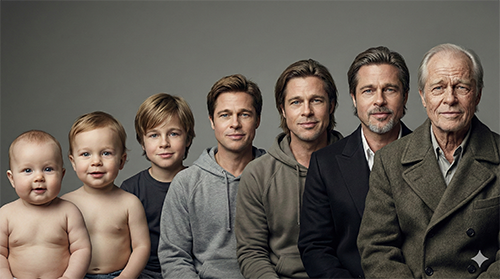
Create a horizontal 1920x1080 cinematic composition in landscape orientation showing seven different portraits of the same person at clearly different ages, from baby to approximately 100 years old, all in one single wide image, not cropped or square.
Use the uploaded photo as the main face and character reference.
Keep the person’s identity 100% identical to the uploaded photo: same facial features, bone structure, skin tone, gender, age impression, hairstyle shape, and overall proportions. Do not change the person’s gender or make the face younger or older in the base identity. Preserve the exact facial expression, nose, eyes, lips, jawline, and any unique marks such as moles, freckles, or scars. The uploaded face is the only identity source and must remain consistent in every stage.
Generate a single horizontal cinematic evolution image in 1920x1080 landscape resolution, presenting exactly seven portraits of this same person aging naturally from baby to approximately 100 years old in one continuous composition. From left to right, depict these distinct life stages: baby, toddler, child, teenager, young adult, middle‑aged adult, and elder around 100 years old. Each portrait should feel like a separate frame in one long strip, but all seamlessly aligned in a single wide image, not separate panels or boxes.
In every stage, the face must clearly match the reference identity, preserving core facial structure, eye shape, nose and mouth proportions, and overall recognizable likeness, only adjusted for realistic age changes. Aging progression must be realistic and anatomically accurate, with gradual changes in skin texture, wrinkles, facial volume, posture, and expression. Early stages (baby, toddler, child) show softer, rounder features and perfectly smooth skin; teenage and young adult stages show peak structure and firmness; middle‑aged and elder stages add believable wrinkles, volume loss, and sagging, while still unmistakably the same person.
Maintain mostly neutral to gently serene expressions across all ages, with subtle variation but no exaggerated caricature, to emphasize continuity of identity rather than drama. The head angle, camera distance, and framing should be consistent across the seven portraits (same crop from chest or shoulders up), so they read as a coherent cinematic character sheet through time.
Clothing should transition smoothly from a casual hoodie in the early life stages into a refined coat in adulthood and old age. Start with a simple, slightly oversized hoodie on the child/teen stages, gradually making it more fitted, structured, and tailored as the person matures. By middle age and elder stages, the hoodie has evolved into a refined coat with richer, heavier fabric and more formal cuts. The material change from hoodie fabric to coat fabric must be gradual and seamless across the lineup, with no abrupt jumps, distortions, or glitches.
Use one continuous neutral cinematic studio background running behind all seven figures in the same horizontal 1920x1080 frame. Apply soft directional studio lighting from a single side, with gentle shadows that sculpt the face and body consistently for every age, as if this evolution was shot in the same studio setup. Emphasize high‑detail skin textures, natural color grading, and a shallow depth of field that keeps each figure sharp while subtly separating them from the background, achieving ultra‑realistic, filmic portrait quality.
Technical look: high‑resolution studio portrait aesthetic (1920x1080), crisp detail, realistic skin and fabric rendering, and a gentle cinematic color grade. The image must be strictly horizontal/widescreen, with all seven life stages side by side in one uninterrupted composition. No text, no props, no labels, no background elements or distractions; no separate borders or frames around each age, only a single, clean, continuous studio environment.
Optional short negative prompt (if the interface allows):
“no deformed faces, no duplicated or mismatched identities, no extra limbs, no text, no age labels, no logos, no watermarks, no low‑resolution artifacts, no busy backgrounds, no separate panels.”
Use the uploaded photo as the main face and character reference.
Keep the person’s identity 100% identical to the uploaded photo: same facial features, bone structure, skin tone, gender, age impression, hairstyle shape, and overall proportions. Do not change the person’s gender or make the face younger or older in the base identity. Preserve the exact facial expression, nose, eyes, lips, jawline, and any unique marks such as moles, freckles, or scars. The uploaded face is the only identity source and must remain consistent in every stage.
Generate a single horizontal cinematic evolution image in 1920x1080 landscape resolution, presenting exactly seven portraits of this same person aging naturally from baby to approximately 100 years old in one continuous composition. From left to right, depict these distinct life stages: baby, toddler, child, teenager, young adult, middle‑aged adult, and elder around 100 years old. Each portrait should feel like a separate frame in one long strip, but all seamlessly aligned in a single wide image, not separate panels or boxes.
In every stage, the face must clearly match the reference identity, preserving core facial structure, eye shape, nose and mouth proportions, and overall recognizable likeness, only adjusted for realistic age changes. Aging progression must be realistic and anatomically accurate, with gradual changes in skin texture, wrinkles, facial volume, posture, and expression. Early stages (baby, toddler, child) show softer, rounder features and perfectly smooth skin; teenage and young adult stages show peak structure and firmness; middle‑aged and elder stages add believable wrinkles, volume loss, and sagging, while still unmistakably the same person.
Maintain mostly neutral to gently serene expressions across all ages, with subtle variation but no exaggerated caricature, to emphasize continuity of identity rather than drama. The head angle, camera distance, and framing should be consistent across the seven portraits (same crop from chest or shoulders up), so they read as a coherent cinematic character sheet through time.
Clothing should transition smoothly from a casual hoodie in the early life stages into a refined coat in adulthood and old age. Start with a simple, slightly oversized hoodie on the child/teen stages, gradually making it more fitted, structured, and tailored as the person matures. By middle age and elder stages, the hoodie has evolved into a refined coat with richer, heavier fabric and more formal cuts. The material change from hoodie fabric to coat fabric must be gradual and seamless across the lineup, with no abrupt jumps, distortions, or glitches.
Use one continuous neutral cinematic studio background running behind all seven figures in the same horizontal 1920x1080 frame. Apply soft directional studio lighting from a single side, with gentle shadows that sculpt the face and body consistently for every age, as if this evolution was shot in the same studio setup. Emphasize high‑detail skin textures, natural color grading, and a shallow depth of field that keeps each figure sharp while subtly separating them from the background, achieving ultra‑realistic, filmic portrait quality.
Technical look: high‑resolution studio portrait aesthetic (1920x1080), crisp detail, realistic skin and fabric rendering, and a gentle cinematic color grade. The image must be strictly horizontal/widescreen, with all seven life stages side by side in one uninterrupted composition. No text, no props, no labels, no background elements or distractions; no separate borders or frames around each age, only a single, clean, continuous studio environment.
Optional short negative prompt (if the interface allows):
“no deformed faces, no duplicated or mismatched identities, no extra limbs, no text, no age labels, no logos, no watermarks, no low‑resolution artifacts, no busy backgrounds, no separate panels.”