A184c4e7f5bc15086e17012d35e4cd13
@Image1 = the source photo
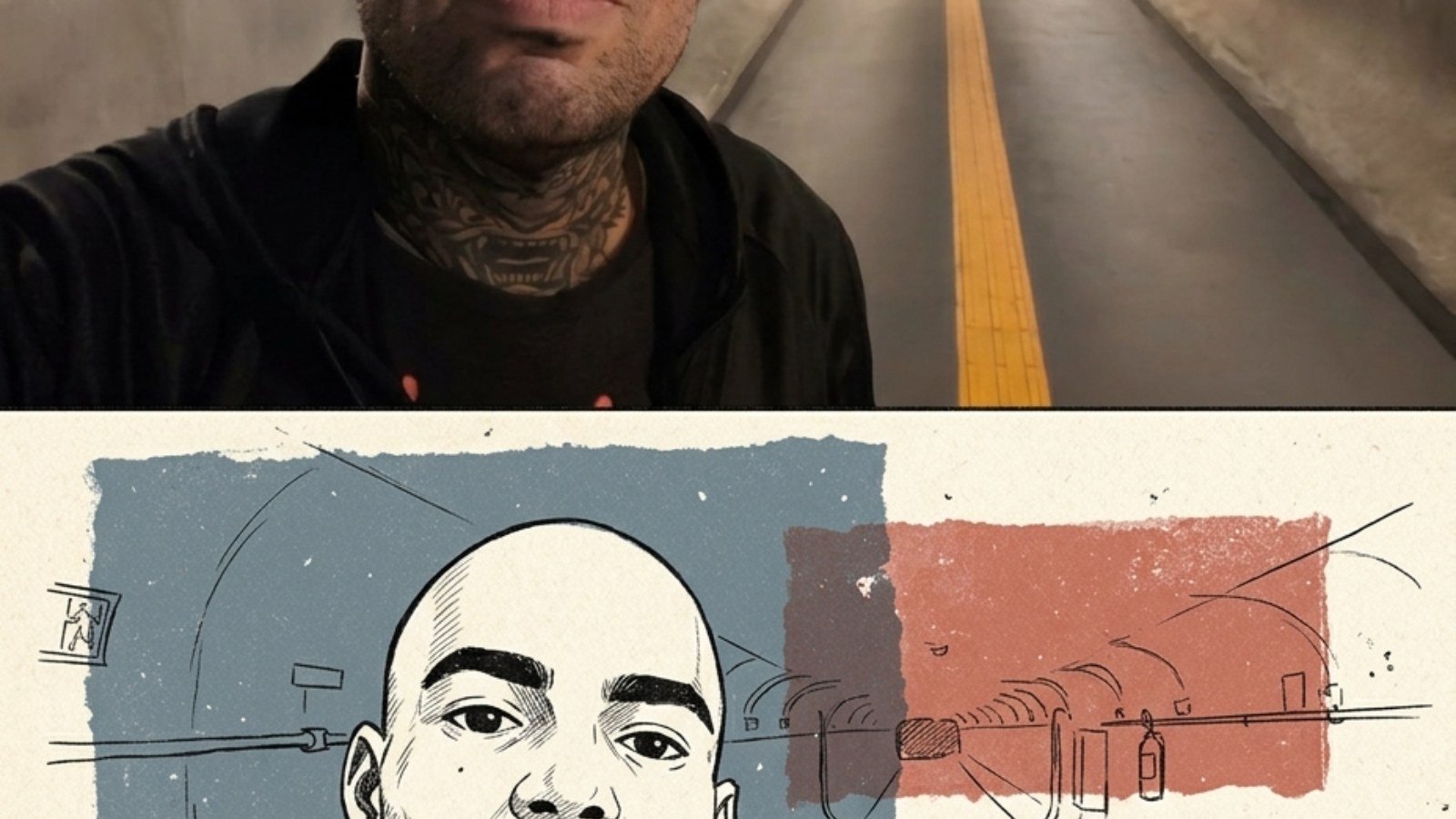
Create a single unified image, 4:5 vertical, split into two panels of exactly equal height — 50% top, 50% bottom — divided by one clean straight horizontal edge. Not a collage.
TOP PANEL — BEFORE: the photograph @Image1 exactly as provided, unedited apart from a subtle grade. Crop intelligently to fill the panel edge to edge without distorting the subject, keeping the face and full pose clearly visible. Full bleed, no margins, no border.
BOTTOM PANEL — AFTER: the same scene redrawn as a risograph-style anime illustration on textured cream paper.
Nothing runs continuously across the dividing edge — the two panels are separate images of the same subject.
POSE AND FACE — LOCKED TO @Image1
Reproduce the subject's pose exactly as photographed: the same body position, the same seated posture, the same leg placement, the same arm and hand positions, the same hand raised to the face, the same tilt of the shoulders.
Match the head angle and face direction exactly. If they face the camera in @image1, they face the camera in the illustration. Do not turn the head into profile, do not redirect the gaze off-frame, do not change where the eyes look. The expression stays the same.
Keep every element around them in the same place: the luggage, bags, jacket, and any objects they lean on or rest against, in the same positions and the same relationship to the body.
THE SUBJECT
Keep them recognisable — the same hairstyle, the same glasses, the same beanie or headwear, the same facial hair, the same build, and the same outfit down to the garment colours, the t-shirt print, the denim wash, the watch and the footwear.
Draw them in a modern anime illustration style with simplified features and expressive eyes, while holding the likeness and all the clothing detail.
THE LINEWORK
Clean, confident ink linework with varied weight — finer on the face and hands, heavier on outer contours, garment seams and hard edges. Crisp and deliberate, never sketchy.
Describe form with line and hatching rather than rendering: dense fine cross-hatching in the denim folds, the shadowed side of the luggage, under the jacket and beneath the feet, with solid black in the hair, boots and deep shadow. Render equipment precisely — suitcase ribbing, catches, wheels, buckles, straps, laces, watch face.
No soft gradients, no airbrushing, no realistic light modelling.
THE BACKGROUND — abstract colour blocks
Do not redraw the full scene. Place two or three rough rectangular patches of flat colour behind the figure, like ink rollered unevenly onto the page. Their edges are torn, dry and irregular, with the brush skipping so the paper shows through. They overlap slightly and sit at different sizes.
Add only a handful of small line-drawn details taken from the real location — a lamp post, a power line, a canopy edge, a distant structure, a few blades of grass — scattered sparsely with large gaps between them. Everything else is bare cream paper.
THE PALETTE
Three colours only, plus black ink and the cream paper: a dusty slate blue, a faded terracotta red, and the warm cream of the paper itself. Desaturated and chalky, as risograph ink prints. Flat fills with no blending.
PRINT TEXTURE
Visible paper grain through the colour, slight misregistration where inks overlap, patchy coverage with worn and faded areas, small specks and imperfections.
Avoid: a changed pose, a changed head angle, a profile view when the source faces the camera, a redirected gaze, a different expression, moved or missing objects, a changed outfit, photorealism in the lower panel, a fully painted background, a detailed scene, soft gradients, glossy or vivid colour, more than three colours, unequal panel heights, a visible gap or border between panels, a side-by-side layout, the lower panel continuing the upper photo, mismatched subjects between panels, text beyond what is printed on the clothing, watermark.