Azulejo_portugues
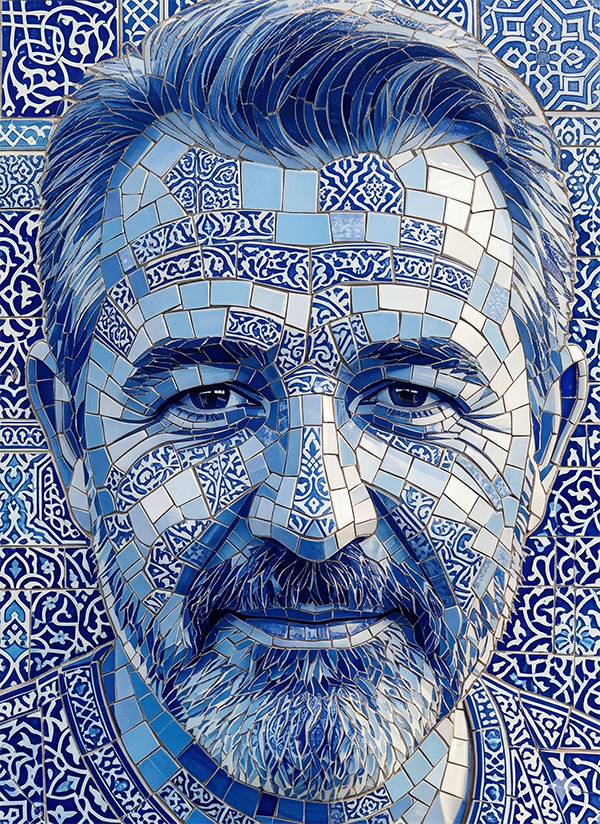
Use the uploaded image as the exact identity reference. Maintain the person’s identity 100% identical to the source photo: same facial bone structure, facial proportions, skin tone, gender, perceived age, hairstyle shape, and overall likeness. Preserve the original expression, nose, eyes, lips, jawline, cheekbones, chin, and any unique marks such as moles, freckles, scars, or skin texture. The result must remain instantly recognizable as the same person.
IDENTITY LOCK — ABSOLUTE (NON-NEGOTIABLE).
Preserve exactly: facial bone structure and proportions; eye shape, eyelids, iris size, and gaze direction; nose bridge, tip, and alignment; lip shape, fullness, and natural asymmetry; jawline, cheekbones, and chin; exact head angle and orientation (side profile or 3/4 view must remain unchanged if present); original facial expression. Do not rotate, mirror, beautify, exaggerate anatomy, or alter proportions.
COMPOSITION — MOSAIC PROFILE PORTRAIT.
Maintain the original framing (close-up portrait: head and partial neck). Preserve the original angle (side profile or 3/4 view exactly as in the source). The face should fill most of the frame. The background must be fully integrated into the same ornamental tile system, with no flat or empty areas: the entire image is covered by mosaic tile patterns.
STYLE TRANSFORMATION — CERAMIC TILE MOSAIC.
Transform the entire subject into a highly detailed ceramic tile mosaic illustration. Construct the face, hair, and neck using small geometric tiles (square, rectangular, and irregular fragments). Tiles must follow the natural contours of the face, flowing with the anatomy and preserving structure. Use a mix of solid tiles, patterned tiles, and ornamental engraved tiles. Integrate intricate Islamic, geometric, and arabesque-style patterns inside many tiles, with pattern variety across the face for richness and complexity.
COLOR SYSTEM — LIMITED BLUE CERAMIC PALETTE.
Use a strict color palette of deep cobalt blue, royal blue, soft porcelain white, and pale blue accents. No random colors outside this palette. Maintain high contrast between dark blue and white tiles, with subtle tonal variations within blue and white tones to create depth, shading, and form.
CARTOONIZED STYLIZED REALISM.
Apply a clean, stylized illustration finish while preserving correct anatomy and likeness. Slightly smooth transitions between tiles, subtly simplified micro-details (skin pores, tiny wrinkles) without simplifying the core structure. Keep crisp, clean tile edges. Eyes are slightly more defined and polished for illustrative clarity, but they must preserve the exact shape, size, and gaze from the source. Overall look: stylized realism, not exaggerated cartoon, not flat photoreal.
MATERIAL & TEXTURE.
The surface should resemble glazed ceramic or porcelain tiles. Each tile has a slight reflective sheen, with visible grout lines between tiles. Subtle depth variation: some tiles are slightly raised, others slightly recessed, creating a tactile, bas-relief effect. Reflections are soft and controlled, not overly glossy or mirror-like.
HAIR / HEAD COVERING.
Hair or fabric (such as a hijab or headscarf) must also be fully constructed from mosaic tiles, following the original shape, direction, and flow in the source image. Use slightly larger, more patterned tiles in fabric regions for contrast and visual interest, while keeping the same limited blue-and-white palette.
BACKGROUND — ORNAMENTAL TILE FIELD.
The background should be a flat decorative tile wall built from repeating geometric and arabesque patterns. Use the same color palette (blue and white), but with slightly lower contrast and less detail than the face so the subject remains the focal point. No plain empty background zones; the whole background is tiled.
LIGHTING & FINISH.
Soft, even lighting across the entire portrait to keep all tile details readable. Gentle highlights on the tile surfaces to suggest glazed ceramic, and subtle shadows in the grout lines and between slightly raised and recessed tiles for depth. Ultra-clean, high-definition finish with sharp focus, precise tile definition, and gallery-quality rendering. Output should feel like a 4K / 8K high-resolution illustration.
Camera and framing: close-up portrait, neutral focal length (50–85mm look), no wide-angle distortion, original angle preserved, subject centered or slightly offset exactly as in the source.
Negative prompt (strict)
no photorealistic skin, no smooth painted skin surfaces, no soft airbrush look, no oil painting texture, no watercolor, no pencil sketch, no charcoal, no rough canvas texture.
no random colors outside the blue and white palette, no red, green, yellow, purple, orange, brown.
no blurred details, no low resolution, no pixelation, no noise, no dirty or muddy textures, no out-of-focus areas on the face.
no broken facial alignment, no distortion of the profile or perspective, no rotated or mirrored face, no changed head angle, no exaggerated caricature proportions.
no messy or chaotic tile placement, no missing grout lines, no large empty flat background areas, no non-tiled regions.
no photoreal background, no real environment, no text, no logos, no watermarks, no UI elements.
no body, hands, full-body composition; keep it as a close-up portrait.
IDENTITY LOCK — ABSOLUTE (NON-NEGOTIABLE).
Preserve exactly: facial bone structure and proportions; eye shape, eyelids, iris size, and gaze direction; nose bridge, tip, and alignment; lip shape, fullness, and natural asymmetry; jawline, cheekbones, and chin; exact head angle and orientation (side profile or 3/4 view must remain unchanged if present); original facial expression. Do not rotate, mirror, beautify, exaggerate anatomy, or alter proportions.
COMPOSITION — MOSAIC PROFILE PORTRAIT.
Maintain the original framing (close-up portrait: head and partial neck). Preserve the original angle (side profile or 3/4 view exactly as in the source). The face should fill most of the frame. The background must be fully integrated into the same ornamental tile system, with no flat or empty areas: the entire image is covered by mosaic tile patterns.
STYLE TRANSFORMATION — CERAMIC TILE MOSAIC.
Transform the entire subject into a highly detailed ceramic tile mosaic illustration. Construct the face, hair, and neck using small geometric tiles (square, rectangular, and irregular fragments). Tiles must follow the natural contours of the face, flowing with the anatomy and preserving structure. Use a mix of solid tiles, patterned tiles, and ornamental engraved tiles. Integrate intricate Islamic, geometric, and arabesque-style patterns inside many tiles, with pattern variety across the face for richness and complexity.
COLOR SYSTEM — LIMITED BLUE CERAMIC PALETTE.
Use a strict color palette of deep cobalt blue, royal blue, soft porcelain white, and pale blue accents. No random colors outside this palette. Maintain high contrast between dark blue and white tiles, with subtle tonal variations within blue and white tones to create depth, shading, and form.
CARTOONIZED STYLIZED REALISM.
Apply a clean, stylized illustration finish while preserving correct anatomy and likeness. Slightly smooth transitions between tiles, subtly simplified micro-details (skin pores, tiny wrinkles) without simplifying the core structure. Keep crisp, clean tile edges. Eyes are slightly more defined and polished for illustrative clarity, but they must preserve the exact shape, size, and gaze from the source. Overall look: stylized realism, not exaggerated cartoon, not flat photoreal.
MATERIAL & TEXTURE.
The surface should resemble glazed ceramic or porcelain tiles. Each tile has a slight reflective sheen, with visible grout lines between tiles. Subtle depth variation: some tiles are slightly raised, others slightly recessed, creating a tactile, bas-relief effect. Reflections are soft and controlled, not overly glossy or mirror-like.
HAIR / HEAD COVERING.
Hair or fabric (such as a hijab or headscarf) must also be fully constructed from mosaic tiles, following the original shape, direction, and flow in the source image. Use slightly larger, more patterned tiles in fabric regions for contrast and visual interest, while keeping the same limited blue-and-white palette.
BACKGROUND — ORNAMENTAL TILE FIELD.
The background should be a flat decorative tile wall built from repeating geometric and arabesque patterns. Use the same color palette (blue and white), but with slightly lower contrast and less detail than the face so the subject remains the focal point. No plain empty background zones; the whole background is tiled.
LIGHTING & FINISH.
Soft, even lighting across the entire portrait to keep all tile details readable. Gentle highlights on the tile surfaces to suggest glazed ceramic, and subtle shadows in the grout lines and between slightly raised and recessed tiles for depth. Ultra-clean, high-definition finish with sharp focus, precise tile definition, and gallery-quality rendering. Output should feel like a 4K / 8K high-resolution illustration.
Camera and framing: close-up portrait, neutral focal length (50–85mm look), no wide-angle distortion, original angle preserved, subject centered or slightly offset exactly as in the source.
Negative prompt (strict)
no photorealistic skin, no smooth painted skin surfaces, no soft airbrush look, no oil painting texture, no watercolor, no pencil sketch, no charcoal, no rough canvas texture.
no random colors outside the blue and white palette, no red, green, yellow, purple, orange, brown.
no blurred details, no low resolution, no pixelation, no noise, no dirty or muddy textures, no out-of-focus areas on the face.
no broken facial alignment, no distortion of the profile or perspective, no rotated or mirrored face, no changed head angle, no exaggerated caricature proportions.
no messy or chaotic tile placement, no missing grout lines, no large empty flat background areas, no non-tiled regions.
no photoreal background, no real environment, no text, no logos, no watermarks, no UI elements.
no body, hands, full-body composition; keep it as a close-up portrait.