Black_and_white
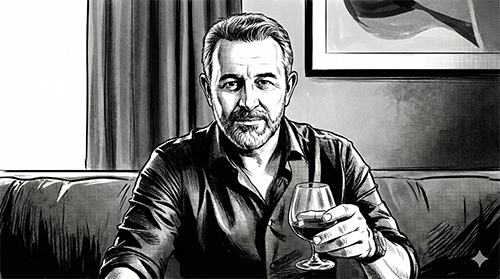
Transform the uploaded photo into a horizontal 16:9, 4K (3840x2160) black and white comic illustration, keeping the original composition and camera angle as close as possible to the reference. The main subject is the person from the uploaded image; use the uploaded photo as the primary face reference and preserve 100% of their identity: identical facial features and bone structure, same nose, eyes, lips, jawline, cheekbones, forehead, hairstyle shape and hairline, same gender and perceived age. Do not change the gender or make the face younger or older. Keep the exact expression family, gaze direction and any unique marks such as moles, freckles, scars, wrinkles and skin texture, but reinterpret them faithfully as ink and line‑art.
Match the skin tone value and contrast to the reference photo, converting it to monochrome: lighter and darker areas of the skin must correspond to the same areas in the original image, with realistic shading built from blacks, whites and mid‑tone hatching instead of color. Replicate the overall lighting direction, contrast and depth of the reference so the new image feels like a faithful comic‑style transformation of the original shot.
Render the scene as a high‑contrast black and white comic illustration with cinematic chiaroscuro lighting. Use bold graphic ink style, deep solid black shadows and bright white highlights, with controlled mid‑tones created by cross‑hatching, line density and subtle halftone textures. Emphasize realistic anatomy with slightly stylized proportions, expressive facial planes carved out by light and shadow, and sharp contour outlines with varied line weight. The background should be treated as a textured monochrome environment (matching the original setting), with simplified shapes but rich tonal structure, maintaining a classic noir graphic novel atmosphere and woodcut‑inspired tonal balance.
Camera, lens and composition
Horizontal 16:9 frame, final output 3840x2160.
Preserve the same basic framing as the uploaded image: same camera height, angle and perspective, same subject size in frame.
Simulate a 35–50 mm lens on a full‑frame camera for natural, slightly cinematic perspective.
Keep strong foreground–background separation using sharp silhouettes and atmospheric perspective in line‑art.
Lighting and rendering style
Cinematic chiaroscuro lighting: one strong key light from the same direction as in the reference photo, creating sculpted highlights on the face and body and deep, unified shadow masses.
Use big contiguous areas of pure black for the darkest regions, crisp white for the brightest, and controlled cross‑hatching and halftone dots for mid‑tones and gradients.
Maintain a classic noir mood: gritty yet refined, with dramatic light beams, long shadows and slightly smoky atmosphere, but strictly monochrome.
Overall finish should look like a print‑ready comic panel with matte ink on paper, ultra‑detailed line‑work and clean edges.
Quality and technical details
Ultra‑detailed ink rendering, 8K‑level detail downscaled to 4K.
Confident inking with dynamic, varied line weight for contours, facial features and fabric folds.
Realistic anatomy and fabric behavior: folds, tension lines and armor/clothing details should follow the body correctly.
Strong storytelling composition, dynamic perspective and clear read of the main character against a slightly simplified but atmospheric background.
Negative prompt
no change of identity, no different face, no wrong skin value mapping, no gender change, no age change, no beauty‑filter skin, no smoothing away pores or texture, no color (strictly black, white and greys), no grayscale photo look without line‑art, no manga screentone overload, no cartoonish chibi proportions, no anime eyes, no low‑detail sketch, no messy or fuzzy lines, no AI artifacts, no duplicated or missing limbs, no deformed hands, no warped anatomy, no inconsistent lighting direction, no flat lighting, no neon or colored accents, no text, speech bubbles or logos, no watermarks, no heavy noise or compression, no vertical or square canvas, no fisheye distortion, no extreme wide‑angle warping, no Dutch angle unless already present in the reference.
Match the skin tone value and contrast to the reference photo, converting it to monochrome: lighter and darker areas of the skin must correspond to the same areas in the original image, with realistic shading built from blacks, whites and mid‑tone hatching instead of color. Replicate the overall lighting direction, contrast and depth of the reference so the new image feels like a faithful comic‑style transformation of the original shot.
Render the scene as a high‑contrast black and white comic illustration with cinematic chiaroscuro lighting. Use bold graphic ink style, deep solid black shadows and bright white highlights, with controlled mid‑tones created by cross‑hatching, line density and subtle halftone textures. Emphasize realistic anatomy with slightly stylized proportions, expressive facial planes carved out by light and shadow, and sharp contour outlines with varied line weight. The background should be treated as a textured monochrome environment (matching the original setting), with simplified shapes but rich tonal structure, maintaining a classic noir graphic novel atmosphere and woodcut‑inspired tonal balance.
Camera, lens and composition
Horizontal 16:9 frame, final output 3840x2160.
Preserve the same basic framing as the uploaded image: same camera height, angle and perspective, same subject size in frame.
Simulate a 35–50 mm lens on a full‑frame camera for natural, slightly cinematic perspective.
Keep strong foreground–background separation using sharp silhouettes and atmospheric perspective in line‑art.
Lighting and rendering style
Cinematic chiaroscuro lighting: one strong key light from the same direction as in the reference photo, creating sculpted highlights on the face and body and deep, unified shadow masses.
Use big contiguous areas of pure black for the darkest regions, crisp white for the brightest, and controlled cross‑hatching and halftone dots for mid‑tones and gradients.
Maintain a classic noir mood: gritty yet refined, with dramatic light beams, long shadows and slightly smoky atmosphere, but strictly monochrome.
Overall finish should look like a print‑ready comic panel with matte ink on paper, ultra‑detailed line‑work and clean edges.
Quality and technical details
Ultra‑detailed ink rendering, 8K‑level detail downscaled to 4K.
Confident inking with dynamic, varied line weight for contours, facial features and fabric folds.
Realistic anatomy and fabric behavior: folds, tension lines and armor/clothing details should follow the body correctly.
Strong storytelling composition, dynamic perspective and clear read of the main character against a slightly simplified but atmospheric background.
Negative prompt
no change of identity, no different face, no wrong skin value mapping, no gender change, no age change, no beauty‑filter skin, no smoothing away pores or texture, no color (strictly black, white and greys), no grayscale photo look without line‑art, no manga screentone overload, no cartoonish chibi proportions, no anime eyes, no low‑detail sketch, no messy or fuzzy lines, no AI artifacts, no duplicated or missing limbs, no deformed hands, no warped anatomy, no inconsistent lighting direction, no flat lighting, no neon or colored accents, no text, speech bubbles or logos, no watermarks, no heavy noise or compression, no vertical or square canvas, no fisheye distortion, no extreme wide‑angle warping, no Dutch angle unless already present in the reference.