C64c2a41ec8a1f8cebbf267e5f9a5118
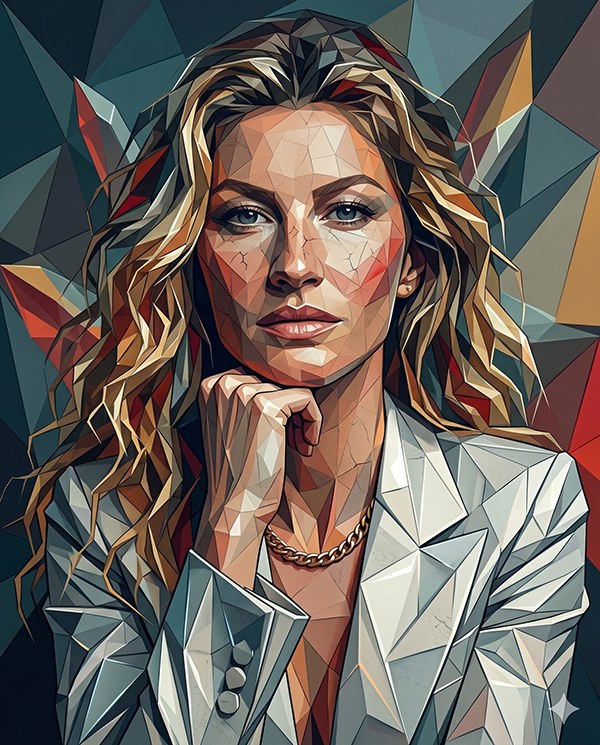
📷 PHOTO REFERENCE:Use the uploaded image as the sole reference for the subject’s identity.Preserve 100% of the person’s facial features, face shape, skin tone, haircolor, hair texture, hair length, hairstyle, body proportions, pose, clothing,camera angle, and overall recognizability exactly as in the photo. Do notbeautify, stylize the anatomy, or alter any physical trait — only transformthe visual rendering style. The subject must remain immediately and clearlyrecognizable as the same person from the photo, including gender and hair.🎨 STYLE:Transform the uploaded image into an advanced 3D Faceted Polygonal CrystalMosaic Illustration with a very high facet density. The entire subject andbackground must be constructed from many small, clearly visible low‑polygeometric planes, sharply defined angular crystal shards, and tightly packedinterlocking faceted forms.Every surface should show a dense mesh of triangles and polygons — no largeflat areas. Facet borders must be clearly outlined by lighting, with crisp,hard edges and strong separation between each polygon face.Recreate skin using smooth matte stone‑enamel textures built from manysmall faceted planes. Maintain realistic facial contours and anatomy fullyrecognizable beneath the geometric construction. Each polygon face showssoft gradient shading, subtle surface wear, fine micro‑cracks, and tonevariation, while the edge lines between facets remain sharp and legible.Recreate hair as simplified sculpted polygon clusters and faceted crystalstrands with clean angular shaping instead of individual hairs. Preserve theexact hair color, style, silhouette, and length from the reference photo.Convert clothing into layered geometric armor‑like panels: folded polygonsurfaces, chamfered and beveled planes, visible facet edges following thegarment’s original folds and seams. Add light weathering, tiny chips, andimperfections without breaking the clean low‑poly aesthetic. Maintain theoriginal garment structure and read as the same clothing from the photo.Overall look: premium, high‑end 3D crystal sculpture portrait, with stronggeometric readability, dense faceting, and a sculptural, mosaic‑like presence.👤 SUBJECT:[GENDER: man / woman / non‑binary — match the photo exactly] with [HAIR COLORAND STYLE — extracted from the photo]. The subject’s facial expression, pose,and proportions must match the reference image precisely, only converted intothe faceted polygonal crystal style.👗 CONTEXT / OUTFIT:Recreate the exact outfit visible in the uploaded image, translated intofaceted polygonal geometry. Each clothing element becomes layered geometricpanels and folded polygon sheets, with dimensional edge definition, beveledborders, and subtle wear. Preserve the original garment types and structure(jacket, shirt, hoodie, dress, etc.) so the outfit is instantly recognizableas the same clothes from the reference photo.🎬 ACTION:Match the original pose and body language from the reference photo: samehead tilt, gaze direction, shoulders, arms, and stance. Do not change thepose or overall attitude — simply reinterpret it in the 3D faceted crystalmosaic style. Preserve the original emotional tone of the expression(confident, calm, serious, joyful, etc.).🖼️ COMPOSITION:Replicate the composition and framing of the reference photo as closely aspossible. Keep the same camera distance (close‑up, bust shot, half‑body,full‑body, etc.), same orientation (portrait or landscape), and same placementof the subject within the frame. Maintain the original crop and negative spacerelationships between subject and background.🔭 CAMERA / LENS:Simulate the same lens perspective as implied by the reference image.Maintain realistic proportions and perspective distortion (no fisheye unlesspresent in the reference). Apply depth‑of‑field similar to the photo:sharp focus on the subject’s faceted crystal geometry, with subtle depthsoftening on background facets if present.💡 LIGHTING AND MATERIAL RESPONSE:Use dramatic lighting that maximizes facet visibility and glass‑like edgebehavior. Every polygon edge should catch light like cut glass.Apply:- Strong directional key light to carve out hard transitions between facets- Deep ambient occlusion in crevices between polygon clusters- Bright rim and edge highlights along exposed ridges, like light refracting through glass- Local specular streaks that run along polygon bordersFacet edges should behave like polished glass or crystal: thin, bright, sharplight streaks along the ridges, with subtle refractive glows where edgesintersect. Polygon faces themselves are mostly matte or satin, but edges areemphasized with a glossy, glass‑like sparkle.Add layered overlapping crystalline forms around the subject to enhance depth:some facets protruding toward the camera, others receding, with clear depthseparation created by shading, occlusion, and parallax.🎨 COLOR PALETTE:Use a refined, cohesive palette of:- Deep teal- Slate blue- Charcoal- Burnt orange- Crimson red- Golden ochre- Muted stone tonesPush contrast between neighboring facets: warm vs. cool, light vs. dark,while staying strictly inside this palette. Avoid large flat color regions.Each polygon face should contain subtle internal gradient or value shift tosupport depth, crystal realism, and tactile material quality.🖼️ BACKGROUND:Convert the entire background of the original photo into the same facetedpolygonal crystal style. Use larger, slightly simpler polygons in thebackground to keep the subject as the highest‑detail area. Preserve theoverall environment cues from the reference (indoor vs. outdoor, wall vs.landscape, etc.), but stylized as geometric crystalline structures andmosaic‑like shards. Ensure strong depth separation between subject andbackground via scale, contrast, and lighting.🚫 NEGATIVE PROMPT:No smooth photorealistic rendering. No large un‑faceted surfaces. No alteredface, no changed hair color or hairstyle, no gender swap, no skin tonemodification, no AI‑generated generic face, no loss of likeness to thereference person. No extra limbs, no distorted anatomy, no melted geometry,no plastic toy look, no watercolor or painterly style, no flat 2D vector art,no heavy bloom that washes out the facet edges, no text, no watermark, nologos, no interface elements, no duplicate subjects. The entire subject andbackground must follow the dense faceted polygonal crystal aesthetic withsharp, glass‑like edges and clearly visible facets everywhere.