Calcada
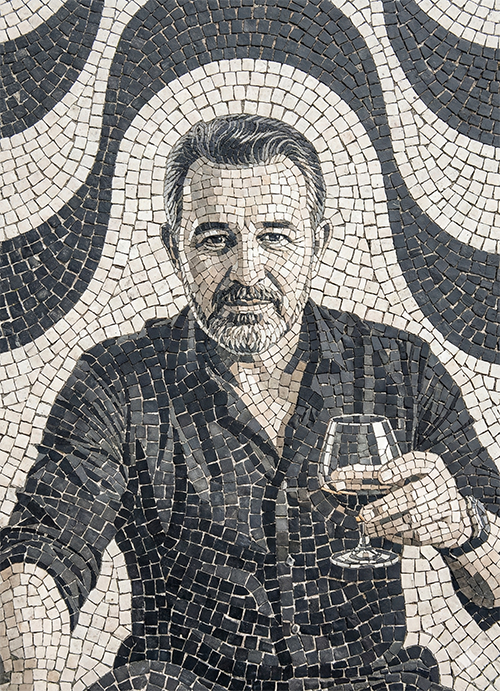
IDENTITY – 100% REAL FACE AS MOSAIC
Use the uploaded photo as the ONLY and EXCLUSIVE identity reference. The person represented in the pavement must be 100% IDENTICAL to the real person in the photo: same facial features and bone structure (overall head shape, jawline, cheekbones, chin, nose profile, eye spacing, brow line, lips, ears), same skin‑tone value translated into light/dark stone areas, same perceived age, same gender and same overall facial proportions. Do NOT change the gender, do NOT make the person younger or older, do NOT beautify, slim or reshape the face or body, and do NOT change ethnicity. Preserve the exact hairstyle family from the reference (same hairline, haircut type, length family, volume, direction and silhouette), expressed through the arrangement of stones. Maintain the same facial expression (eyes, brows, mouth) and any unique marks such as moles, freckles or scars as subtle local variations in stone placement and tone.
MATERIAL & STYLE – PORTUGUESE PAVEMENT MOSAIC
Transform the entire image into a section of calçada portuguesa: a black‑and‑white cobblestone pavement mosaic built from uniformly cut basalt (black) and light stone (white) pieces. All stones must have consistent size, smooth edges and clearly defined grout lines, so the image looks assembled and intentional, never cracked or broken. No random fractures, broken tiles or irregular gaps – everything must follow a controlled mosaic grid and curvature.
PORTRAIT AS PAVEMENT
Recreate the person’s full face, hair, clothing and pose entirely through deliberate placement of these black and white stones. Use light stones for highlights and midtones, darker stones for shadows and contours, building the portrait with graphic shapes rather than gradients. Keep grout lines clean and consistent, following the curves of facial features, hair direction and clothing folds so the portrait reads clearly from above while still feeling like part of the pavement. The identity should be instantly recognizable even though it is rendered only with stones and grout.
WAVE PATTERNS & INTEGRATION
Around and behind the portrait, construct classic Portuguese wave motifs in the pavement: flowing, repeating black‑and‑white wave patterns similar to traditional sidewalk designs in Lisbon/Rio. These waves must extend across the background and subtly integrate into the portrait, sharing the same scale, curves, density and grout lines as the stones that form the face and body. The stones inside the portrait follow the same visual logic as the surrounding waves (same size, curvature rhythm and contrast), so the figure and pattern feel built from the same continuous language of mosaic.
COMPOSITION & VIEW
Top‑down or slightly angled overhead view of a rectangular section of pavement, as if photographed from above in a plaza. The portrait is centered or slightly off‑center within this section, with enough surrounding wave pattern to clearly show the calçada context. No additional objects (no feet, leaves, trash, cracks or damage) should interrupt the clean mosaic artwork.
LIGHTING & TEXTURE
Use soft, even daylight to reveal the subtle relief of the stones, their matte surfaces and gentle specular highlights along edges, without harsh shadows that obscure the pattern. Texture must show real stone: slight surface variation, tiny chips and natural grain, but grout lines remain clean and continuous. Contrast should be high enough that the black‑and‑white design and portrait are clearly legible from a distance.
OVERALL QUALITY & AESTHETIC
The final image must look like a carefully designed section of Portuguese pavement where both portrait and pattern are constructed from the same continuous mosaic language: intentional, graphic and cohesive, with no cracked textures, no fragmented surfaces and no painterly effects. High resolution, sharp detail on each stone, grout line and curve. No text, logos or watermarks. The viewer should read it first as a piece of calçada portuguesa and, at the same time, immediately recognize the person from the uploaded photo encoded in the mosaic.
Use the uploaded photo as the ONLY and EXCLUSIVE identity reference. The person represented in the pavement must be 100% IDENTICAL to the real person in the photo: same facial features and bone structure (overall head shape, jawline, cheekbones, chin, nose profile, eye spacing, brow line, lips, ears), same skin‑tone value translated into light/dark stone areas, same perceived age, same gender and same overall facial proportions. Do NOT change the gender, do NOT make the person younger or older, do NOT beautify, slim or reshape the face or body, and do NOT change ethnicity. Preserve the exact hairstyle family from the reference (same hairline, haircut type, length family, volume, direction and silhouette), expressed through the arrangement of stones. Maintain the same facial expression (eyes, brows, mouth) and any unique marks such as moles, freckles or scars as subtle local variations in stone placement and tone.
MATERIAL & STYLE – PORTUGUESE PAVEMENT MOSAIC
Transform the entire image into a section of calçada portuguesa: a black‑and‑white cobblestone pavement mosaic built from uniformly cut basalt (black) and light stone (white) pieces. All stones must have consistent size, smooth edges and clearly defined grout lines, so the image looks assembled and intentional, never cracked or broken. No random fractures, broken tiles or irregular gaps – everything must follow a controlled mosaic grid and curvature.
PORTRAIT AS PAVEMENT
Recreate the person’s full face, hair, clothing and pose entirely through deliberate placement of these black and white stones. Use light stones for highlights and midtones, darker stones for shadows and contours, building the portrait with graphic shapes rather than gradients. Keep grout lines clean and consistent, following the curves of facial features, hair direction and clothing folds so the portrait reads clearly from above while still feeling like part of the pavement. The identity should be instantly recognizable even though it is rendered only with stones and grout.
WAVE PATTERNS & INTEGRATION
Around and behind the portrait, construct classic Portuguese wave motifs in the pavement: flowing, repeating black‑and‑white wave patterns similar to traditional sidewalk designs in Lisbon/Rio. These waves must extend across the background and subtly integrate into the portrait, sharing the same scale, curves, density and grout lines as the stones that form the face and body. The stones inside the portrait follow the same visual logic as the surrounding waves (same size, curvature rhythm and contrast), so the figure and pattern feel built from the same continuous language of mosaic.
COMPOSITION & VIEW
Top‑down or slightly angled overhead view of a rectangular section of pavement, as if photographed from above in a plaza. The portrait is centered or slightly off‑center within this section, with enough surrounding wave pattern to clearly show the calçada context. No additional objects (no feet, leaves, trash, cracks or damage) should interrupt the clean mosaic artwork.
LIGHTING & TEXTURE
Use soft, even daylight to reveal the subtle relief of the stones, their matte surfaces and gentle specular highlights along edges, without harsh shadows that obscure the pattern. Texture must show real stone: slight surface variation, tiny chips and natural grain, but grout lines remain clean and continuous. Contrast should be high enough that the black‑and‑white design and portrait are clearly legible from a distance.
OVERALL QUALITY & AESTHETIC
The final image must look like a carefully designed section of Portuguese pavement where both portrait and pattern are constructed from the same continuous mosaic language: intentional, graphic and cohesive, with no cracked textures, no fragmented surfaces and no painterly effects. High resolution, sharp detail on each stone, grout line and curve. No text, logos or watermarks. The viewer should read it first as a piece of calçada portuguesa and, at the same time, immediately recognize the person from the uploaded photo encoded in the mosaic.