Camadas_guache
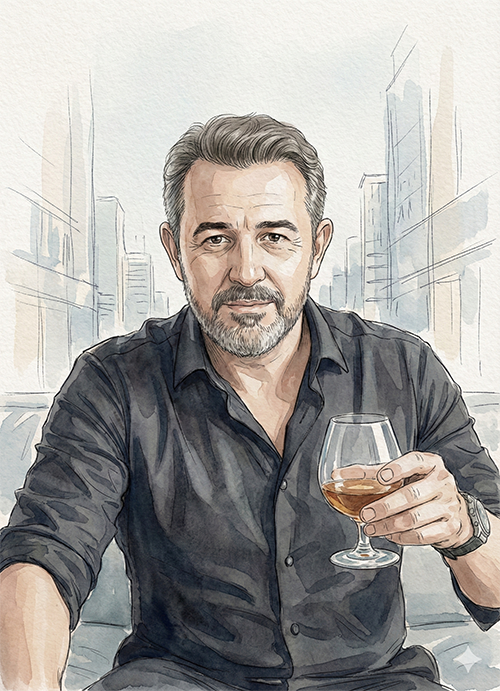
Use the uploaded photo as the ONLY and EXCLUSIVE identity reference. The illustrated character must be 100% IDENTICAL to the real person in the photo: same facial features and bone structure (jawline, cheekbones, chin, nose, eyes, eyelids, eyebrows, lips, ears), same skin tone family, same perceived age, same gender and overall facial proportions. Do NOT change the gender, do NOT make the person younger or older, do NOT beautify, slim or reshape the face or body, and do NOT change ethnicity. Translate the exact hairstyle family into anime watercolor form: same hairline, haircut type, length, volume, direction and silhouette, drawn with fine ink strokes and soft watercolor fills. Preserve the expression from the reference photo (eyes, brows, mouth) and keep unique marks like moles, freckles, scars and skin texture as subtle tonal or line details so the identity remains clearly recognizable in semi‑realistic anime style.
STYLE & MEDIUM
Semi‑realistic anime watercolor illustration with delicate pencil linework and soft hand‑drawn ink contours. Use thin, slightly sketchy outlines with natural line variation, with a subtle graphite underdrawing still visible beneath transparent watercolor layers. Overall, the finish should feel like modern anime concept art painted on lightly textured paper, combining elegance and realism.
PERSPECTIVE & COMPOSITION
High‑angle cinematic perspective, as if the camera is slightly above looking down at the subject. Airy composition with gentle negative space around the figure, avoiding clutter. Keep proportions elegant and slightly realistic (not chibi, not exaggerated), following modern semi‑realistic anime anatomy.
COLOR & SHADING
Muted cool color palette: dusty blue, soft gray, beige and cream as the main tones, with very subtle warm accents only where needed. Use transparent watercolor wash layering, with soft gradient shading that blends seamlessly and minimal hard shadows. Natural daylight illumination, no harsh rim lights or deep contrast, just soft, calm lighting that preserves the gentle mood.
FACE, HAIR & SKIN
Refined facial rendering with detailed expressive eyes, subtle highlight accents on the irises and a light blush warmth on the cheeks. Skin tones should be smooth and soft, matching the real skin tone but slightly idealized in watercolor, without losing the person’s characteristic features. Loose, flowing hair strands are defined by fine ink strokes, with soft watercolor fills following the natural direction and volume of the real hairstyle. Line weight around the eyes and mouth can be slightly stronger to keep the likeness crisp.
CLOTHING & FABRIC
Render fabric folds with soft tonal transitions and delicate line accents, using the same muted cool palette. Folds should flow naturally with gravity and pose, with minimal hard edges, more suggested than over‑defined, matching watercolor fashion illustration aesthetics.
BACKGROUND & ATMOSPHERE
Use a lightly textured paper background with faint architectural line suggestions in the backdrop: barely‑there sketched buildings or urban elements that imply a calm city environment without drawing attention away from the character. Keep these lines very soft and desaturated so they serve as atmospheric context. Aim for a calm urban atmosphere, like a quiet day in a modern city.
OVERALL FINISH & QUALITY
Modern anime concept art aesthetic with elegant, slightly realistic proportions, clean yet organic finish, and a balance of softness and clarity. High resolution, gallery‑quality illustration: crisp linework, smooth gradients, no muddy colors, no heavy noise, no 3D rendering artifacts, no logos or text. The final result should look like a professional semi‑realistic anime watercolor portrait where the viewer immediately recognizes the person from the uploaded photo, translated faithfully into this delicate, cool‑toned illustration style.
STYLE & MEDIUM
Semi‑realistic anime watercolor illustration with delicate pencil linework and soft hand‑drawn ink contours. Use thin, slightly sketchy outlines with natural line variation, with a subtle graphite underdrawing still visible beneath transparent watercolor layers. Overall, the finish should feel like modern anime concept art painted on lightly textured paper, combining elegance and realism.
PERSPECTIVE & COMPOSITION
High‑angle cinematic perspective, as if the camera is slightly above looking down at the subject. Airy composition with gentle negative space around the figure, avoiding clutter. Keep proportions elegant and slightly realistic (not chibi, not exaggerated), following modern semi‑realistic anime anatomy.
COLOR & SHADING
Muted cool color palette: dusty blue, soft gray, beige and cream as the main tones, with very subtle warm accents only where needed. Use transparent watercolor wash layering, with soft gradient shading that blends seamlessly and minimal hard shadows. Natural daylight illumination, no harsh rim lights or deep contrast, just soft, calm lighting that preserves the gentle mood.
FACE, HAIR & SKIN
Refined facial rendering with detailed expressive eyes, subtle highlight accents on the irises and a light blush warmth on the cheeks. Skin tones should be smooth and soft, matching the real skin tone but slightly idealized in watercolor, without losing the person’s characteristic features. Loose, flowing hair strands are defined by fine ink strokes, with soft watercolor fills following the natural direction and volume of the real hairstyle. Line weight around the eyes and mouth can be slightly stronger to keep the likeness crisp.
CLOTHING & FABRIC
Render fabric folds with soft tonal transitions and delicate line accents, using the same muted cool palette. Folds should flow naturally with gravity and pose, with minimal hard edges, more suggested than over‑defined, matching watercolor fashion illustration aesthetics.
BACKGROUND & ATMOSPHERE
Use a lightly textured paper background with faint architectural line suggestions in the backdrop: barely‑there sketched buildings or urban elements that imply a calm city environment without drawing attention away from the character. Keep these lines very soft and desaturated so they serve as atmospheric context. Aim for a calm urban atmosphere, like a quiet day in a modern city.
OVERALL FINISH & QUALITY
Modern anime concept art aesthetic with elegant, slightly realistic proportions, clean yet organic finish, and a balance of softness and clarity. High resolution, gallery‑quality illustration: crisp linework, smooth gradients, no muddy colors, no heavy noise, no 3D rendering artifacts, no logos or text. The final result should look like a professional semi‑realistic anime watercolor portrait where the viewer immediately recognizes the person from the uploaded photo, translated faithfully into this delicate, cool‑toned illustration style.