Cap_americav
Identity Lock
Use the exact face of the person in the reference photo as Captain America’s face. Maintain 100% identity accuracy: same facial structure and bone structure, jawline, cheekbones, nose, lips, eyes, eyebrows, hairstyle shape and length, skin tone, age impression, and any unique marks such as moles, freckles, scars, or skin texture. Do not idealize, stylize, or replace the face. No de‑aging, no aging, no gender change. The visible face must look like a perfect live‑action version of the reference photo, seamlessly integrated into Captain America’s head and helmet, with matching lighting and color.
Positive Prompt / Scene
Create a cinematic ultra‑realistic film still, portrait orientation (9:16), in a POV (point‑of‑view) style, as if the viewer is standing right in front of Captain America in the middle of an intense battle.
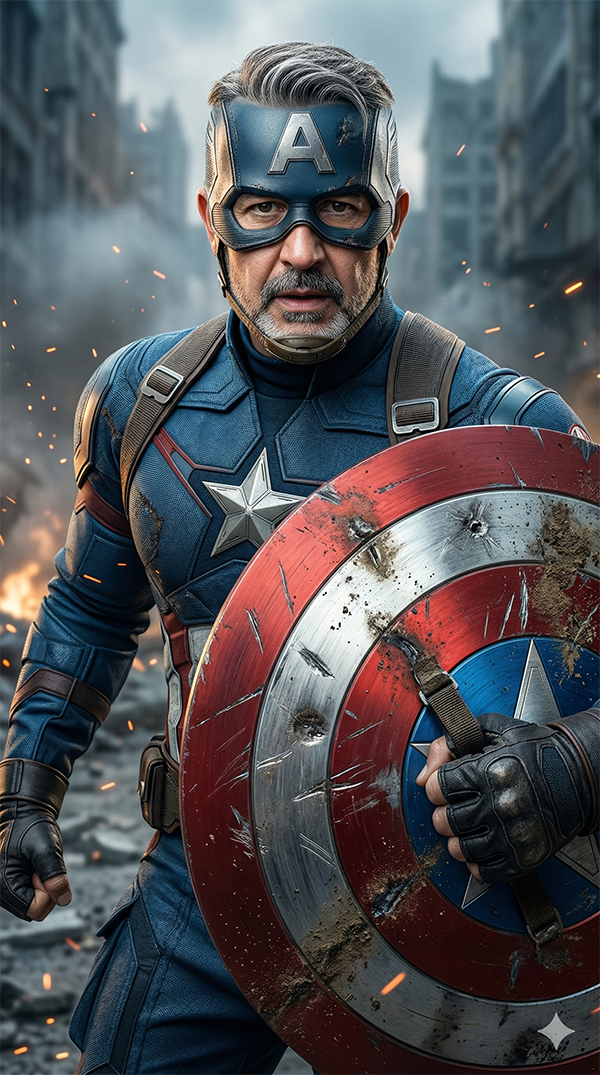
Captain America is portrayed with the face from the uploaded reference photo, wearing a high‑detail modern Captain America suit (MCU‑inspired): armored blue fabric with textured panels, white star on the chest, red‑white stripes on the torso, tactical straps, combat gloves, and battle‑worn helmet with the “A” symbol. His expression is exhausted but determined, breathing hard, eyes locked on the viewer with unwavering resolve, as if he just stood up after a brutal fight and is ready to continue.
The shield is the main foreground element, extremely close to the camera in a POV style. It is shown at a slight angle, almost filling the frame: a circular red, white, and blue Captain America shield rendered with hyper‑realistic metal textures. It is heavily battle damaged: deep scratches, scrapes, dents, chipped paint, impact marks, burn scars, and slightly bent edges, all with clear micro‑detail. Dirt, dust, and dried mud cling to its surface, with small metal reflections catching the light along the worn edges.
Captain America grips the shield’s straps firmly with his gloved hand, visible from behind the shield, selling the POV feeling that we are right in front of him. Background suggests a war‑torn battlefield or city street: broken concrete, smoke, sparks, debris, and faint silhouettes of ruined structures, but kept slightly out of focus so the viewer’s attention stays on the shield and face.
Lighting
Use dramatic, high‑end cinematic lighting. A strong key light from one side illuminates Captain America’s face and the front of the shield, revealing every scratch, dent, and metallic imperfection. Add a softer fill light from the opposite side so facial features remain readable, and a subtle back/rim light outlining the helmet, shoulders, and shield edge, helping separate him from the smoky background. Reflections and specular highlights on the shield’s metal must be realistic, showing curvature and damage without blowing out details. Color grading should lean toward slightly cool tones with warm orange sparks or firelight accents for contrast.
Camera, Lens & POV
Aspect ratio: 9:16 vertical, optimized for cinematic poster or social media.
Camera style: POV shot, as if the viewer is at arm’s length from Captain America looking directly at him and his shield.
Lens: natural cinematic lens around 35–50 mm full‑frame to keep proportions realistic but still immersive.
Composition: shield dominates the foreground near the bottom and center of the frame, with Captain America’s face and upper torso visible just behind it; his eyes fall roughly in the upper third of the frame.
Depth of field: shallow to moderate — extremely sharp focus on the shield’s scratches, dents, and textures, and on Captain America’s face and eyes; background ruins and smoke are softly blurred.
Visual Details
Render at ultra‑high resolution (8K) with photorealistic detail and HDR dynamic range. Emphasize:
Realistic skin texture, subtle sweat, dirt smudges, and small cuts on the face.
Fabric weave, seams, stitching, and armor plates on the suit.
Metal grain, chipped paint, and layered damage on the shield, with varied depth to the scratches.
Small flying debris and sparks in the air, with light haze and volumetric lighting.
Overall style: high‑budget superhero movie still, not comic or stylized illustration.
Negative Prompt
Do not change the person’s identity, age, gender, or facial proportions from the reference photo; no generic Captain America face.
No anime, no cartoon, no cel‑shading, no comic‑book halftone, no 2D illustration, no painterly oil‑painting look.
No clean, pristine shield; avoid smooth, undamaged surfaces. The shield must look scratched, dented, and battle‑worn.
No low resolution, no blur, no motion blur, no pixelation, no compression artifacts, no ghosting, no warped anatomy, no extra fingers.
No wrong setting: avoid medieval castles, fantasy forests, bright beaches, or sci‑fi interiors; environment must feel like a grounded, war‑torn battlefield or destroyed city.
No text overlays, HUD, UI, health bars, logos, or watermarks; no borders or split screens.
Use the exact face of the person in the reference photo as Captain America’s face. Maintain 100% identity accuracy: same facial structure and bone structure, jawline, cheekbones, nose, lips, eyes, eyebrows, hairstyle shape and length, skin tone, age impression, and any unique marks such as moles, freckles, scars, or skin texture. Do not idealize, stylize, or replace the face. No de‑aging, no aging, no gender change. The visible face must look like a perfect live‑action version of the reference photo, seamlessly integrated into Captain America’s head and helmet, with matching lighting and color.
Positive Prompt / Scene
Create a cinematic ultra‑realistic film still, portrait orientation (9:16), in a POV (point‑of‑view) style, as if the viewer is standing right in front of Captain America in the middle of an intense battle.
Captain America is portrayed with the face from the uploaded reference photo, wearing a high‑detail modern Captain America suit (MCU‑inspired): armored blue fabric with textured panels, white star on the chest, red‑white stripes on the torso, tactical straps, combat gloves, and battle‑worn helmet with the “A” symbol. His expression is exhausted but determined, breathing hard, eyes locked on the viewer with unwavering resolve, as if he just stood up after a brutal fight and is ready to continue.
The shield is the main foreground element, extremely close to the camera in a POV style. It is shown at a slight angle, almost filling the frame: a circular red, white, and blue Captain America shield rendered with hyper‑realistic metal textures. It is heavily battle damaged: deep scratches, scrapes, dents, chipped paint, impact marks, burn scars, and slightly bent edges, all with clear micro‑detail. Dirt, dust, and dried mud cling to its surface, with small metal reflections catching the light along the worn edges.
Captain America grips the shield’s straps firmly with his gloved hand, visible from behind the shield, selling the POV feeling that we are right in front of him. Background suggests a war‑torn battlefield or city street: broken concrete, smoke, sparks, debris, and faint silhouettes of ruined structures, but kept slightly out of focus so the viewer’s attention stays on the shield and face.
Lighting
Use dramatic, high‑end cinematic lighting. A strong key light from one side illuminates Captain America’s face and the front of the shield, revealing every scratch, dent, and metallic imperfection. Add a softer fill light from the opposite side so facial features remain readable, and a subtle back/rim light outlining the helmet, shoulders, and shield edge, helping separate him from the smoky background. Reflections and specular highlights on the shield’s metal must be realistic, showing curvature and damage without blowing out details. Color grading should lean toward slightly cool tones with warm orange sparks or firelight accents for contrast.
Camera, Lens & POV
Aspect ratio: 9:16 vertical, optimized for cinematic poster or social media.
Camera style: POV shot, as if the viewer is at arm’s length from Captain America looking directly at him and his shield.
Lens: natural cinematic lens around 35–50 mm full‑frame to keep proportions realistic but still immersive.
Composition: shield dominates the foreground near the bottom and center of the frame, with Captain America’s face and upper torso visible just behind it; his eyes fall roughly in the upper third of the frame.
Depth of field: shallow to moderate — extremely sharp focus on the shield’s scratches, dents, and textures, and on Captain America’s face and eyes; background ruins and smoke are softly blurred.
Visual Details
Render at ultra‑high resolution (8K) with photorealistic detail and HDR dynamic range. Emphasize:
Realistic skin texture, subtle sweat, dirt smudges, and small cuts on the face.
Fabric weave, seams, stitching, and armor plates on the suit.
Metal grain, chipped paint, and layered damage on the shield, with varied depth to the scratches.
Small flying debris and sparks in the air, with light haze and volumetric lighting.
Overall style: high‑budget superhero movie still, not comic or stylized illustration.
Negative Prompt
Do not change the person’s identity, age, gender, or facial proportions from the reference photo; no generic Captain America face.
No anime, no cartoon, no cel‑shading, no comic‑book halftone, no 2D illustration, no painterly oil‑painting look.
No clean, pristine shield; avoid smooth, undamaged surfaces. The shield must look scratched, dented, and battle‑worn.
No low resolution, no blur, no motion blur, no pixelation, no compression artifacts, no ghosting, no warped anatomy, no extra fingers.
No wrong setting: avoid medieval castles, fantasy forests, bright beaches, or sci‑fi interiors; environment must feel like a grounded, war‑torn battlefield or destroyed city.
No text overlays, HUD, UI, health bars, logos, or watermarks; no borders or split screens.