Capivara
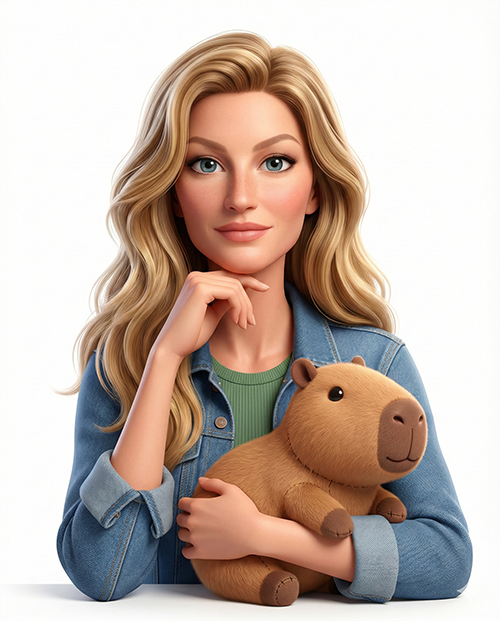
Use the uploaded photo as the primary face and character reference, and keep the person’s gender, identity and facial traits exactly the same as in the reference. The character’s face must be a 120% faithful match to the reference: identical facial structure and bone structure, identical skin tone, identical gender presentation, identical age impression, identical hairstyle length and overall hairstyle shape, and identical general facial proportions. Do not change the gender, do not make the face younger or older, and do not change the base expression type from the reference.
Preserve the exact same type of nose, eyes, lips, jawline, cheekbones, chin, forehead and any visible unique marks such as moles, freckles, scars or skin texture, as if the face were “locked” to the uploaded photo with zero deviation. The hairstyle must follow the same direction, hairline, volume and silhouette as in the photo, only translated into a stylized 3D animated look, without changing the haircut design.
Generate a high‑quality 3D‑style digital illustration of this person in the style of modern, premium animated movies and series. They have natural facial features, matte brown eyes, soft detailed eyelids, and a serene, confident expression, with slightly relaxed eyes that give a cool, laid‑back attitude, resting one hand gently on the chin in a thoughtful pose. The dark hair is voluminous and slightly exaggerated in height and shape, but still clearly the same hairstyle as in the reference, treated like an elegant, stylized caricature of the original.
Outfit: they wear a blue denim jacket, open at the front, with a ribbed green shirt underneath. In their arms they are holding a plush capybara toy, hugging it close to the chest in a natural, affectionate pose. The plush capybara must be clearly readable, soft, cute, and proportionally smaller than the character, with visible stitching, plush texture and rounded, appealing proportions.
The result should clearly look like a stylized 3D animated character based on the reference person, not like a new person and not like a real photo.
Lighting:
Use soft, studio‑style three‑point lighting: a gentle key light from the front and slightly above, a subtle fill light from the opposite side, and a soft rim light that outlines the hair and shoulders. Keep shadows soft and smooth under the chin and around the nose. Add subtle specular highlights on the hair, eyes and lips to give a premium 3D render look, without harsh contrast. Overall lighting should be bright, even and flattering, suitable for a modern animation character portrait on a clean white background.
Camera, lens and framing:
Simulate a digital cinema or 3D render camera with a focal length around 50–65 mm for a natural portrait look. Frame the character from the chest up, centered, with enough space to clearly see the face, hair and the plush capybara being held in their arms. Use a very slight depth of field so the face and plush are in perfect focus, while the edges of the shoulders and the background remain clean and slightly softer. Aspect ratio 4:5 or 3:4 vertical portrait.
Rendering and style details:
3D‑style character rendering with smooth but detailed skin, visible but subtle pores and micro‑shading, preserving natural skin texture instead of plastic smoothing. Clean, precise edges on clothing, realistic fabric textures on the blue denim jacket and ribbed knit texture on the green shirt. The plush capybara should have a soft, fluffy plush texture, clear facial details, and cute, slightly rounded proportions, with visible seams and stitching that reinforce the toy look. Colors should be rich but not oversaturated, with a balanced, professional color grade. The background is pure solid white, clean and minimal, making all colors and textures of the character and plush stand out strongly.
Negative prompt:
blurry face, distorted facial features, off‑model face, wrong skin tone, wrong gender, wrong age, different hairstyle, messy or changed hair shape, changed haircut design, plastic low‑poly look, exaggerated cartoon proportions, horror style, scary expressions, angry or aggressive face, low resolution, noisy render, visible polygons, unfinished 3D model, harsh shadows, overexposed highlights, dark moody lighting, busy or colored background, gradients in the background, background objects, text on the background, missing plush, unclear plush, plush blocking the face, extra arms, extra fingers, missing fingers, deformed hands, glitch effects, jpeg artifacts, identity drift, face not matching the reference, altered facial structure, altered hairline.
Preserve the exact same type of nose, eyes, lips, jawline, cheekbones, chin, forehead and any visible unique marks such as moles, freckles, scars or skin texture, as if the face were “locked” to the uploaded photo with zero deviation. The hairstyle must follow the same direction, hairline, volume and silhouette as in the photo, only translated into a stylized 3D animated look, without changing the haircut design.
Generate a high‑quality 3D‑style digital illustration of this person in the style of modern, premium animated movies and series. They have natural facial features, matte brown eyes, soft detailed eyelids, and a serene, confident expression, with slightly relaxed eyes that give a cool, laid‑back attitude, resting one hand gently on the chin in a thoughtful pose. The dark hair is voluminous and slightly exaggerated in height and shape, but still clearly the same hairstyle as in the reference, treated like an elegant, stylized caricature of the original.
Outfit: they wear a blue denim jacket, open at the front, with a ribbed green shirt underneath. In their arms they are holding a plush capybara toy, hugging it close to the chest in a natural, affectionate pose. The plush capybara must be clearly readable, soft, cute, and proportionally smaller than the character, with visible stitching, plush texture and rounded, appealing proportions.
The result should clearly look like a stylized 3D animated character based on the reference person, not like a new person and not like a real photo.
Lighting:
Use soft, studio‑style three‑point lighting: a gentle key light from the front and slightly above, a subtle fill light from the opposite side, and a soft rim light that outlines the hair and shoulders. Keep shadows soft and smooth under the chin and around the nose. Add subtle specular highlights on the hair, eyes and lips to give a premium 3D render look, without harsh contrast. Overall lighting should be bright, even and flattering, suitable for a modern animation character portrait on a clean white background.
Camera, lens and framing:
Simulate a digital cinema or 3D render camera with a focal length around 50–65 mm for a natural portrait look. Frame the character from the chest up, centered, with enough space to clearly see the face, hair and the plush capybara being held in their arms. Use a very slight depth of field so the face and plush are in perfect focus, while the edges of the shoulders and the background remain clean and slightly softer. Aspect ratio 4:5 or 3:4 vertical portrait.
Rendering and style details:
3D‑style character rendering with smooth but detailed skin, visible but subtle pores and micro‑shading, preserving natural skin texture instead of plastic smoothing. Clean, precise edges on clothing, realistic fabric textures on the blue denim jacket and ribbed knit texture on the green shirt. The plush capybara should have a soft, fluffy plush texture, clear facial details, and cute, slightly rounded proportions, with visible seams and stitching that reinforce the toy look. Colors should be rich but not oversaturated, with a balanced, professional color grade. The background is pure solid white, clean and minimal, making all colors and textures of the character and plush stand out strongly.
Negative prompt:
blurry face, distorted facial features, off‑model face, wrong skin tone, wrong gender, wrong age, different hairstyle, messy or changed hair shape, changed haircut design, plastic low‑poly look, exaggerated cartoon proportions, horror style, scary expressions, angry or aggressive face, low resolution, noisy render, visible polygons, unfinished 3D model, harsh shadows, overexposed highlights, dark moody lighting, busy or colored background, gradients in the background, background objects, text on the background, missing plush, unclear plush, plush blocking the face, extra arms, extra fingers, missing fingers, deformed hands, glitch effects, jpeg artifacts, identity drift, face not matching the reference, altered facial structure, altered hairline.