Collage2
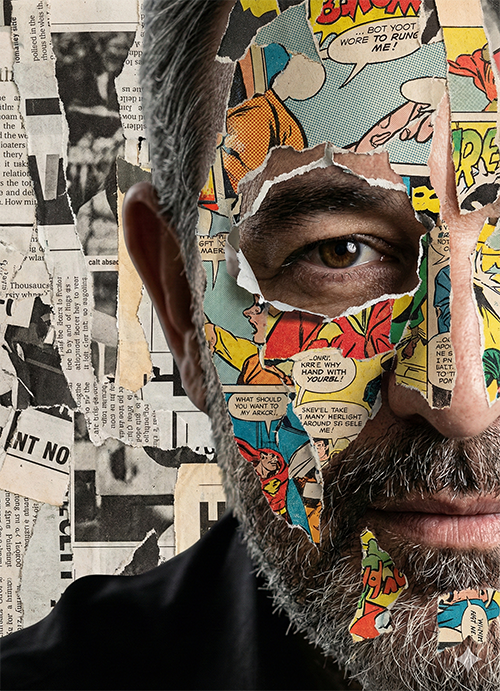
Aqui vai o mesmo prompt completo, agora já ajustado para ter mais camadas de jornal recortado e misturar tiras de histórias em quadrinhos antigas coloridas no collage:
MAIN SUBJECT & IDENTITY – STRICT PHOTO MATCH
Use the uploaded portrait photo as the only face and character reference when generating the image. The model must copy 100% of the visual characteristics from that photo at render time, including: same gender, same age impression, same overall proportions, same facial features and bone structure (jawline, cheekbones, chin, nose, eyes, eyelids, eyebrows, lips, ears), same skin tone and texture, and any unique marks such as moles, freckles, scars, wrinkles, or pores. Preserve the exact hairstyle shape, hairline, volume, and direction of the hair from the reference photo. Keep the same facial expression, gaze direction, mouth position, and emotional nuance as in the original. Do not change gender, do not make the character younger or older, and do not beautify or stylize the face in a way that alters identity; the generated face must look like the exact same person as in the uploaded photo.
COMPOSITION & CROPPING – HALF FACE ONLY
Tight vertical close‑up portrait showing only half of the face, exactly like the reference collage image. The frame is cropped so that the face fills the height of the canvas, from forehead to chin, with just one eye, part of the nose, and the mouth visible. The inner edge of the face runs close to the center of the image, while the other side of the head and hair extend out of frame, keeping the same angle and position as the example. Use a 9:16 vertical aspect ratio and maintain the same camera distance and perspective, as if the camera is very close to the subject, focusing on this single half‑face section.
STYLE & MATERIALS – NEWSPAPER AND VINTAGE COMIC COLLAGE
Recreate the entire visible face as if it were constructed from many layers of torn newspaper and old comic‑book pages mixed together. The skin is built from overlapping scraps of black‑and‑white newspapers, different column layouts, fonts, and headlines, combined with colorful fragments from vintage comic strips: speech bubbles, halftone dots, retro frames, and bold primary colors. Increase the density of layers so the surface looks rich and busy, with multiple small pieces stacked on top of each other, some peeling away and casting soft shadows. All text and comic art must be generic and non‑branded, evoking old newspaper print and golden‑age comics without copying recognizable characters or logos.
EYE, LIPS, AND FACIAL FEATURES
The visible eye must match the exact position, scale, and perspective of the example image while keeping the identity of the uploaded person: same eye shape, eyelids, and brow structure as the reference face, but emerging through a ripped opening surrounded by mixed newspaper and comic paper. The iris is detailed, glossy, and realistic, with sharp reflections, framed by long eyelashes and a crisp eyelid crease. Lips are full, glossy, and realistic, matching the mouth shape and expression from the uploaded face, protruding from torn layers of newsprint and colored comic pieces. The nose structure follows the original person’s anatomy but is partially abstracted into layered paper segments, some black‑and‑white, some from vintage comics.
HAIR & OUTER EDGES
Preserve the overall hairstyle shape and direction from the uploaded portrait: same hairline, parting, and flow, but rendered with strips of dark printed paper and curved bands of comic artwork. Along the outer edge of the head and neck, show frayed and torn borders, with multiple layers of newspaper and comic pages visible in cross‑section. Some fragments can show bits of illustrated characters, word balloons, or action lines from old comics, partially cut off and integrated into the hair and background.
LIGHTING & MOOD
Soft, even studio lighting with gentle shadows that enhance the three‑dimensional depth of all the layered paper. Highlights on the eye and lips are slightly stronger to draw attention, while the newspaper and comic surfaces show subtle texture, paper grain, and occasional glossy reflections from colored ink. Overall mood is surreal, vibrant, and artistic, blending realistic portraiture with expressive mixed‑media collage. Color palette combines neutral newspaper grays and beiges with bursts of saturated comic colors—reds, yellows, blues, and greens—distributed across the face in a balanced way.
CAMERA, LENS & DEPTH OF FIELD
Macro‑style close‑up with a portrait or short telephoto lens feel, maintaining natural proportions of the face while filling the frame. Very shallow depth of field so that the eye, nose, and lips are in sharp focus, while outer edges of the collage and deeper paper layers fall slightly out of focus. No wide‑angle distortion; everything should look like a photograph of a real, physical mixed‑media collage assembled on the surface of the face.
QUALITY & DETAILS
Ultra‑high resolution, hyper‑detailed textures for paper fibers, printed ink, halftone dots, and skin. Include micro‑details such as tiny tears, curled corners, overlapping seams, staples or tape marks, and faint shadows between every layer. Ensure clean rendering of comic panels and speech bubbles without obvious repetition or glitching. The final result should feel like a handcrafted, gallery‑grade mixed‑media artwork suitable for an editorial magazine cover or art print.
NEGATIVE PROMPT / CONSTRAINTS
Do not alter the identity, gender, or perceived age of the person from the uploaded reference photo. Avoid flat cartoon or fully illustrated comic‑book faces; the eye and lips must remain highly realistic. No logos of real newspapers, brands, or copyrighted comic characters; all text and drawings must be generic or abstract. Avoid duplicated eyes, misplaced facial features, extra limbs, warped anatomy, or unnatural symmetry. Exclude heavy film grain, motion blur, glitch effects, watermarks, UI elements, and any overlay text that is not part of the collage material itself.
MAIN SUBJECT & IDENTITY – STRICT PHOTO MATCH
Use the uploaded portrait photo as the only face and character reference when generating the image. The model must copy 100% of the visual characteristics from that photo at render time, including: same gender, same age impression, same overall proportions, same facial features and bone structure (jawline, cheekbones, chin, nose, eyes, eyelids, eyebrows, lips, ears), same skin tone and texture, and any unique marks such as moles, freckles, scars, wrinkles, or pores. Preserve the exact hairstyle shape, hairline, volume, and direction of the hair from the reference photo. Keep the same facial expression, gaze direction, mouth position, and emotional nuance as in the original. Do not change gender, do not make the character younger or older, and do not beautify or stylize the face in a way that alters identity; the generated face must look like the exact same person as in the uploaded photo.
COMPOSITION & CROPPING – HALF FACE ONLY
Tight vertical close‑up portrait showing only half of the face, exactly like the reference collage image. The frame is cropped so that the face fills the height of the canvas, from forehead to chin, with just one eye, part of the nose, and the mouth visible. The inner edge of the face runs close to the center of the image, while the other side of the head and hair extend out of frame, keeping the same angle and position as the example. Use a 9:16 vertical aspect ratio and maintain the same camera distance and perspective, as if the camera is very close to the subject, focusing on this single half‑face section.
STYLE & MATERIALS – NEWSPAPER AND VINTAGE COMIC COLLAGE
Recreate the entire visible face as if it were constructed from many layers of torn newspaper and old comic‑book pages mixed together. The skin is built from overlapping scraps of black‑and‑white newspapers, different column layouts, fonts, and headlines, combined with colorful fragments from vintage comic strips: speech bubbles, halftone dots, retro frames, and bold primary colors. Increase the density of layers so the surface looks rich and busy, with multiple small pieces stacked on top of each other, some peeling away and casting soft shadows. All text and comic art must be generic and non‑branded, evoking old newspaper print and golden‑age comics without copying recognizable characters or logos.
EYE, LIPS, AND FACIAL FEATURES
The visible eye must match the exact position, scale, and perspective of the example image while keeping the identity of the uploaded person: same eye shape, eyelids, and brow structure as the reference face, but emerging through a ripped opening surrounded by mixed newspaper and comic paper. The iris is detailed, glossy, and realistic, with sharp reflections, framed by long eyelashes and a crisp eyelid crease. Lips are full, glossy, and realistic, matching the mouth shape and expression from the uploaded face, protruding from torn layers of newsprint and colored comic pieces. The nose structure follows the original person’s anatomy but is partially abstracted into layered paper segments, some black‑and‑white, some from vintage comics.
HAIR & OUTER EDGES
Preserve the overall hairstyle shape and direction from the uploaded portrait: same hairline, parting, and flow, but rendered with strips of dark printed paper and curved bands of comic artwork. Along the outer edge of the head and neck, show frayed and torn borders, with multiple layers of newspaper and comic pages visible in cross‑section. Some fragments can show bits of illustrated characters, word balloons, or action lines from old comics, partially cut off and integrated into the hair and background.
LIGHTING & MOOD
Soft, even studio lighting with gentle shadows that enhance the three‑dimensional depth of all the layered paper. Highlights on the eye and lips are slightly stronger to draw attention, while the newspaper and comic surfaces show subtle texture, paper grain, and occasional glossy reflections from colored ink. Overall mood is surreal, vibrant, and artistic, blending realistic portraiture with expressive mixed‑media collage. Color palette combines neutral newspaper grays and beiges with bursts of saturated comic colors—reds, yellows, blues, and greens—distributed across the face in a balanced way.
CAMERA, LENS & DEPTH OF FIELD
Macro‑style close‑up with a portrait or short telephoto lens feel, maintaining natural proportions of the face while filling the frame. Very shallow depth of field so that the eye, nose, and lips are in sharp focus, while outer edges of the collage and deeper paper layers fall slightly out of focus. No wide‑angle distortion; everything should look like a photograph of a real, physical mixed‑media collage assembled on the surface of the face.
QUALITY & DETAILS
Ultra‑high resolution, hyper‑detailed textures for paper fibers, printed ink, halftone dots, and skin. Include micro‑details such as tiny tears, curled corners, overlapping seams, staples or tape marks, and faint shadows between every layer. Ensure clean rendering of comic panels and speech bubbles without obvious repetition or glitching. The final result should feel like a handcrafted, gallery‑grade mixed‑media artwork suitable for an editorial magazine cover or art print.
NEGATIVE PROMPT / CONSTRAINTS
Do not alter the identity, gender, or perceived age of the person from the uploaded reference photo. Avoid flat cartoon or fully illustrated comic‑book faces; the eye and lips must remain highly realistic. No logos of real newspapers, brands, or copyrighted comic characters; all text and drawings must be generic or abstract. Avoid duplicated eyes, misplaced facial features, extra limbs, warped anatomy, or unnatural symmetry. Exclude heavy film grain, motion blur, glitch effects, watermarks, UI elements, and any overlay text that is not part of the collage material itself.