Comic_art_plano
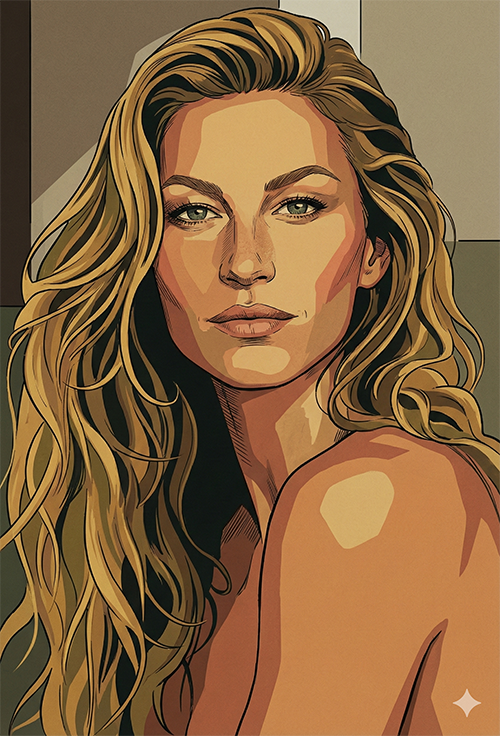
Use the uploaded reference image as the single, locked identity. Keep the person 100% identical to the reference photo: same facial features and bone structure, same skin tone, same gender, same age impression, same hairstyle shape and hairline, and the same overall facial proportions. Preserve the exact facial expression, nose, eyes, lips, jawline, and any unique marks such as moles, freckles, scars, or skin texture. Do not change the gender, do not beautify, do not make the face younger or older, and do not alter the hairstyle structure. This must look like the exact same person from the reference image, only reimagined in a bold graphic comic‑art style.
Create an illustration of this same person with a bold graphic comic‑art approach: clean, vector‑like linework, semi‑realistic proportions, and highly defined contour outlines. Use flat yet rich color blocking with subtle textured shading, a limited but harmonious earthy color palette with muted vintage tones and a matte finish. Apply a hand‑drawn inking effect with controlled cross‑hatching and minimal gradients. Put strong emphasis on detailed gear, fabric folds, and surface textures rendered in stylized illustrative realism. Keep a high contrast between the foreground subject and a simple, minimal background. The overall image should have a crisp graphic poster aesthetic, an adventure‑illustration mood, a modern editorial comic illustration look, precise line discipline, cinematic composition, and polished digital illustration quality.
Lighting
Use clear, readable lighting similar to cinematic comic panels: one main directional light source creating bold, clean areas of light and shadow on the face and clothing. Avoid overly complex bounce light; keep the lighting graphic, with simple shadow shapes that support the contour lines and color blocks while still preserving the natural structure of the face.
Lens and camera
Portrait or mid‑shot framing, showing head and upper torso (or full figure if needed for the adventure feel), at or slightly below eye‑level for a cinematic presence. Perspective should feel like a standard 35–50 mm lens: natural proportions, no extreme distortion, with a strong, centered or rule‑of‑thirds composition that reads like a comic cover or poster.
Details
Crisp, disciplined linework around the face and key features, with controlled line thickness to guide focus. Subtle cross‑hatching only where needed to suggest form, keeping most shading in flat or gently textured color blocks. Gear, clothing seams, and fabric folds should be clearly designed and rendered with stylized realism, while the background remains minimal and unobtrusive. Colors should stay within a muted, earthy, slightly vintage range, avoiding glossy or overly saturated looks, to maintain the editorial comic poster vibe.
Negative prompt
low quality, blurry, pixelated, messy sketch lines, scribbled outlines, overly thick or sloppy linework, muddy colors, oversaturated neon palette, harsh gradients, painterly oil style, watercolor wash, photorealistic rendering, 3D CGI look, anime cel‑shading, cartoonish chibi proportions, changed identity, changed gender, changed hairstyle, different age, beautified face, distorted anatomy, wrong proportions, extra limbs, extra fingers, missing fingers, wrong number of fingers, cluttered or hyper‑detailed background, complex scenery that competes with the subject, text, logos, watermark, UI elements, frame, border.
Create an illustration of this same person with a bold graphic comic‑art approach: clean, vector‑like linework, semi‑realistic proportions, and highly defined contour outlines. Use flat yet rich color blocking with subtle textured shading, a limited but harmonious earthy color palette with muted vintage tones and a matte finish. Apply a hand‑drawn inking effect with controlled cross‑hatching and minimal gradients. Put strong emphasis on detailed gear, fabric folds, and surface textures rendered in stylized illustrative realism. Keep a high contrast between the foreground subject and a simple, minimal background. The overall image should have a crisp graphic poster aesthetic, an adventure‑illustration mood, a modern editorial comic illustration look, precise line discipline, cinematic composition, and polished digital illustration quality.
Lighting
Use clear, readable lighting similar to cinematic comic panels: one main directional light source creating bold, clean areas of light and shadow on the face and clothing. Avoid overly complex bounce light; keep the lighting graphic, with simple shadow shapes that support the contour lines and color blocks while still preserving the natural structure of the face.
Lens and camera
Portrait or mid‑shot framing, showing head and upper torso (or full figure if needed for the adventure feel), at or slightly below eye‑level for a cinematic presence. Perspective should feel like a standard 35–50 mm lens: natural proportions, no extreme distortion, with a strong, centered or rule‑of‑thirds composition that reads like a comic cover or poster.
Details
Crisp, disciplined linework around the face and key features, with controlled line thickness to guide focus. Subtle cross‑hatching only where needed to suggest form, keeping most shading in flat or gently textured color blocks. Gear, clothing seams, and fabric folds should be clearly designed and rendered with stylized realism, while the background remains minimal and unobtrusive. Colors should stay within a muted, earthy, slightly vintage range, avoiding glossy or overly saturated looks, to maintain the editorial comic poster vibe.
Negative prompt
low quality, blurry, pixelated, messy sketch lines, scribbled outlines, overly thick or sloppy linework, muddy colors, oversaturated neon palette, harsh gradients, painterly oil style, watercolor wash, photorealistic rendering, 3D CGI look, anime cel‑shading, cartoonish chibi proportions, changed identity, changed gender, changed hairstyle, different age, beautified face, distorted anatomy, wrong proportions, extra limbs, extra fingers, missing fingers, wrong number of fingers, cluttered or hyper‑detailed background, complex scenery that competes with the subject, text, logos, watermark, UI elements, frame, border.