Comunicacao_laranja
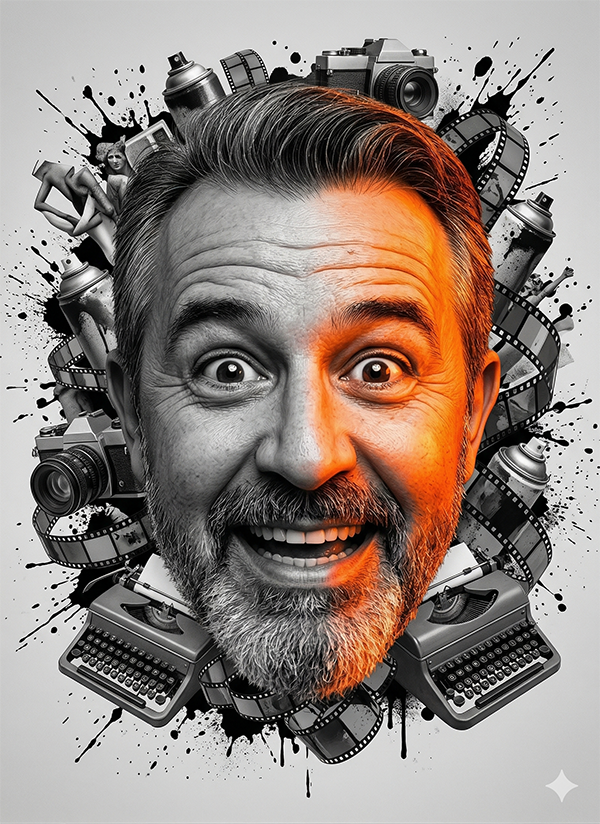
Using my uploaded reference photo as the primary face reference, keep the person’s identity 100% identical to the original image: same facial features, bone structure, skin tone, gender, perceived age, hairstyle shape and overall facial proportions, with no age‑regression or aging. Preserve the exact facial expression, nose, eyes, lips, jawline and any unique marks such as moles, freckles, scars or skin texture, as if it were the same person captured again. Transform this into an ultra‑detailed surreal digital collage where this same face becomes the central stylized face in the composition, with an exaggerated, expressive emotion, but still clearly recognizable as the person from the reference photo.
Around and partially fused with the central face, build a chaotic cluster of objects and human elements: vintage cameras, typewriters, spray cans, film strips, abstract sculptures and fragmented human figures, all interlocking and overlapping in a dynamic, spiraling composition. Use a color palette where the background and most surrounding space are in grayscale (black, white and gray tones), while the central face is illuminated by vivid orange light reflections and orange color accents across the skin, creating a strong focal contrast. Keep black ink splashes, paint bursts and grunge textures exploding outward from the center, now mostly in grayscale, so the orange reflections on the face stand out even more.
Lighting
Use cinematic, high‑contrast lighting: a strong key light from one side, casting bright, warm orange highlights across the face (forehead, cheeks, nose, lips) and deep shadows on the opposite side for dramatic depth. The orange reflections should feel like colored light hitting a realistically textured face within an otherwise monochrome world. Metallic and glossy objects in the collage can pick up subtle orange glows, but the background and most elements remain grayscale to preserve the color focus on the face.
Camera, lens and composition
Use a centered composition on a clean solid grayscale background (gradient or flat tones of gray), with the central face and object cluster occupying the middle of the frame, vertically stretched like a poster. Frame the subject as a medium close‑up so the identity from the uploaded photo is clear. Simulate a neutral portrait lens equivalent around 50–85 mm to maintain natural proportions for the base face before collage transformations, rendered in 8K resolution with sharp focus on the central cluster and gentle falloff toward the edges.
Style and detail
Modern digital collage / mixed‑media style: layered photographic fragments, 3D‑like objects and graphic illustration elements combined with grayscale ink splashes, paint bursts and grunge overlays. Apply halftone dots, subtle film‑grain and scratch textures mainly in grayscale, while the face receives detailed orange reflections and warm highlights, preserving natural skin texture under the stylized lighting. The overall look should feel like a contemporary gallery‑style surreal collage, where the only strong color is the orange light on the face, making it the emotional and visual center.
Negative prompt
different person, altered identity, changed gender, younger or older face, changed nose, eyes, lips or jawline, different skin tone, different hairstyle, missing or altered moles, freckles or scars, fully colored background, cyan or bright blue background, rainbow colors everywhere, flat low‑contrast grayscale, no orange reflections on the face, washed‑out lighting, minimal elements with no collage, low resolution, blurry details, pixelation, heavy compression artifacts, visible copy‑paste edges around objects, text blocks, big logos, watermarks, frames.
Around and partially fused with the central face, build a chaotic cluster of objects and human elements: vintage cameras, typewriters, spray cans, film strips, abstract sculptures and fragmented human figures, all interlocking and overlapping in a dynamic, spiraling composition. Use a color palette where the background and most surrounding space are in grayscale (black, white and gray tones), while the central face is illuminated by vivid orange light reflections and orange color accents across the skin, creating a strong focal contrast. Keep black ink splashes, paint bursts and grunge textures exploding outward from the center, now mostly in grayscale, so the orange reflections on the face stand out even more.
Lighting
Use cinematic, high‑contrast lighting: a strong key light from one side, casting bright, warm orange highlights across the face (forehead, cheeks, nose, lips) and deep shadows on the opposite side for dramatic depth. The orange reflections should feel like colored light hitting a realistically textured face within an otherwise monochrome world. Metallic and glossy objects in the collage can pick up subtle orange glows, but the background and most elements remain grayscale to preserve the color focus on the face.
Camera, lens and composition
Use a centered composition on a clean solid grayscale background (gradient or flat tones of gray), with the central face and object cluster occupying the middle of the frame, vertically stretched like a poster. Frame the subject as a medium close‑up so the identity from the uploaded photo is clear. Simulate a neutral portrait lens equivalent around 50–85 mm to maintain natural proportions for the base face before collage transformations, rendered in 8K resolution with sharp focus on the central cluster and gentle falloff toward the edges.
Style and detail
Modern digital collage / mixed‑media style: layered photographic fragments, 3D‑like objects and graphic illustration elements combined with grayscale ink splashes, paint bursts and grunge overlays. Apply halftone dots, subtle film‑grain and scratch textures mainly in grayscale, while the face receives detailed orange reflections and warm highlights, preserving natural skin texture under the stylized lighting. The overall look should feel like a contemporary gallery‑style surreal collage, where the only strong color is the orange light on the face, making it the emotional and visual center.
Negative prompt
different person, altered identity, changed gender, younger or older face, changed nose, eyes, lips or jawline, different skin tone, different hairstyle, missing or altered moles, freckles or scars, fully colored background, cyan or bright blue background, rainbow colors everywhere, flat low‑contrast grayscale, no orange reflections on the face, washed‑out lighting, minimal elements with no collage, low resolution, blurry details, pixelation, heavy compression artifacts, visible copy‑paste edges around objects, text blocks, big logos, watermarks, frames.