Dark_mode
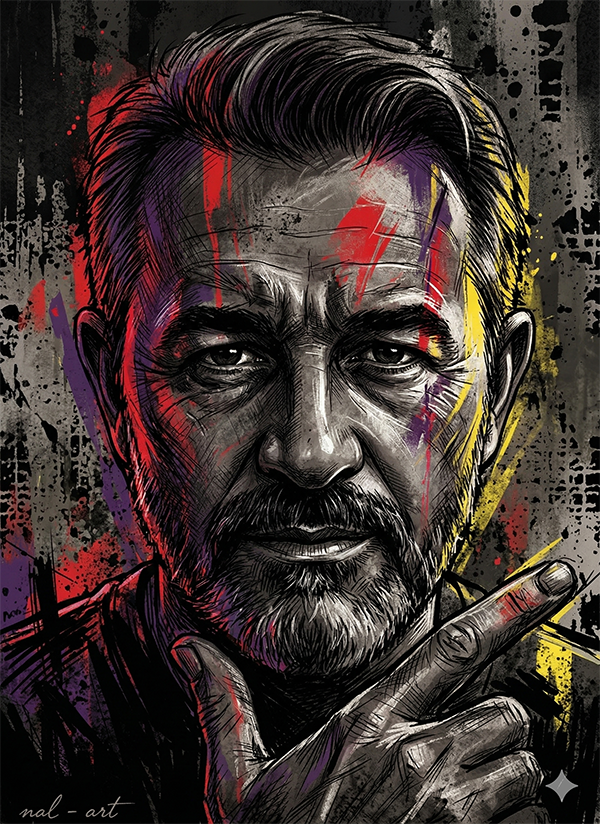
Using my uploaded reference photo as the primary face and body reference, keep the person’s identity 100% identical to the original image: same facial features, bone structure, skin tone, gender, perceived age, hairstyle shape and overall facial proportions, with no age‑regression or aging. Preserve the exact facial expression, nose, eyes, lips, jawline and any unique marks like moles, freckles, scars or skin texture, as if it were the same person captured again, with the same or very similar pose and hand position as in the photo. Create a creative abstract grunge digital illustration variation: the face and hands are rendered with intense linework and rough coloring, inspired by the reference style, but with a new, original composition and background.
The skin tone of the face should be pushed into dark, almost monochrome tones, close to black‑and‑white, built with thick, random brushstrokes, rough cross‑hatching and scratchy linework to create a strong sense of depth, texture and intense detail in the facial skin. Emphasize sharp shadows and bright highlights to clearly define cheekbones, jaw, nose bridge and eye sockets, giving a powerful, almost 3D high‑contrast look. The overall color palette must be dominated by dark, high‑contrast colors such as black, bright red, deep purple and bright yellow, used in bold accents and streaks around and over the face to create drama, chaos and energy.
Draw the hands with the same identity and pose as in the reference photo (expressive, pointing or gesturing), using intricate linework and rough brushstrokes on the fingers, knuckles and skin folds to maintain a strong sense of realism mixed with grunge abstraction. Ensure the facial expression is intense and full of character, with piercing, dark eyes as the main focal point of the composition. Add a small cursive signature “nal - art” in the bottom left corner of the canvas. Use poses similar to the original photo and integrate a painted, textured background that feels like part of the illustration rather than a flat backdrop.
Lighting
Use dramatic, high‑contrast lighting: a strong key light from one side (slightly above eye level) creating deep shadows on the opposite side of the face and under the cheekbones, nose and jawline, emphasizing bone structure. Let the background remain dark and textured (black, deep purple, or very dark red) with grunge textures, paint splatters and distressed patterns, so the bright reds, yellows and highlights on the face and hands pop aggressively against it.
Camera, lens and composition
Medium close‑up portrait composition: frame the subject from the mid‑torso or chest up, with the face and hands large in the frame and clearly visible, similar to the pose in the reference photo. Use a portrait lens equivalent around 50–85 mm for natural proportions, no distortion, as if this were a DSLR portrait later overpainted into a grunge illustration. Keep the subject centered or slightly off‑center with the hands entering the frame dynamically, guiding the eye back toward the face and the intense eyes as the focal point.
Style and detail
Abstract grunge digital illustration style: heavy textures, layered brushstrokes, splatters, drips, rough halftone‑like noise and eroded edges around the subject. Use thick, sketchy outlines around the face and hands, combined with chaotic inner linework and cross‑hatching to suggest pores, wrinkles and micro‑textures, blending realism in facial structure with expressive abstraction in the color fields. Let bright red, deep purple and bright yellow appear as bold strokes, glows, streaks and graphic accents around the eyes, cheekbones, hands and background, adding a sense of motion and emotional turbulence. The final illustration should feel strong, expressive, full of energy, like a modern graphic poster or album cover with a gritty, artistic mood.
Negative prompt
different person, altered identity, changed gender, younger or older face, slimmed or widened face, changed nose, eyes, lips or jawline, different skin tone, different hairstyle, missing or altered moles, freckles or scars, soft beauty‑filter skin, smooth airbrushed painting, pastel low‑contrast colors, flat cartoon style, anime or chibi, 3D CGI render, plastic toy look, clean studio portrait without grunge, low texture background, washed‑out lighting, overexposed or flat lighting, no hands, hands hidden or cropped, completely different pose, random typography, big logos, UI elements, large text blocks, watermarks, frames, low resolution, blurry face, pixelation or heavy compression artifacts.
The skin tone of the face should be pushed into dark, almost monochrome tones, close to black‑and‑white, built with thick, random brushstrokes, rough cross‑hatching and scratchy linework to create a strong sense of depth, texture and intense detail in the facial skin. Emphasize sharp shadows and bright highlights to clearly define cheekbones, jaw, nose bridge and eye sockets, giving a powerful, almost 3D high‑contrast look. The overall color palette must be dominated by dark, high‑contrast colors such as black, bright red, deep purple and bright yellow, used in bold accents and streaks around and over the face to create drama, chaos and energy.
Draw the hands with the same identity and pose as in the reference photo (expressive, pointing or gesturing), using intricate linework and rough brushstrokes on the fingers, knuckles and skin folds to maintain a strong sense of realism mixed with grunge abstraction. Ensure the facial expression is intense and full of character, with piercing, dark eyes as the main focal point of the composition. Add a small cursive signature “nal - art” in the bottom left corner of the canvas. Use poses similar to the original photo and integrate a painted, textured background that feels like part of the illustration rather than a flat backdrop.
Lighting
Use dramatic, high‑contrast lighting: a strong key light from one side (slightly above eye level) creating deep shadows on the opposite side of the face and under the cheekbones, nose and jawline, emphasizing bone structure. Let the background remain dark and textured (black, deep purple, or very dark red) with grunge textures, paint splatters and distressed patterns, so the bright reds, yellows and highlights on the face and hands pop aggressively against it.
Camera, lens and composition
Medium close‑up portrait composition: frame the subject from the mid‑torso or chest up, with the face and hands large in the frame and clearly visible, similar to the pose in the reference photo. Use a portrait lens equivalent around 50–85 mm for natural proportions, no distortion, as if this were a DSLR portrait later overpainted into a grunge illustration. Keep the subject centered or slightly off‑center with the hands entering the frame dynamically, guiding the eye back toward the face and the intense eyes as the focal point.
Style and detail
Abstract grunge digital illustration style: heavy textures, layered brushstrokes, splatters, drips, rough halftone‑like noise and eroded edges around the subject. Use thick, sketchy outlines around the face and hands, combined with chaotic inner linework and cross‑hatching to suggest pores, wrinkles and micro‑textures, blending realism in facial structure with expressive abstraction in the color fields. Let bright red, deep purple and bright yellow appear as bold strokes, glows, streaks and graphic accents around the eyes, cheekbones, hands and background, adding a sense of motion and emotional turbulence. The final illustration should feel strong, expressive, full of energy, like a modern graphic poster or album cover with a gritty, artistic mood.
Negative prompt
different person, altered identity, changed gender, younger or older face, slimmed or widened face, changed nose, eyes, lips or jawline, different skin tone, different hairstyle, missing or altered moles, freckles or scars, soft beauty‑filter skin, smooth airbrushed painting, pastel low‑contrast colors, flat cartoon style, anime or chibi, 3D CGI render, plastic toy look, clean studio portrait without grunge, low texture background, washed‑out lighting, overexposed or flat lighting, no hands, hands hidden or cropped, completely different pose, random typography, big logos, UI elements, large text blocks, watermarks, frames, low resolution, blurry face, pixelation or heavy compression artifacts.