Desenho_rebuscado
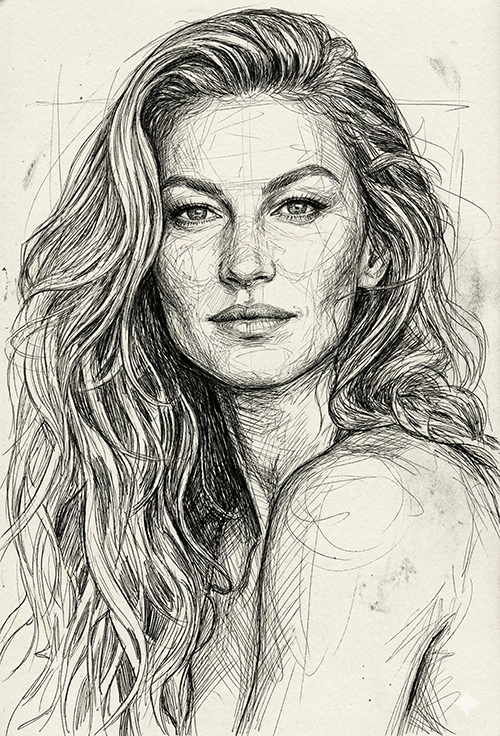
Use the uploaded photo as the main and strict face and character reference.
Keep the person’s identity 100% identical to the uploaded photo: same facial features, bone structure, skin tone values translated into grayscale, gender, age impression, hairstyle shape, hairline, and overall facial proportions. Do not change the person’s gender or make the face younger or older. Preserve the exact facial expression, nose, eyes, eyelids, eyebrows, lips, jawline, chin, ears, and any unique marks such as moles, freckles, scars, or visible skin texture so the face remains instantly recognizable as the same real person from the photo.
Do not idealize or beautify the face in a way that alters its structure. Do not slim or stretch the face, do not change eye size or spacing, do not modify nose shape or lip volume, and do not alter the hairstyle family, volume, direction, or hairline – only translate them into the black‑and‑white sketch style.
Now apply this updated visual style to the portrait:
Black‑and‑white, grayscale only, with no color at all. Highly detailed hybrid pencil‑ink sketch, dense scratchy linework, lots of overlapping construction lines, visible corrections and ghost lines, strong cross‑hatching and scribbled shading, loose hand‑drawn contours, messy and expressive strokes that still keep the facial structure accurate. The illustration should look like an elaborate rough draft or concept sketch, not a clean final lineart.
Increase line density and complexity:
Use many varied line weights and directions around the eyes, nose, mouth, jawline, hair and neck, creating a rich web of strokes that describes volume and texture. Keep some areas intentionally over‑worked with extra hatching and scribbles, especially in the hair and background edges, to reinforce the raw sketchbook feeling while maintaining a clear, readable face.
Background and tone behavior:
Simple, light gray or off‑white paper tone, with pencil grain and smudges visible, minimal explicit objects or scenery. Suggest only a few sketchy background hints or framing lines; avoid detailed environments so the focus stays on the portrait and the layered scribbled strokes.
Lighting and mood:
Use soft, implied lighting built mainly through hatching density and value: darker, denser lines in shadow areas, lighter and more open strokes on lit planes. The overall mood should feel intimate and artistic, like a page from an artist’s sketchbook capturing a real person from life.
Optional short negative prompt (if the interface allows):
“no color, no watercolor wash, no flat gray fill, no clean vector lineart, no smooth airbrushed shading, no photorealistic photo look, no anime, no cartoon style, no 3D render, no low‑detail or blurry face, no simplified emoji‑like features, no busy realistic background, no text, no logos, no watermarks, no UI elements.”
Keep the person’s identity 100% identical to the uploaded photo: same facial features, bone structure, skin tone values translated into grayscale, gender, age impression, hairstyle shape, hairline, and overall facial proportions. Do not change the person’s gender or make the face younger or older. Preserve the exact facial expression, nose, eyes, eyelids, eyebrows, lips, jawline, chin, ears, and any unique marks such as moles, freckles, scars, or visible skin texture so the face remains instantly recognizable as the same real person from the photo.
Do not idealize or beautify the face in a way that alters its structure. Do not slim or stretch the face, do not change eye size or spacing, do not modify nose shape or lip volume, and do not alter the hairstyle family, volume, direction, or hairline – only translate them into the black‑and‑white sketch style.
Now apply this updated visual style to the portrait:
Black‑and‑white, grayscale only, with no color at all. Highly detailed hybrid pencil‑ink sketch, dense scratchy linework, lots of overlapping construction lines, visible corrections and ghost lines, strong cross‑hatching and scribbled shading, loose hand‑drawn contours, messy and expressive strokes that still keep the facial structure accurate. The illustration should look like an elaborate rough draft or concept sketch, not a clean final lineart.
Increase line density and complexity:
Use many varied line weights and directions around the eyes, nose, mouth, jawline, hair and neck, creating a rich web of strokes that describes volume and texture. Keep some areas intentionally over‑worked with extra hatching and scribbles, especially in the hair and background edges, to reinforce the raw sketchbook feeling while maintaining a clear, readable face.
Background and tone behavior:
Simple, light gray or off‑white paper tone, with pencil grain and smudges visible, minimal explicit objects or scenery. Suggest only a few sketchy background hints or framing lines; avoid detailed environments so the focus stays on the portrait and the layered scribbled strokes.
Lighting and mood:
Use soft, implied lighting built mainly through hatching density and value: darker, denser lines in shadow areas, lighter and more open strokes on lit planes. The overall mood should feel intimate and artistic, like a page from an artist’s sketchbook capturing a real person from life.
Optional short negative prompt (if the interface allows):
“no color, no watercolor wash, no flat gray fill, no clean vector lineart, no smooth airbrushed shading, no photorealistic photo look, no anime, no cartoon style, no 3D render, no low‑detail or blurry face, no simplified emoji‑like features, no busy realistic background, no text, no logos, no watermarks, no UI elements.”