Escultura_monumental
Main instruction (identity lock + transformation)
Use the uploaded image as the primary reference. Preserve 100% of the original subject’s identity: exact facial structure (if a person), silhouette, pose and gesture, clothing design and details, object shapes, proportions, perspective, expression, and gaze direction. Do not redesign the subject, do not stylize into cartoon, do not change era or costume. The viewer must instantly recognize the original image — only the material and environment change.
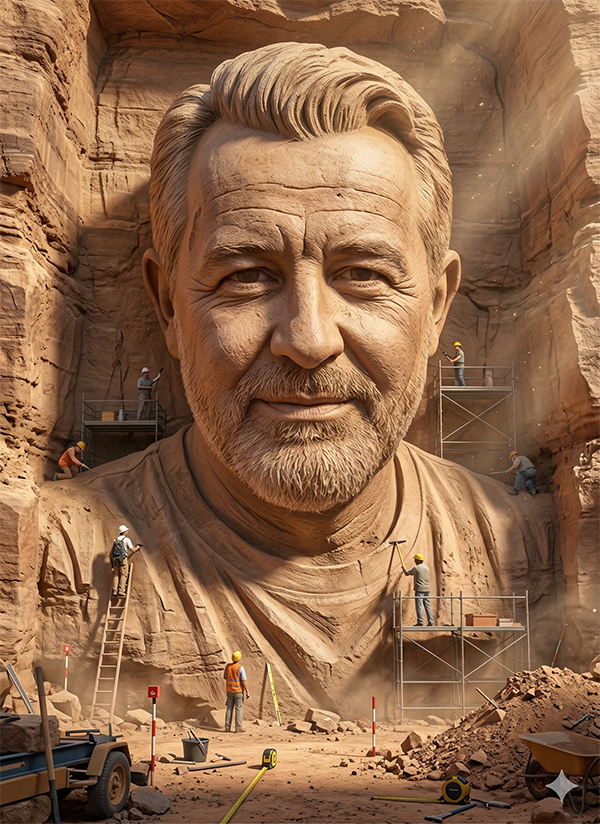
Transform the uploaded image into an archaeological excavation discovery where the subject is not a separate object but a colossal monument carved directly into the surrounding rock formation at a dig site. The subject is physically part of the cliff, canyon wall, or exposed rock face.
Positive prompt (what to generate)
Reconstruct the entire subject as a massive rock monument made from the same geological material as the excavation site itself. The subject is carved sedimentary stone: chiseled sandstone, stratified limestone layers, fractured cliff rock, with eroded mineral surfaces. No original materials remain visible; there is no paint, no metal, no plastic, no fabric — everything becomes geological material.
All surfaces must show realistic geological behavior: erosion patterns, mineral veins, sediment layers, tool chisel marks, weathered cracks, small rock fractures, chipped edges, dust accumulation in crevices, partially buried areas, and broken corners. Clothing folds turn into carved stone ridges, hair becomes rock ridges and stratified bands, skin becomes smooth but weathered stone planes. Nothing looks smooth or polished like marble; it must feel ancient, eroded, and long-buried, not freshly sculpted.
The monument is fully integrated into the environment. It is carved directly into the canyon wall or cliff face, with rock from the environment visibly flowing into and through the subject: the cliff wall becomes the subject, surrounding rock wraps into the form, some parts are still buried in the stone, and certain areas are only partially revealed by excavation. No floating statue, no pedestal — it must clearly look like workers are still uncovering a giant rock carving.
Add a realistic archaeological excavation site around the monument, populated by small workers to emphasize scale: tiny archaeologists and laborers in helmets and safety gear standing on scaffolding platforms, climbing ladders, working on ropes and harnesses, moving around wooden supports and metal scaffolding frames, using digging tools and brushes near the rock surface. Include survey markings on the stone, numbered tags, measuring tapes, and excavation tarps hanging or folded nearby. Add floodlights or portable work lights (if desired) or shafts of warm sunlight cutting through dust-filled air, with fine dust particles visible in the light beams. The workers must appear significantly smaller than the monument to communicate massive scale.
Environment and atmosphere: a realistic open-air dig site in a rocky canyon or desert cliff area, with warm canyon sunlight, volumetric dust beams, soft ambient bounce light from the rock walls, and realistic shadows that follow the rock relief. Slight atmospheric haze in the distance, dust in the air near the excavation area, piles of rubble and stone blocks at the base of the monument, loose dirt and tools scattered around.
Camera and style: wide-angle documentary photograph, cinematic realism, environmental storytelling, taken from ground level or slightly below to enhance the monument’s scale. Photorealistic rendering with ultra-detailed rock microtexture, porous stone surfaces, granular mineral breakup, natural color variation in ochre, tan, rust, and gray tones, dirt and sand accumulation, and erosion gradients across the monument. The final image should look like a real archaeological expedition photograph from a film crew or documentary team, not fantasy art or digital illustration.
Quality tags: photorealistic, cinematic realism, documentary photography, natural lighting, ultra-detailed rock textures, massive scale, high resolution, sharp focus on key areas of the monument and workers.
Negative prompt (what to avoid)
statue on a platform, pedestal, museum plinth, clean gallery space, original materials still visible, fabric texture, plastic, painted surfaces, metal armor, glossy surfaces, smooth polished marble, polished stone, modern sculpture appearance, newly carved look, fantasy glow, magical light rays, neon lighting, studio lighting setup, cartoon style, anime, illustration, concept art, flat shading, low detail, low resolution, blurry, noisy, CGI-looking rock, fake plastic rock, soft human skin texture, visible pores, real hair strands, beauty filters, deformed anatomy, redesigned subject, changed pose, changed costume, changed era, different person, small chibi characters, exaggerated proportions, floating statue, disconnected from cliff, indoor museum setting, art installation look.
Use the uploaded image as the primary reference. Preserve 100% of the original subject’s identity: exact facial structure (if a person), silhouette, pose and gesture, clothing design and details, object shapes, proportions, perspective, expression, and gaze direction. Do not redesign the subject, do not stylize into cartoon, do not change era or costume. The viewer must instantly recognize the original image — only the material and environment change.
Transform the uploaded image into an archaeological excavation discovery where the subject is not a separate object but a colossal monument carved directly into the surrounding rock formation at a dig site. The subject is physically part of the cliff, canyon wall, or exposed rock face.
Positive prompt (what to generate)
Reconstruct the entire subject as a massive rock monument made from the same geological material as the excavation site itself. The subject is carved sedimentary stone: chiseled sandstone, stratified limestone layers, fractured cliff rock, with eroded mineral surfaces. No original materials remain visible; there is no paint, no metal, no plastic, no fabric — everything becomes geological material.
All surfaces must show realistic geological behavior: erosion patterns, mineral veins, sediment layers, tool chisel marks, weathered cracks, small rock fractures, chipped edges, dust accumulation in crevices, partially buried areas, and broken corners. Clothing folds turn into carved stone ridges, hair becomes rock ridges and stratified bands, skin becomes smooth but weathered stone planes. Nothing looks smooth or polished like marble; it must feel ancient, eroded, and long-buried, not freshly sculpted.
The monument is fully integrated into the environment. It is carved directly into the canyon wall or cliff face, with rock from the environment visibly flowing into and through the subject: the cliff wall becomes the subject, surrounding rock wraps into the form, some parts are still buried in the stone, and certain areas are only partially revealed by excavation. No floating statue, no pedestal — it must clearly look like workers are still uncovering a giant rock carving.
Add a realistic archaeological excavation site around the monument, populated by small workers to emphasize scale: tiny archaeologists and laborers in helmets and safety gear standing on scaffolding platforms, climbing ladders, working on ropes and harnesses, moving around wooden supports and metal scaffolding frames, using digging tools and brushes near the rock surface. Include survey markings on the stone, numbered tags, measuring tapes, and excavation tarps hanging or folded nearby. Add floodlights or portable work lights (if desired) or shafts of warm sunlight cutting through dust-filled air, with fine dust particles visible in the light beams. The workers must appear significantly smaller than the monument to communicate massive scale.
Environment and atmosphere: a realistic open-air dig site in a rocky canyon or desert cliff area, with warm canyon sunlight, volumetric dust beams, soft ambient bounce light from the rock walls, and realistic shadows that follow the rock relief. Slight atmospheric haze in the distance, dust in the air near the excavation area, piles of rubble and stone blocks at the base of the monument, loose dirt and tools scattered around.
Camera and style: wide-angle documentary photograph, cinematic realism, environmental storytelling, taken from ground level or slightly below to enhance the monument’s scale. Photorealistic rendering with ultra-detailed rock microtexture, porous stone surfaces, granular mineral breakup, natural color variation in ochre, tan, rust, and gray tones, dirt and sand accumulation, and erosion gradients across the monument. The final image should look like a real archaeological expedition photograph from a film crew or documentary team, not fantasy art or digital illustration.
Quality tags: photorealistic, cinematic realism, documentary photography, natural lighting, ultra-detailed rock textures, massive scale, high resolution, sharp focus on key areas of the monument and workers.
Negative prompt (what to avoid)
statue on a platform, pedestal, museum plinth, clean gallery space, original materials still visible, fabric texture, plastic, painted surfaces, metal armor, glossy surfaces, smooth polished marble, polished stone, modern sculpture appearance, newly carved look, fantasy glow, magical light rays, neon lighting, studio lighting setup, cartoon style, anime, illustration, concept art, flat shading, low detail, low resolution, blurry, noisy, CGI-looking rock, fake plastic rock, soft human skin texture, visible pores, real hair strands, beauty filters, deformed anatomy, redesigned subject, changed pose, changed costume, changed era, different person, small chibi characters, exaggerated proportions, floating statue, disconnected from cliff, indoor museum setting, art installation look.