Flat_halftone
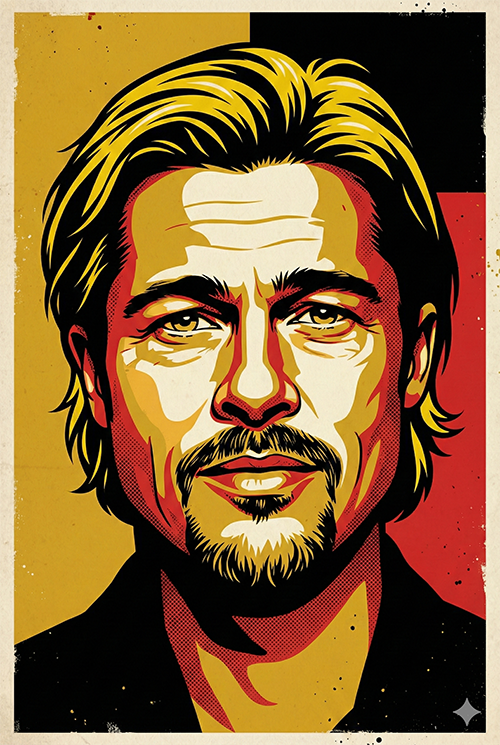
Use the uploaded photo as the ONLY and EXCLUSIVE identity reference. The retro pop‑art poster must clearly depict the SAME REAL PERSON from the uploaded image, not a generic character or a different person. Face, hair and gender expression must remain 100% identical to the uploaded photo (critical identity lock: do not change facial structure, hairstyle family, age, gender or ethnicity).
Preserve 100% of the facial traits from the uploaded photo: same facial structure and proportions, head shape, jawline, chin, cheekbones, nose, mouth, lips thickness, eye shape, eyelid type, eyebrow shape and density, and natural skin tone. Respect the same hairstyle family (length, volume, direction, hairline and overall silhouette), only simplifying it into stylized graphic shapes while keeping it instantly recognizable as the same hair from the reference. Respect the original gender from the uploaded photo 100%, maintaining the same gender expression, body type and overall look; no feminization, no extra masculinization, no androgynous shift and no ethnicity change.
Convert the person into a retro pop‑art poster illustration style while keeping their identity perfectly recognizable. Use bold graphic composition with a strong, centralized portrait that fills most of the frame. Apply high‑contrast color blocking with a strictly limited warm color palette: mustard yellow, red, black and cream as the dominant colors, with no extra hues unless absolutely necessary for subtle variation. Use thick, clean, vector‑like outlines around the face, hair and major shapes, avoiding thin sketchy lines or messy strokes.
Render the shading as flat and graphic with subtle halftone texture in the shadows and midtones, simulating old‑school printed dots. Add a vintage screen‑print aesthetic with slightly imperfect ink coverage, distressed paper grain and soft paint splatter overlays, especially around the edges and background areas, without hiding or deforming the face. Lighting must feel dramatic and frontal, creating strong shadow shapes that emphasize the facial features, nose, lips and jaw while still reading as stylized realism instead of full cartoon.
Keep the background minimalist and uncluttered, using large blocks of mustard yellow, red, black or cream to frame the face and create a modern pop‑art meets mid‑century poster design. Aim for a cinematic bold look with clear graphic hierarchy, where the person’s face and hair are the absolute main focus. The final result must feel like a high‑impact editorial illustration suitable for a magazine cover or gallery print, with clean composition and strong silhouette.
Optional text elements may appear in the composition but must never cover or distort the face, and should follow the retro pop‑art poster aesthetic if used. Avoid tiny unreadable typography or UI‑like overlays. The overall look must be stylized realism in pop‑art form, not photorealistic photography, not anime and not 3D render.
Negative prompt (optional, but recommended): photorealistic, soft pastel anime style, 3D render, glossy skin, watercolor blur, low contrast, messy composition, thin sketch lines, muted colors, realistic photography lighting, hyper‑detailed pores, cluttered background, different person, changed hairstyle, incorrect gender, distorted anatomy, deformed face, extra limbs, extra heads, logos, watermarks, random UI elements, heavy noise, pixelation.
Do NOT change the subject’s facial identity, hairstyle family or gender: the pop‑art portrait must remain instantly recognizable as the SAME REAL PERSON from the uploaded photo, with 100% identity consistency.
Preserve 100% of the facial traits from the uploaded photo: same facial structure and proportions, head shape, jawline, chin, cheekbones, nose, mouth, lips thickness, eye shape, eyelid type, eyebrow shape and density, and natural skin tone. Respect the same hairstyle family (length, volume, direction, hairline and overall silhouette), only simplifying it into stylized graphic shapes while keeping it instantly recognizable as the same hair from the reference. Respect the original gender from the uploaded photo 100%, maintaining the same gender expression, body type and overall look; no feminization, no extra masculinization, no androgynous shift and no ethnicity change.
Convert the person into a retro pop‑art poster illustration style while keeping their identity perfectly recognizable. Use bold graphic composition with a strong, centralized portrait that fills most of the frame. Apply high‑contrast color blocking with a strictly limited warm color palette: mustard yellow, red, black and cream as the dominant colors, with no extra hues unless absolutely necessary for subtle variation. Use thick, clean, vector‑like outlines around the face, hair and major shapes, avoiding thin sketchy lines or messy strokes.
Render the shading as flat and graphic with subtle halftone texture in the shadows and midtones, simulating old‑school printed dots. Add a vintage screen‑print aesthetic with slightly imperfect ink coverage, distressed paper grain and soft paint splatter overlays, especially around the edges and background areas, without hiding or deforming the face. Lighting must feel dramatic and frontal, creating strong shadow shapes that emphasize the facial features, nose, lips and jaw while still reading as stylized realism instead of full cartoon.
Keep the background minimalist and uncluttered, using large blocks of mustard yellow, red, black or cream to frame the face and create a modern pop‑art meets mid‑century poster design. Aim for a cinematic bold look with clear graphic hierarchy, where the person’s face and hair are the absolute main focus. The final result must feel like a high‑impact editorial illustration suitable for a magazine cover or gallery print, with clean composition and strong silhouette.
Optional text elements may appear in the composition but must never cover or distort the face, and should follow the retro pop‑art poster aesthetic if used. Avoid tiny unreadable typography or UI‑like overlays. The overall look must be stylized realism in pop‑art form, not photorealistic photography, not anime and not 3D render.
Negative prompt (optional, but recommended): photorealistic, soft pastel anime style, 3D render, glossy skin, watercolor blur, low contrast, messy composition, thin sketch lines, muted colors, realistic photography lighting, hyper‑detailed pores, cluttered background, different person, changed hairstyle, incorrect gender, distorted anatomy, deformed face, extra limbs, extra heads, logos, watermarks, random UI elements, heavy noise, pixelation.
Do NOT change the subject’s facial identity, hairstyle family or gender: the pop‑art portrait must remain instantly recognizable as the SAME REAL PERSON from the uploaded photo, with 100% identity consistency.