Ilustracao_real
Use the uploaded image as the only identity reference.
Identity lock – face, hair, gender (100% from photo)
Keep the exact same face and likeness from the reference photo, preserving 100% of facial structure, proportions, and base expression.
Maintain the same eye shape and distance, eyelids, eyebrows, nose, lips and mouth shape, jawline, cheekbones, chin, ears, apparent age, and gender expression exactly as in the original.
Preserve the same hairstyle family (length, volume, silhouette, hairline, parting, general flow), only stylized into graphic shapes and strokes without redesigning the haircut or beard style.
Core style – bold vector-painting aesthetics
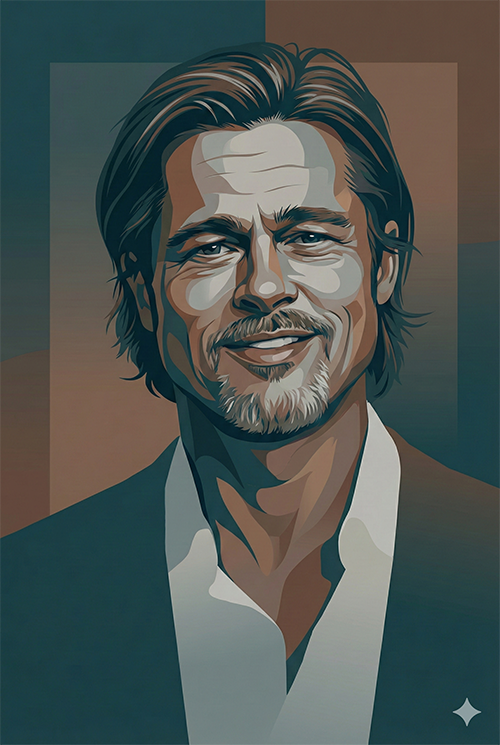
Transform the portrait into a highly stylized realistic illustration with bold vector‑painting aesthetics.
Build the face from clean, sharp‑edged shapes and layered color blocks that define facial planes and anatomy (forehead, cheekbones, nose bridge, jaw, neck).
Proportions stay semi‑realistic, but forms are simplified into graphic planes with minimal soft gradients.
Lighting, contrast, and facial focus
Use strong contrast lighting with dramatic shadows and sculpted highlights, creating clear separation between light and dark values.
Keep eyes expressive and intense: crisp shapes, clear irises and pupils, strong catchlights, while respecting the real eye shape and spacing.
Facial details (nose edges, lips, eyelids, brow ridge) should be described with stacked value shapes rather than blended airbrush.
Hair, beard, and texture
Render hair and beard using flowing, graphic brush strokes: curved, directional strokes that follow the real hairstyle and beard pattern from the photo.
Use controlled texture in hair and beard—clusters of strokes and shapes—while keeping the overall read clean and design‑driven.
Color palette and finish
Apply a muted cinematic color palette: deep teal, warm browns, soft grays, and a few accent tones, with minimal gradients.
Finish should feel smooth and matte, with poster‑quality clarity and high visual impact—no obvious brush noise or grain.
Background: simple, muted, with large soft color blocks or subtle gradients to frame the face without distraction, inspired by editorial and graphic novel covers.
Overall mood and quality
Overall style: modern digital illustration inspired by editorial art and graphic novels—painterly but clean, crisp contours, and strong silhouette.
The final result should feel like a high‑end magazine or streaming‑series poster: striking, readable at thumbnail, and detailed up close.
🚫 NEGATIVE PROMPT – avoid
No photorealistic skin rendering, heavy texture, or noisy grain; avoid soft airbrush, messy painterly strokes, or low‑contrast flat lighting.
Avoid anime, manga, cartoon flat look, low‑detail vector icons, 3D/CGI style, glossy reflections, neon saturation, or UI/infographic style graphics.
Identity lock – face, hair, gender (100% from photo)
Keep the exact same face and likeness from the reference photo, preserving 100% of facial structure, proportions, and base expression.
Maintain the same eye shape and distance, eyelids, eyebrows, nose, lips and mouth shape, jawline, cheekbones, chin, ears, apparent age, and gender expression exactly as in the original.
Preserve the same hairstyle family (length, volume, silhouette, hairline, parting, general flow), only stylized into graphic shapes and strokes without redesigning the haircut or beard style.
Core style – bold vector-painting aesthetics
Transform the portrait into a highly stylized realistic illustration with bold vector‑painting aesthetics.
Build the face from clean, sharp‑edged shapes and layered color blocks that define facial planes and anatomy (forehead, cheekbones, nose bridge, jaw, neck).
Proportions stay semi‑realistic, but forms are simplified into graphic planes with minimal soft gradients.
Lighting, contrast, and facial focus
Use strong contrast lighting with dramatic shadows and sculpted highlights, creating clear separation between light and dark values.
Keep eyes expressive and intense: crisp shapes, clear irises and pupils, strong catchlights, while respecting the real eye shape and spacing.
Facial details (nose edges, lips, eyelids, brow ridge) should be described with stacked value shapes rather than blended airbrush.
Hair, beard, and texture
Render hair and beard using flowing, graphic brush strokes: curved, directional strokes that follow the real hairstyle and beard pattern from the photo.
Use controlled texture in hair and beard—clusters of strokes and shapes—while keeping the overall read clean and design‑driven.
Color palette and finish
Apply a muted cinematic color palette: deep teal, warm browns, soft grays, and a few accent tones, with minimal gradients.
Finish should feel smooth and matte, with poster‑quality clarity and high visual impact—no obvious brush noise or grain.
Background: simple, muted, with large soft color blocks or subtle gradients to frame the face without distraction, inspired by editorial and graphic novel covers.
Overall mood and quality
Overall style: modern digital illustration inspired by editorial art and graphic novels—painterly but clean, crisp contours, and strong silhouette.
The final result should feel like a high‑end magazine or streaming‑series poster: striking, readable at thumbnail, and detailed up close.
🚫 NEGATIVE PROMPT – avoid
No photorealistic skin rendering, heavy texture, or noisy grain; avoid soft airbrush, messy painterly strokes, or low‑contrast flat lighting.
Avoid anime, manga, cartoon flat look, low‑detail vector icons, 3D/CGI style, glossy reflections, neon saturation, or UI/infographic style graphics.