Lapis_e_oleo
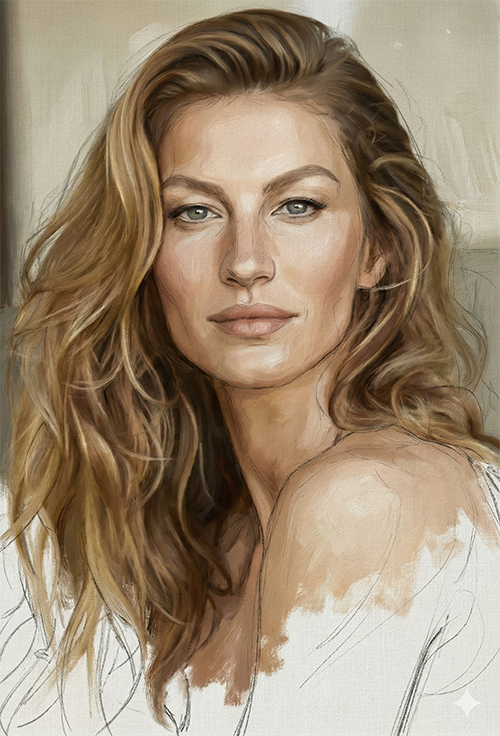
Use the uploaded photo as the ONLY and EXCLUSIVE face and character reference.
Keep the person’s identity 100% identical to the uploaded photo: same facial features, bone structure, skin tone, gender, perceived age, hairstyle shape, hairline, and overall facial proportions. Do not change the person’s gender or make the face younger or older. Preserve the exact facial expression, nose, eyes, eyelids, eyebrows, lips, jawline, chin, ears, and any unique marks such as moles, freckles, scars, or visible skin texture so the face remains instantly recognizable as the same real person from the photo.
Do not idealize or beautify the face in a way that changes its real structure. Do not shrink or enlarge the nose, do not change eye size or spacing, do not modify lip volume, and do not alter the hairstyle family, hair volume, direction, or hairline shape, only translate them into the illustrated style.
Now apply this exact visual style to the portrait:
Realistic portrait in painting style with pencil sketch as the base, classic oil painting style combined with graphite lines, off‑white, warm beige and earthy brown colors. Soft cinematic studio lighting, textured canvas surface, clearly visible hand‑drawn outlines, delicate brush strokes on the skin, soft chiaroscuro shadows, vintage fine‑art illustration look, expressive facial details. The background should remain only partially finished: part of it rendered as a traditional painting, and the rest appearing as overlapping pencil sketches, with multiply muted colors and subtle painting‑style gradients.
Composition and framing:
Single‑subject portrait, centered or slightly off‑center, from shoulders or chest up, clearly showing the face and hairstyle taken from the uploaded photo. The face must stay in sharp focus and is the main area of detail, while the unfinished background and sketchy zones give a “work in progress” traditional illustration feeling.
Lighting and mood:
Use soft cinematic studio lighting that gently models the facial structure and creates smooth chiaroscuro shadows on the face and neck, avoiding harsh overexposure. Keep contrast balanced so skin tones look natural within the warm, earthy palette, with subtle highlights on the most important planes of the face to enhance realism without breaking the painterly mood.
Texture and line behavior:
The canvas surface should look tactile and slightly rough, with visible grain and micro‑texture. Pencil / graphite lines must stay clearly visible around key facial contours (jawline, nose bridge, eye sockets, hair edges) and background shapes, while the oil‑like brush strokes softly fill in color and shading on top, blending sketch and paint into a cohesive traditional‑meets‑modern illustration.
Optional short negative prompt (if the interface allows):
“no different person, no changed gender, no changed age, no photorealistic photographic skin, no plastic beauty‑filtered skin, no anime style, no cartoon style, no flat vector illustration, no 3D CGI render, no low‑detail face, no blurred or deformed facial features, no strong neon colors, no fully finished realistic background, no modern UI icon look, no text, no logos, no watermarks, no UI elements.”
Keep the person’s identity 100% identical to the uploaded photo: same facial features, bone structure, skin tone, gender, perceived age, hairstyle shape, hairline, and overall facial proportions. Do not change the person’s gender or make the face younger or older. Preserve the exact facial expression, nose, eyes, eyelids, eyebrows, lips, jawline, chin, ears, and any unique marks such as moles, freckles, scars, or visible skin texture so the face remains instantly recognizable as the same real person from the photo.
Do not idealize or beautify the face in a way that changes its real structure. Do not shrink or enlarge the nose, do not change eye size or spacing, do not modify lip volume, and do not alter the hairstyle family, hair volume, direction, or hairline shape, only translate them into the illustrated style.
Now apply this exact visual style to the portrait:
Realistic portrait in painting style with pencil sketch as the base, classic oil painting style combined with graphite lines, off‑white, warm beige and earthy brown colors. Soft cinematic studio lighting, textured canvas surface, clearly visible hand‑drawn outlines, delicate brush strokes on the skin, soft chiaroscuro shadows, vintage fine‑art illustration look, expressive facial details. The background should remain only partially finished: part of it rendered as a traditional painting, and the rest appearing as overlapping pencil sketches, with multiply muted colors and subtle painting‑style gradients.
Composition and framing:
Single‑subject portrait, centered or slightly off‑center, from shoulders or chest up, clearly showing the face and hairstyle taken from the uploaded photo. The face must stay in sharp focus and is the main area of detail, while the unfinished background and sketchy zones give a “work in progress” traditional illustration feeling.
Lighting and mood:
Use soft cinematic studio lighting that gently models the facial structure and creates smooth chiaroscuro shadows on the face and neck, avoiding harsh overexposure. Keep contrast balanced so skin tones look natural within the warm, earthy palette, with subtle highlights on the most important planes of the face to enhance realism without breaking the painterly mood.
Texture and line behavior:
The canvas surface should look tactile and slightly rough, with visible grain and micro‑texture. Pencil / graphite lines must stay clearly visible around key facial contours (jawline, nose bridge, eye sockets, hair edges) and background shapes, while the oil‑like brush strokes softly fill in color and shading on top, blending sketch and paint into a cohesive traditional‑meets‑modern illustration.
Optional short negative prompt (if the interface allows):
“no different person, no changed gender, no changed age, no photorealistic photographic skin, no plastic beauty‑filtered skin, no anime style, no cartoon style, no flat vector illustration, no 3D CGI render, no low‑detail face, no blurred or deformed facial features, no strong neon colors, no fully finished realistic background, no modern UI icon look, no text, no logos, no watermarks, no UI elements.”