Meio_rosto_indio
Use the uploaded photo as the ONLY and EXCLUSIVE identity reference. The portrait must clearly depict the SAME REAL PERSON from the uploaded image, not a generic model or a different person. Face, hair and gender expression must remain 100% identical to the uploaded photo (absolute identity lock: do not change facial structure, hairstyle family, age, gender or ethnicity).
Preserve 100% of the facial traits from the uploaded photo: same facial structure and proportions, head shape, jawline, chin, cheekbones, nose shape, mouth shape, lip thickness, eye shape, eyelid type, eyebrow shape and density, and natural skin tone. Keep the same hairstyle family from the reference (overall length, volume, hairline, parting and silhouette), only adapting it to fit the headwrap and framing while keeping it instantly recognizable as the same hair. Respect the original gender from the uploaded photo 100%, maintaining the same gender expression, body type and overall look; no feminization, no extra masculinization, no androgynous shift and no ethnicity change.
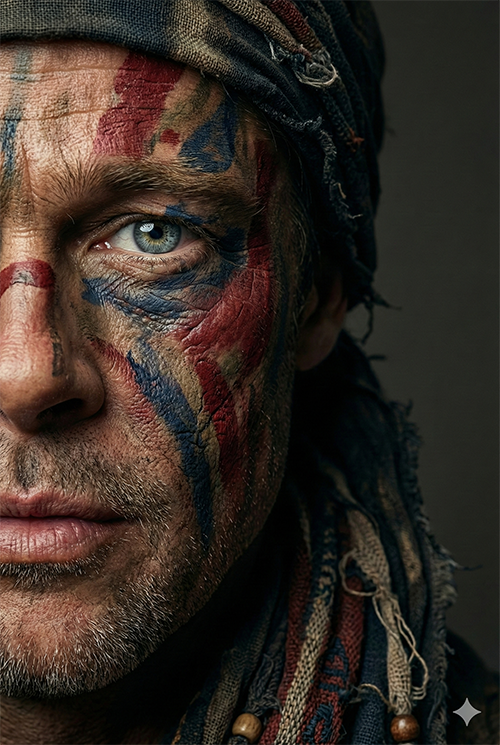
Transform the reference portrait into a dramatic ultra‑realistic close‑up where only half of the face is visible in the frame. Use an extreme close‑up crop so that one eye, half the nose, part of the mouth and cheek dominate the composition, while the other half of the face falls outside the frame. Maintain painterly realism with subtle brush‑like texture, but keep all facial details sharp and highly realistic.
Paint the skin with bold tribal markings in deep red, navy blue and muted earth tones, layered over the natural skin. The markings should follow the contours and planes of the face, creating strong graphic shapes, rough textures and symbolic patterns across the forehead, cheek, nose and around the eye, while never obscuring the person’s identity. Use a mixture of opaque, thick painted areas and slightly worn or cracked zones to suggest age and meaning in the paint.
One striking light‑blue eye must be the sharpest focal point of the image, perfectly in focus and hyper‑detailed. The gaze should convey strength, resilience and quiet intensity, with subtle reflections of light in the iris and a slightly moist, realistic eye surface. Surround the eye with carefully rendered eyelashes, wrinkles, pores and painted markings to enhance realism and emotional impact.
Dress the subject in weathered fabric and woven textiles wrapped around the head and partially around the neck. The fabric should have frayed edges, visible threads and small wooden beads woven into or hanging from the textiles, hinting at an ancient or nomadic culture. Textures must feel tactile and realistic, with small imperfections, folds and fiber detail that reinforce the lived‑in, historical feel.
Use cinematic lighting with soft shadows and a moody, directional setup. One side of the face should catch slightly stronger light, emphasizing the paint texture, pores and fine detail, while the other side falls into softer shadow, preserving subtle information without going completely black. Keep a shallow depth of field so the visible half of the face and eye are in razor‑sharp focus, while the fabrics and background softly blur out.
Set the background as a dark neutral tone—deep charcoal, muted brown or very dark gray—with minimal variation so it does not distract from the face. Let a hint of painterly texture or soft vignette appear in the background to maintain an artistic, editorial poster feel. The overall atmosphere must be moody and powerful, with a strong sense of presence and quiet intensity.
Render the image in 8K quality with hyper‑detailed skin texture (pores, subtle imperfections, fine hairs) and carefully refined paint, fabric and bead materials. The finish should combine painterly realism with ultra‑realistic detail, suitable for an editorial poster or gallery print. Keep the composition clean and uncluttered, with the half‑face and eye as the unquestionable visual anchor.
Negative prompt (optional, if your tool supports it): low resolution, blurry, soft focus, flat lighting, cartoon, anime, manga, chibi, 2D flat vector style, over‑smooth airbrushed skin, plastic skin, low detail, muddy colors, exaggerated caricature, distorted anatomy, different person, wrong gender, incorrect hairstyle, busy colorful background, strong grain, noise, watermark, logos, UI elements, random text in the image.
Do NOT change the subject’s facial identity, hairstyle family or gender at any point: the ultra‑realistic tribal close‑up portrait must remain instantly recognizable as the SAME REAL PERSON from the uploaded photo, with 100% identity consistency.
Preserve 100% of the facial traits from the uploaded photo: same facial structure and proportions, head shape, jawline, chin, cheekbones, nose shape, mouth shape, lip thickness, eye shape, eyelid type, eyebrow shape and density, and natural skin tone. Keep the same hairstyle family from the reference (overall length, volume, hairline, parting and silhouette), only adapting it to fit the headwrap and framing while keeping it instantly recognizable as the same hair. Respect the original gender from the uploaded photo 100%, maintaining the same gender expression, body type and overall look; no feminization, no extra masculinization, no androgynous shift and no ethnicity change.
Transform the reference portrait into a dramatic ultra‑realistic close‑up where only half of the face is visible in the frame. Use an extreme close‑up crop so that one eye, half the nose, part of the mouth and cheek dominate the composition, while the other half of the face falls outside the frame. Maintain painterly realism with subtle brush‑like texture, but keep all facial details sharp and highly realistic.
Paint the skin with bold tribal markings in deep red, navy blue and muted earth tones, layered over the natural skin. The markings should follow the contours and planes of the face, creating strong graphic shapes, rough textures and symbolic patterns across the forehead, cheek, nose and around the eye, while never obscuring the person’s identity. Use a mixture of opaque, thick painted areas and slightly worn or cracked zones to suggest age and meaning in the paint.
One striking light‑blue eye must be the sharpest focal point of the image, perfectly in focus and hyper‑detailed. The gaze should convey strength, resilience and quiet intensity, with subtle reflections of light in the iris and a slightly moist, realistic eye surface. Surround the eye with carefully rendered eyelashes, wrinkles, pores and painted markings to enhance realism and emotional impact.
Dress the subject in weathered fabric and woven textiles wrapped around the head and partially around the neck. The fabric should have frayed edges, visible threads and small wooden beads woven into or hanging from the textiles, hinting at an ancient or nomadic culture. Textures must feel tactile and realistic, with small imperfections, folds and fiber detail that reinforce the lived‑in, historical feel.
Use cinematic lighting with soft shadows and a moody, directional setup. One side of the face should catch slightly stronger light, emphasizing the paint texture, pores and fine detail, while the other side falls into softer shadow, preserving subtle information without going completely black. Keep a shallow depth of field so the visible half of the face and eye are in razor‑sharp focus, while the fabrics and background softly blur out.
Set the background as a dark neutral tone—deep charcoal, muted brown or very dark gray—with minimal variation so it does not distract from the face. Let a hint of painterly texture or soft vignette appear in the background to maintain an artistic, editorial poster feel. The overall atmosphere must be moody and powerful, with a strong sense of presence and quiet intensity.
Render the image in 8K quality with hyper‑detailed skin texture (pores, subtle imperfections, fine hairs) and carefully refined paint, fabric and bead materials. The finish should combine painterly realism with ultra‑realistic detail, suitable for an editorial poster or gallery print. Keep the composition clean and uncluttered, with the half‑face and eye as the unquestionable visual anchor.
Negative prompt (optional, if your tool supports it): low resolution, blurry, soft focus, flat lighting, cartoon, anime, manga, chibi, 2D flat vector style, over‑smooth airbrushed skin, plastic skin, low detail, muddy colors, exaggerated caricature, distorted anatomy, different person, wrong gender, incorrect hairstyle, busy colorful background, strong grain, noise, watermark, logos, UI elements, random text in the image.
Do NOT change the subject’s facial identity, hairstyle family or gender at any point: the ultra‑realistic tribal close‑up portrait must remain instantly recognizable as the SAME REAL PERSON from the uploaded photo, with 100% identity consistency.