Oculos_solda
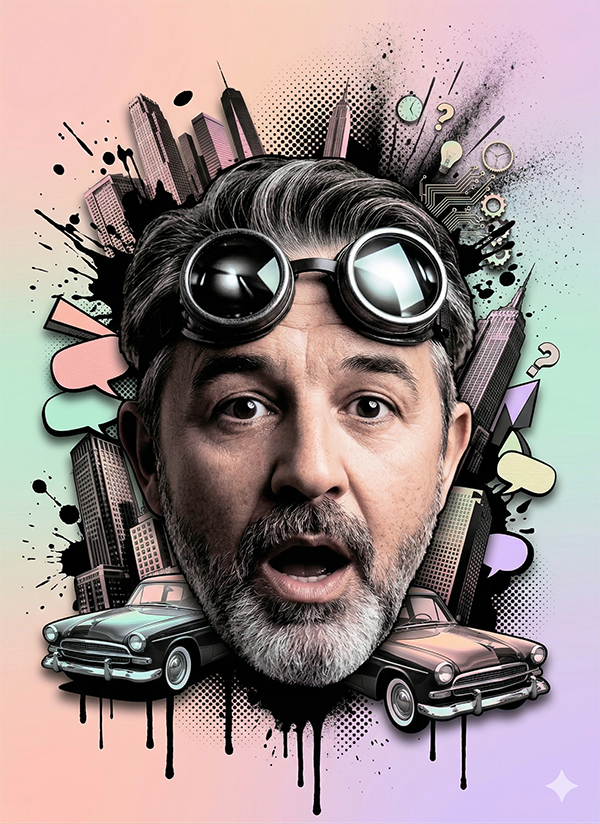
Using my uploaded reference photo as the primary face reference, keep the person’s identity 100% identical to the original image: same facial features, bone structure, skin tone, gender, perceived age, hairstyle shape and overall facial proportions, with no age‑regression or aging. Preserve the exact facial expression, nose, eyes, lips, jawline and any unique marks such as moles, freckles, scars or skin texture, as if it were the same person captured again. Create a surreal digital collage portrait where this same face is large, expressive and central, wearing round, glossy goggles, with the mouth slightly open in awe, but still clearly recognizable as the person from the reference.
Let the head visually blend and transition into a chaotic urban composition: skyscrapers, a vintage car, speech‑bubble shapes, abstract geometric forms and other floating objects radiating upward and outward from the head, as if the city and thoughts are erupting from the character’s mind. Replace the cyan‑dominant color scheme with a soft pastel gradient palette: gentle transitions between pastel pink, peach, mint, lavender and light yellow, used across the background and key graphic shapes, while keeping black ink splashes, dripping paint effects and monochrome accents for contrast. Add halftone dot textures and spray‑paint bursts behind the head, tinted in pastel tones, to maintain a graphic print‑like feel.
Lighting
Use cinematic, high‑contrast lighting: a defined key light from one side of the face and goggles, creating strong highlights on the lenses and facial planes and deep shadows on the opposite side for depth. Let the pastel gradient background stay bright and clean, so the dark ink splashes, urban elements and the face with goggles stand out with clear contrast. Goggles and car should show glossy reflections, while skyscrapers and abstract objects get more matte, pastel‑tinted shading.
Camera, lens and composition
Use a vertically stretched, centered composition: the face and goggles occupy the center of the frame, with the urban collage rising above and around the head, like a poster or cover. Frame the subject as a medium close‑up (from shoulders or upper chest up), keeping the face large and readable based on the uploaded photo pose. Simulate a neutral portrait lens equivalent around 50–85 mm to preserve realistic proportions and avoid wide‑angle distortion, then stylize into collage form, rendered in 8K resolution with sharp focus.
Style and detail
Modern graphic collage style: layered elements with crisp edges and subtle drop‑shadows between layers to create depth. Combine high‑detail textures (glass reflections on goggles, metal and chrome on the vintage car, windows on skyscrapers, slight paper grain on speech bubbles) with flat graphic shapes and pastel halftone dots, plus spray‑paint bursts and drips around the head. Keep the overall color harmony centered on pastel gradients (pink, peach, mint, lavender, light yellow) contrasted with black and dark ink for structure, preserving a clean, contemporary, surreal storytelling vibe.
Negative prompt
different person, altered identity, changed gender, younger or older face, changed nose, eyes, lips or jawline, different skin tone, different hairstyle, missing or altered moles, freckles or scars, no goggles, tiny or subtle glasses instead of bold round goggles, flat single‑color background without gradient, harsh neon colors instead of pastels, muddy desaturated palette, busy realistic street with ground and perspective, natural daylight snapshot, soft flat lighting with no contrast, heavy motion blur, low resolution, blurry details, pixelation, visible cut‑out halos, long text blocks, big logos, watermarks, frames.
Let the head visually blend and transition into a chaotic urban composition: skyscrapers, a vintage car, speech‑bubble shapes, abstract geometric forms and other floating objects radiating upward and outward from the head, as if the city and thoughts are erupting from the character’s mind. Replace the cyan‑dominant color scheme with a soft pastel gradient palette: gentle transitions between pastel pink, peach, mint, lavender and light yellow, used across the background and key graphic shapes, while keeping black ink splashes, dripping paint effects and monochrome accents for contrast. Add halftone dot textures and spray‑paint bursts behind the head, tinted in pastel tones, to maintain a graphic print‑like feel.
Lighting
Use cinematic, high‑contrast lighting: a defined key light from one side of the face and goggles, creating strong highlights on the lenses and facial planes and deep shadows on the opposite side for depth. Let the pastel gradient background stay bright and clean, so the dark ink splashes, urban elements and the face with goggles stand out with clear contrast. Goggles and car should show glossy reflections, while skyscrapers and abstract objects get more matte, pastel‑tinted shading.
Camera, lens and composition
Use a vertically stretched, centered composition: the face and goggles occupy the center of the frame, with the urban collage rising above and around the head, like a poster or cover. Frame the subject as a medium close‑up (from shoulders or upper chest up), keeping the face large and readable based on the uploaded photo pose. Simulate a neutral portrait lens equivalent around 50–85 mm to preserve realistic proportions and avoid wide‑angle distortion, then stylize into collage form, rendered in 8K resolution with sharp focus.
Style and detail
Modern graphic collage style: layered elements with crisp edges and subtle drop‑shadows between layers to create depth. Combine high‑detail textures (glass reflections on goggles, metal and chrome on the vintage car, windows on skyscrapers, slight paper grain on speech bubbles) with flat graphic shapes and pastel halftone dots, plus spray‑paint bursts and drips around the head. Keep the overall color harmony centered on pastel gradients (pink, peach, mint, lavender, light yellow) contrasted with black and dark ink for structure, preserving a clean, contemporary, surreal storytelling vibe.
Negative prompt
different person, altered identity, changed gender, younger or older face, changed nose, eyes, lips or jawline, different skin tone, different hairstyle, missing or altered moles, freckles or scars, no goggles, tiny or subtle glasses instead of bold round goggles, flat single‑color background without gradient, harsh neon colors instead of pastels, muddy desaturated palette, busy realistic street with ground and perspective, natural daylight snapshot, soft flat lighting with no contrast, heavy motion blur, low resolution, blurry details, pixelation, visible cut‑out halos, long text blocks, big logos, watermarks, frames.