Papel_com_fita_adesiva
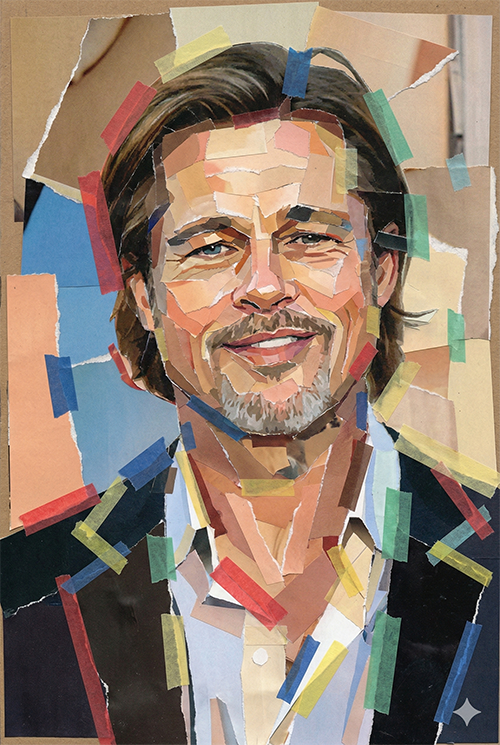
Use this full structured prompt in Nano Banana with your own photo as input.
IMAGE INPUT – IDENTITY SOURCE
Use the uploaded photo as the ONLY and EXCLUSIVE identity reference.
The generated portrait must clearly be the same real person from the uploaded photo, not a generic model or a different person.
IDENTITY LOCK – 100% FACE, HAIR, GENDER
Preserve 100% of the person’s real appearance from the uploaded photo:
Same facial structure and proportions, head shape, skull geometry, jawline, chin, cheekbones, neck, and real age (no de-aging or aging).
Same eye shape and spacing, eyelids, eyelashes, eyebrows, nose shape, lips shape and volume, and overall expression character.
Natural skin tone translated into stylized geometric color areas made from paper pieces, but still matching the real person’s complexion and ethnicity.
Hair: keep the exact same hairstyle, hair length, hair volume, hairline and hair color as in the photo, only rebuilt using torn paper pieces that follow the same haircut silhouette.
Gender: keep the same gender presentation as in the original photo; do not feminize a masculine face or masculinize a feminine face; do not change ethnic traits.
No beautification, no slimming, no face swap, no mixing with other faces, no averaged features.
The viewer must instantly recognize that this is the same person from the original photo, only rendered as a torn‑paper collage held together with tape.
CORE STYLE – GEOMETRIC / CUBIST COLLAGE
Transform the portrait into a modern geometric collage art style with cubist influence:
Fragmented polygonal and irregular shapes arranged in a layered composition around and across the face and upper body.
Strong emphasis on sharp angles, broken planes and overlapping pieces, while keeping the identity readable.
Symmetrical or near‑symmetrical overall balance, with the collage radiating around the head and shoulders.
STYLE VARIATION – TORN PAPER WITH COLORED TAPE
Turn each geometric piece into a roughly torn piece of colored paper, joined with visible tape:
Every facet of the mosaic is a separate piece of paper, torn by hand with rough, irregular, fuzzy edges, clearly showing the torn fiber texture.
Use various types of paper: colored construction paper, printed paper, magazine scraps and painted paper, all with different hues and surface textures.
Instead of stitching, all seams between two paper pieces are joined with colored adhesive tape:
At every junction where two torn paper pieces meet, place a strip of tape crossing the seam.
The tape can be masking tape or washi‑style tape in vivid colors (red, blue, yellow, green, orange, pink, black and white patterns).
Tape strips must be clearly visible, slightly translucent or matte, sometimes overlapping the paper on both sides of the seam, with small wrinkles or bubbles to enhance realism.
Keep the cubist layout, but the structure is now built from torn paper pieces plus colored tape instead of clean geometric tiles or leather patches.
COLOR PALETTE
Use a rich, varied palette of colored papers to build skin, hair and background: warm beiges, peaches, browns, cool shadows, plus accent colors where needed.
Let each piece of paper have slight variations in tone, as if cut from different sources (magazines, painted sheets, colored cardstock).
The colored tape should contrast with nearby paper pieces so the network of taped seams becomes a visible graphic element, without overpowering the face.
TEXTURE AND SURFACE
Overall feel of a torn paper collage on cardboard, with visible layering and thickness.
Show clearly:
Rough torn edges with exposed paper fibers.
Slight curls or lifts at some corners.
Matte, papery surfaces with occasional printed text or patterns subtly visible.
Colored tape must have its own texture: slightly glossy or satin, with soft reflections and tiny creases where it bends over the torn paper.
COMPOSITION AND BALANCE
Portrait or bust composition, centered, with the face as the main focal point.
Decorative illustrative feel, suitable for an art print, editorial illustration or gallery collage piece.
Contemporary abstract realism: the face is stylized into torn paper shapes and tape strips but still readable, recognizable and emotionally expressive.
LIGHTING AND MOOD
Lighting indicated by value changes in the paper: lighter paper pieces on lit areas, darker and cooler tones in the shadows.
Subtle cast shadows between overlapping paper layers and tape strips to enhance depth.
Mood: artistic, handmade, playful but refined, like a designer torn‑paper portrait created for a magazine cover.
QUALITY AND RENDERING
High‑resolution, ultra‑detailed rendering.
Crisp depiction of torn edges, tape boundaries and printed textures, no blur, no unintended noise or compression artifacts.
Fine handcrafted finish, as if it could be printed large as a gallery‑quality torn‑paper and tape collage portrait.
NEGATIVE PROMPT (RECOMMENDED)
photorealistic human skin, realistic smooth photo portrait, leather, fabric, metal, perfectly clean vector shapes, low detail, blurry, noise, messy AI artifacts, soft airbrushed gradients, 3D CGI plastic look, anime style, cartoon style, chibi, generic mosaic without a clear portrait, wrong face, different person, changed gender, changed age, changed ethnicity, watercolor wash, oil painting, pixel art, glitch effects, stitching, seams, zipper, watermark, logo, text overlays, UI elements.
IMAGE INPUT – IDENTITY SOURCE
Use the uploaded photo as the ONLY and EXCLUSIVE identity reference.
The generated portrait must clearly be the same real person from the uploaded photo, not a generic model or a different person.
IDENTITY LOCK – 100% FACE, HAIR, GENDER
Preserve 100% of the person’s real appearance from the uploaded photo:
Same facial structure and proportions, head shape, skull geometry, jawline, chin, cheekbones, neck, and real age (no de-aging or aging).
Same eye shape and spacing, eyelids, eyelashes, eyebrows, nose shape, lips shape and volume, and overall expression character.
Natural skin tone translated into stylized geometric color areas made from paper pieces, but still matching the real person’s complexion and ethnicity.
Hair: keep the exact same hairstyle, hair length, hair volume, hairline and hair color as in the photo, only rebuilt using torn paper pieces that follow the same haircut silhouette.
Gender: keep the same gender presentation as in the original photo; do not feminize a masculine face or masculinize a feminine face; do not change ethnic traits.
No beautification, no slimming, no face swap, no mixing with other faces, no averaged features.
The viewer must instantly recognize that this is the same person from the original photo, only rendered as a torn‑paper collage held together with tape.
CORE STYLE – GEOMETRIC / CUBIST COLLAGE
Transform the portrait into a modern geometric collage art style with cubist influence:
Fragmented polygonal and irregular shapes arranged in a layered composition around and across the face and upper body.
Strong emphasis on sharp angles, broken planes and overlapping pieces, while keeping the identity readable.
Symmetrical or near‑symmetrical overall balance, with the collage radiating around the head and shoulders.
STYLE VARIATION – TORN PAPER WITH COLORED TAPE
Turn each geometric piece into a roughly torn piece of colored paper, joined with visible tape:
Every facet of the mosaic is a separate piece of paper, torn by hand with rough, irregular, fuzzy edges, clearly showing the torn fiber texture.
Use various types of paper: colored construction paper, printed paper, magazine scraps and painted paper, all with different hues and surface textures.
Instead of stitching, all seams between two paper pieces are joined with colored adhesive tape:
At every junction where two torn paper pieces meet, place a strip of tape crossing the seam.
The tape can be masking tape or washi‑style tape in vivid colors (red, blue, yellow, green, orange, pink, black and white patterns).
Tape strips must be clearly visible, slightly translucent or matte, sometimes overlapping the paper on both sides of the seam, with small wrinkles or bubbles to enhance realism.
Keep the cubist layout, but the structure is now built from torn paper pieces plus colored tape instead of clean geometric tiles or leather patches.
COLOR PALETTE
Use a rich, varied palette of colored papers to build skin, hair and background: warm beiges, peaches, browns, cool shadows, plus accent colors where needed.
Let each piece of paper have slight variations in tone, as if cut from different sources (magazines, painted sheets, colored cardstock).
The colored tape should contrast with nearby paper pieces so the network of taped seams becomes a visible graphic element, without overpowering the face.
TEXTURE AND SURFACE
Overall feel of a torn paper collage on cardboard, with visible layering and thickness.
Show clearly:
Rough torn edges with exposed paper fibers.
Slight curls or lifts at some corners.
Matte, papery surfaces with occasional printed text or patterns subtly visible.
Colored tape must have its own texture: slightly glossy or satin, with soft reflections and tiny creases where it bends over the torn paper.
COMPOSITION AND BALANCE
Portrait or bust composition, centered, with the face as the main focal point.
Decorative illustrative feel, suitable for an art print, editorial illustration or gallery collage piece.
Contemporary abstract realism: the face is stylized into torn paper shapes and tape strips but still readable, recognizable and emotionally expressive.
LIGHTING AND MOOD
Lighting indicated by value changes in the paper: lighter paper pieces on lit areas, darker and cooler tones in the shadows.
Subtle cast shadows between overlapping paper layers and tape strips to enhance depth.
Mood: artistic, handmade, playful but refined, like a designer torn‑paper portrait created for a magazine cover.
QUALITY AND RENDERING
High‑resolution, ultra‑detailed rendering.
Crisp depiction of torn edges, tape boundaries and printed textures, no blur, no unintended noise or compression artifacts.
Fine handcrafted finish, as if it could be printed large as a gallery‑quality torn‑paper and tape collage portrait.
NEGATIVE PROMPT (RECOMMENDED)
photorealistic human skin, realistic smooth photo portrait, leather, fabric, metal, perfectly clean vector shapes, low detail, blurry, noise, messy AI artifacts, soft airbrushed gradients, 3D CGI plastic look, anime style, cartoon style, chibi, generic mosaic without a clear portrait, wrong face, different person, changed gender, changed age, changed ethnicity, watercolor wash, oil painting, pixel art, glitch effects, stitching, seams, zipper, watermark, logo, text overlays, UI elements.