Petalas
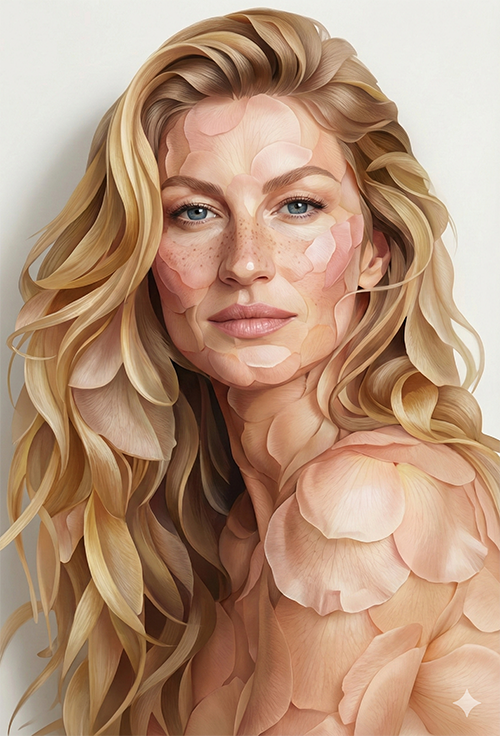
IDENTITY – 100% REAL FACE MATCH
Use the uploaded photo as the ONLY and EXCLUSIVE identity reference. The floral figure must keep the person’s identity 100% identical to the real face: same facial features and bone structure (jawline, cheekbones, chin, nose, eyes, eyelids, eyebrows, lips, ears), same skin tone family, same perceived age, same gender and overall facial proportions. Do NOT change the gender, do NOT make the person younger or older, do NOT beautify, slim or reshape the face or body, and do NOT change ethnicity. Preserve the exact hairstyle family (same hairline, haircut type, volume and silhouette) translated into flower‑petal shapes and colors while staying clearly related to the original hair. Keep the expression from the reference photo as much as possible (mouth, eyes, brows), and preserve unique marks such as moles, freckles, scars and skin texture as subtle variations in petal color, pattern or layering so the identity remains recognizable.
SUBJECT – FIGURE MADE OF FLOWER PETALS
Transform the entire visible person into a figure made entirely from layered flower petals, while keeping a clear human silhouette and readable face. Use realistic petal textures with visible veins, soft translucency and natural curvature. Build the facial features, neck and shoulders by layering petals in different sizes and tones to mimic skin shading and contours, maintaining the same face shape and feature placement as the uploaded person. Use slightly darker or differently colored petals to define eyes, eyelids, eyebrows, nostrils and lips, keeping proportions true to the real face.
PETAL STRUCTURE – FACE, HAIR, BODY
Form the hair using denser clusters of petals radiating in the same direction as the real hairstyle, using colors that echo the natural hair tone (darker petals for shadows, lighter ones for highlights). The jawline, cheekbones and chin should be sculpted from overlapping petals that follow the real bone structure. Shoulders and upper torso should also be constructed from layered petals, tapering into a clean silhouette so the figure is clearly readable against the background. Petal edges must remain delicate, crisp and highly detailed, with natural overlaps and subtle gaps where light can pass through.
LIGHTING & SHADING
Use soft daylight, with gentle, natural shadows that give depth to the petal layers without harsh contrast. Highlights should catch along the curved edges of the petals, creating a slightly luminous, tactile look. Shading must reinforce the underlying face and body structure, so even though the figure is made of petals, the viewer can still read the original anatomy and identity. Maintain realistic color behavior: no neon or artificial glow; keep hues elegant, floral and believable.
BACKGROUND & COMPOSITION
Place the petal figure on a clean, minimal background (soft off‑white or very light neutral tone) with no clutter or detailed scenery. The composition should be centered or slightly off‑center portrait framing that clearly shows the head and upper body made of petals, with enough negative space around to emphasize the sculpted silhouette. Add a very soft shadow or gradient under/behind the figure to ground it without distracting from the petals.
STYLE & QUALITY
Photoreal, high‑detail, elegant rendering: every petal should look like a real macro photograph, with sharp texture, subtle translucency and realistic edges. No cartoon or painterly style. 8K‑quality feel, ultra‑crisp details, no noise, no artifacts, no text or logos. The final image must look like a hyper‑realistic conceptual portrait where the person from the uploaded photo has been entirely rebuilt out of flower petals, yet remains instantly recognizable by face structure, hair shape, skin tone family and gender.
Use the uploaded photo as the ONLY and EXCLUSIVE identity reference. The floral figure must keep the person’s identity 100% identical to the real face: same facial features and bone structure (jawline, cheekbones, chin, nose, eyes, eyelids, eyebrows, lips, ears), same skin tone family, same perceived age, same gender and overall facial proportions. Do NOT change the gender, do NOT make the person younger or older, do NOT beautify, slim or reshape the face or body, and do NOT change ethnicity. Preserve the exact hairstyle family (same hairline, haircut type, volume and silhouette) translated into flower‑petal shapes and colors while staying clearly related to the original hair. Keep the expression from the reference photo as much as possible (mouth, eyes, brows), and preserve unique marks such as moles, freckles, scars and skin texture as subtle variations in petal color, pattern or layering so the identity remains recognizable.
SUBJECT – FIGURE MADE OF FLOWER PETALS
Transform the entire visible person into a figure made entirely from layered flower petals, while keeping a clear human silhouette and readable face. Use realistic petal textures with visible veins, soft translucency and natural curvature. Build the facial features, neck and shoulders by layering petals in different sizes and tones to mimic skin shading and contours, maintaining the same face shape and feature placement as the uploaded person. Use slightly darker or differently colored petals to define eyes, eyelids, eyebrows, nostrils and lips, keeping proportions true to the real face.
PETAL STRUCTURE – FACE, HAIR, BODY
Form the hair using denser clusters of petals radiating in the same direction as the real hairstyle, using colors that echo the natural hair tone (darker petals for shadows, lighter ones for highlights). The jawline, cheekbones and chin should be sculpted from overlapping petals that follow the real bone structure. Shoulders and upper torso should also be constructed from layered petals, tapering into a clean silhouette so the figure is clearly readable against the background. Petal edges must remain delicate, crisp and highly detailed, with natural overlaps and subtle gaps where light can pass through.
LIGHTING & SHADING
Use soft daylight, with gentle, natural shadows that give depth to the petal layers without harsh contrast. Highlights should catch along the curved edges of the petals, creating a slightly luminous, tactile look. Shading must reinforce the underlying face and body structure, so even though the figure is made of petals, the viewer can still read the original anatomy and identity. Maintain realistic color behavior: no neon or artificial glow; keep hues elegant, floral and believable.
BACKGROUND & COMPOSITION
Place the petal figure on a clean, minimal background (soft off‑white or very light neutral tone) with no clutter or detailed scenery. The composition should be centered or slightly off‑center portrait framing that clearly shows the head and upper body made of petals, with enough negative space around to emphasize the sculpted silhouette. Add a very soft shadow or gradient under/behind the figure to ground it without distracting from the petals.
STYLE & QUALITY
Photoreal, high‑detail, elegant rendering: every petal should look like a real macro photograph, with sharp texture, subtle translucency and realistic edges. No cartoon or painterly style. 8K‑quality feel, ultra‑crisp details, no noise, no artifacts, no text or logos. The final image must look like a hyper‑realistic conceptual portrait where the person from the uploaded photo has been entirely rebuilt out of flower petals, yet remains instantly recognizable by face structure, hair shape, skin tone family and gender.