Pintura_a_oleo_antiga
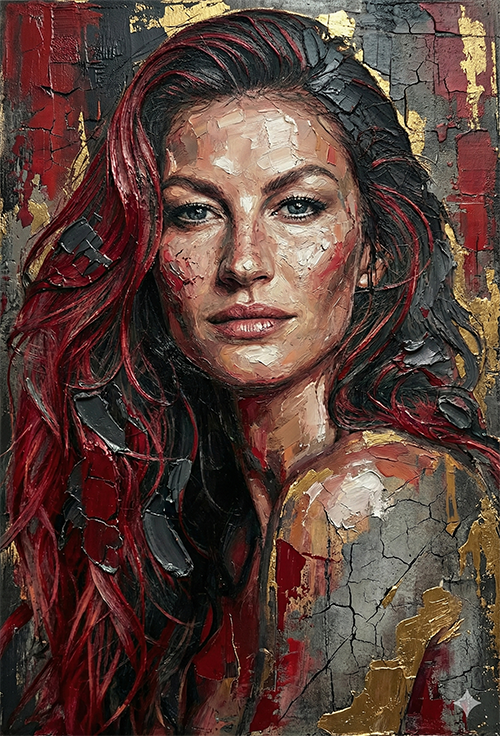
Use the uploaded image as the only identity reference.
Identity lock – face, hair, gender (100% from photo)
Keep the exact same face and likeness from the reference photo, preserving 100% of facial structure and proportions, only changing rendering style and textures.
Maintain the same eye shape and distance, nose, lips and mouth shape, jawline, cheekbones, chin, ears, apparent age, skin tone family, and gender expression exactly as in the original.
Do not beautify, de-age, slim, or alter the anatomy; the subject must remain fully recognizable as the same person.
Preserve the same hairstyle family (length, volume, silhouette, hairline, overall direction), expressing it through thick impasto strokes and palette‑knife marks instead of smooth hair rendering.
Core style – dark mixed-media impasto
Transform the portrait into a dark, ultra‑detailed mixed‑media painting with aggressive palette‑knife textures and heavy impasto layers.
Use thick, sculptural paint application that creates cracked, chipped, and fractured surfaces across the canvas, especially around background and clothing areas.
Combine hyper‑realistic facial rendering (correct anatomy and likeness) with abstract, heavily textured backgrounds and surrounding shapes.
Lighting and mood
Apply high‑contrast lighting with dramatic chiaroscuro, carving strong light and deep shadows across the face and upper body to emphasize depth and intensity.
Let light catch the thick paint ridges and broken surfaces, creating small specular highlights on impasto peaks while keeping midtones gritty and dark.
Overall mood: gritty, cinematic, raw, and emotionally charged, as if this were a brutalist gallery piece under a single strong spotlight.
Color palette and materials
Dominant color scheme: deep crimson red, matte black, charcoal gray, with metallic gold accents in select areas (edges, scratches, or abstract shapes).
Use reds and blacks around the figure to suggest tension and violence, while charcoal grays and muted neutrals ground the portrait in an industrial atmosphere.
Metallic gold can appear as scraped lines, small geometric blocks, or edge highlights, catching the light against the darker paint.
Texture distribution – face vs background
Keep the face more resolved and hyper‑realistic in structure, but still rendered with visible brushwork and fine texture, never smooth or plastic.
Around the face, intensify palette‑knife strokes and heavy impasto on hair, clothing, and the abstract background, with cracked and fractured paint surfaces.
Let some impasto strokes partially overlap the figure, merging subject and environment into a single brutalist, neo‑expressionist mass.
Background and atmosphere
Design the background as an abstract textural field rather than a literal scene: layered blocks of red, black, gray, and gold with scraped, gouged, and chipped paint.
Suggest a gritty, industrial environment through rough geometry, vertical/horizontal scraped lines, and concrete‑like texture, not through recognizable objects.
Keep the background darker overall, so high‑contrast lighting on the face and impasto edges pushes the subject forward.
Overall aesthetic
Brutalist, neo‑expressionist aesthetic with a gritty, industrial, emotionally intense finish: raw strokes, visible process, and heavy material presence.
The portrait should feel like a large gallery painting photographed in high resolution, with every crack, chip, and thick stroke clearly visible.
Negative prompt – strictly avoid
Avoid anime, cartoon, flat vector illustration, soft airbrushed digital look, low detail, blur, or overly clean surfaces.
No plastic, over‑smoothed skin, minimal AI artifacts; do not use pastel palettes or bright cute colors that break the dark, brutalist tone.
Identity lock – face, hair, gender (100% from photo)
Keep the exact same face and likeness from the reference photo, preserving 100% of facial structure and proportions, only changing rendering style and textures.
Maintain the same eye shape and distance, nose, lips and mouth shape, jawline, cheekbones, chin, ears, apparent age, skin tone family, and gender expression exactly as in the original.
Do not beautify, de-age, slim, or alter the anatomy; the subject must remain fully recognizable as the same person.
Preserve the same hairstyle family (length, volume, silhouette, hairline, overall direction), expressing it through thick impasto strokes and palette‑knife marks instead of smooth hair rendering.
Core style – dark mixed-media impasto
Transform the portrait into a dark, ultra‑detailed mixed‑media painting with aggressive palette‑knife textures and heavy impasto layers.
Use thick, sculptural paint application that creates cracked, chipped, and fractured surfaces across the canvas, especially around background and clothing areas.
Combine hyper‑realistic facial rendering (correct anatomy and likeness) with abstract, heavily textured backgrounds and surrounding shapes.
Lighting and mood
Apply high‑contrast lighting with dramatic chiaroscuro, carving strong light and deep shadows across the face and upper body to emphasize depth and intensity.
Let light catch the thick paint ridges and broken surfaces, creating small specular highlights on impasto peaks while keeping midtones gritty and dark.
Overall mood: gritty, cinematic, raw, and emotionally charged, as if this were a brutalist gallery piece under a single strong spotlight.
Color palette and materials
Dominant color scheme: deep crimson red, matte black, charcoal gray, with metallic gold accents in select areas (edges, scratches, or abstract shapes).
Use reds and blacks around the figure to suggest tension and violence, while charcoal grays and muted neutrals ground the portrait in an industrial atmosphere.
Metallic gold can appear as scraped lines, small geometric blocks, or edge highlights, catching the light against the darker paint.
Texture distribution – face vs background
Keep the face more resolved and hyper‑realistic in structure, but still rendered with visible brushwork and fine texture, never smooth or plastic.
Around the face, intensify palette‑knife strokes and heavy impasto on hair, clothing, and the abstract background, with cracked and fractured paint surfaces.
Let some impasto strokes partially overlap the figure, merging subject and environment into a single brutalist, neo‑expressionist mass.
Background and atmosphere
Design the background as an abstract textural field rather than a literal scene: layered blocks of red, black, gray, and gold with scraped, gouged, and chipped paint.
Suggest a gritty, industrial environment through rough geometry, vertical/horizontal scraped lines, and concrete‑like texture, not through recognizable objects.
Keep the background darker overall, so high‑contrast lighting on the face and impasto edges pushes the subject forward.
Overall aesthetic
Brutalist, neo‑expressionist aesthetic with a gritty, industrial, emotionally intense finish: raw strokes, visible process, and heavy material presence.
The portrait should feel like a large gallery painting photographed in high resolution, with every crack, chip, and thick stroke clearly visible.
Negative prompt – strictly avoid
Avoid anime, cartoon, flat vector illustration, soft airbrushed digital look, low detail, blur, or overly clean surfaces.
No plastic, over‑smoothed skin, minimal AI artifacts; do not use pastel palettes or bright cute colors that break the dark, brutalist tone.