Pintura_espatulada_grosseira
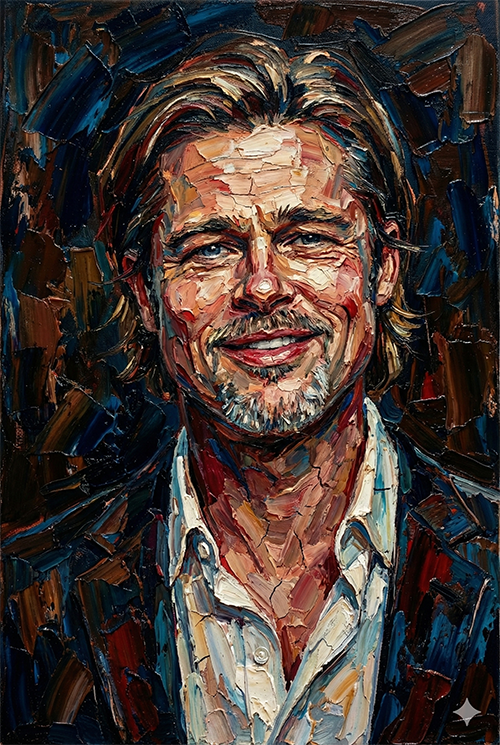
Use the uploaded photo as the ONLY and EXCLUSIVE face and character reference.
The generated portrait must clearly be the SAME REAL PERSON from the uploaded image, not a generic model or a different person.
Keep the person’s identity 100% identical to the uploaded photo: same facial features, bone structure, skin tone, gender, age impression, hairstyle shape, hairline and overall facial proportions. Do not change the person’s gender, ethnicity or apparent age; do not make the face younger or older. Preserve the exact facial expression, nose, eyes, eyelids, eyebrows, lips, jawline, chin, ears, and any unique marks such as moles, freckles, scars or asymmetries so the face looks perfectly consistent with the uploaded photo.
The face must remain fully recognizable as the same real person even after the painting effect is applied. Do not beautify or standardize the features, do not slim or reshape the face, do not change eye size or spacing, and do not alter the hairstyle family or hair volume (only translate it into paint strokes).
Now apply this style and effect to the entire portrait:
Raw impasto painting style, extremely thick layered paint, heavy palette knife strokes, bold aggressive brushwork, rich saturated colors clashing organically, rugged paint texture with visible ridges and cracks. Expressive abstract color blocking, high contrast lighting, dark dramatic background, painterly chaos, imperfect rough edges, modern expressionist fine‑art painting, intense emotional depth, tactile surface quality, brutal and highly textured visual character. The whole image should feel like a physical, hand‑painted canvas with volume, depth, and visible paint build‑up, not a smooth digital illustration.
Lighting and mood:
Strong, directional, high‑contrast lighting that sculpts the facial structure and emphasizes the impasto texture on the face and background. Dark, moody background with dramatic shadows so the face emerges from the darkness, focusing attention on the expression and the thick paint strokes. Subtle highlights on the most raised paint areas to enhance the three‑dimensional tactile feeling of the canvas surface.
Composition and framing:
Single‑subject portrait, centered or slightly off‑center, from shoulders or chest up, clearly showing the face and hairstyle. The background should remain simple, dark, and abstract, with chaotic painterly strokes but no objects or recognizable scenery, so the viewer’s focus stays on the face and the expressive paint texture. Keep the camera angle similar to the uploaded photo when possible (same orientation and general crop), only translated into this expressive impasto painting language.
Texture and detail behavior:
Use very thick, visible paint for facial planes, hair, and background, allowing brush and knife marks to remain rough and imperfect, but NEVER distort or lose the underlying facial identity. Edges can be loose and painterly around clothing and background, but the eyes, nose, mouth, and jawline should remain clear enough to guarantee perfect recognition of the person.
Optional short negative prompt (if the interface allows):
“no different person, no changed gender, no changed age, no beautified plastic skin, no anime style, no cartoon look, no smooth digital illustration, no 3D CGI render, no flat vector art, no pastel watercolor style, no soft airbrushed gradients, no photorealistic photo look, no low detail, no blurred face, no deformed anatomy, no extra limbs, no busy or detailed background, no props, no text, no logos, no watermarks, no UI elements.”
The generated portrait must clearly be the SAME REAL PERSON from the uploaded image, not a generic model or a different person.
Keep the person’s identity 100% identical to the uploaded photo: same facial features, bone structure, skin tone, gender, age impression, hairstyle shape, hairline and overall facial proportions. Do not change the person’s gender, ethnicity or apparent age; do not make the face younger or older. Preserve the exact facial expression, nose, eyes, eyelids, eyebrows, lips, jawline, chin, ears, and any unique marks such as moles, freckles, scars or asymmetries so the face looks perfectly consistent with the uploaded photo.
The face must remain fully recognizable as the same real person even after the painting effect is applied. Do not beautify or standardize the features, do not slim or reshape the face, do not change eye size or spacing, and do not alter the hairstyle family or hair volume (only translate it into paint strokes).
Now apply this style and effect to the entire portrait:
Raw impasto painting style, extremely thick layered paint, heavy palette knife strokes, bold aggressive brushwork, rich saturated colors clashing organically, rugged paint texture with visible ridges and cracks. Expressive abstract color blocking, high contrast lighting, dark dramatic background, painterly chaos, imperfect rough edges, modern expressionist fine‑art painting, intense emotional depth, tactile surface quality, brutal and highly textured visual character. The whole image should feel like a physical, hand‑painted canvas with volume, depth, and visible paint build‑up, not a smooth digital illustration.
Lighting and mood:
Strong, directional, high‑contrast lighting that sculpts the facial structure and emphasizes the impasto texture on the face and background. Dark, moody background with dramatic shadows so the face emerges from the darkness, focusing attention on the expression and the thick paint strokes. Subtle highlights on the most raised paint areas to enhance the three‑dimensional tactile feeling of the canvas surface.
Composition and framing:
Single‑subject portrait, centered or slightly off‑center, from shoulders or chest up, clearly showing the face and hairstyle. The background should remain simple, dark, and abstract, with chaotic painterly strokes but no objects or recognizable scenery, so the viewer’s focus stays on the face and the expressive paint texture. Keep the camera angle similar to the uploaded photo when possible (same orientation and general crop), only translated into this expressive impasto painting language.
Texture and detail behavior:
Use very thick, visible paint for facial planes, hair, and background, allowing brush and knife marks to remain rough and imperfect, but NEVER distort or lose the underlying facial identity. Edges can be loose and painterly around clothing and background, but the eyes, nose, mouth, and jawline should remain clear enough to guarantee perfect recognition of the person.
Optional short negative prompt (if the interface allows):
“no different person, no changed gender, no changed age, no beautified plastic skin, no anime style, no cartoon look, no smooth digital illustration, no 3D CGI render, no flat vector art, no pastel watercolor style, no soft airbrushed gradients, no photorealistic photo look, no low detail, no blurred face, no deformed anatomy, no extra limbs, no busy or detailed background, no props, no text, no logos, no watermarks, no UI elements.”