Quiling
Use the uploaded photo as the primary face and character reference.
Keep the person’s identity 100% identical to the photo: same facial features, bone structure, skin tone, gender, perceived age, hairstyle shape, and overall facial proportions. Do not change the person’s gender and do not make the face younger or older. Preserve the exact facial expression, nose, eyes, lips, jawline, and any unique marks such as moles, freckles, scars, and skin texture. The generated character must look like the same real person from the reference photo, only translated into the creative quilling paper portrait style described below.
(If you use tokens, you can also add:)
“Keep the face identity exactly the same as Image 1, including facial structure, skin tone, age impression, hairstyle shape, expression, and unique marks.”
Positive prompt
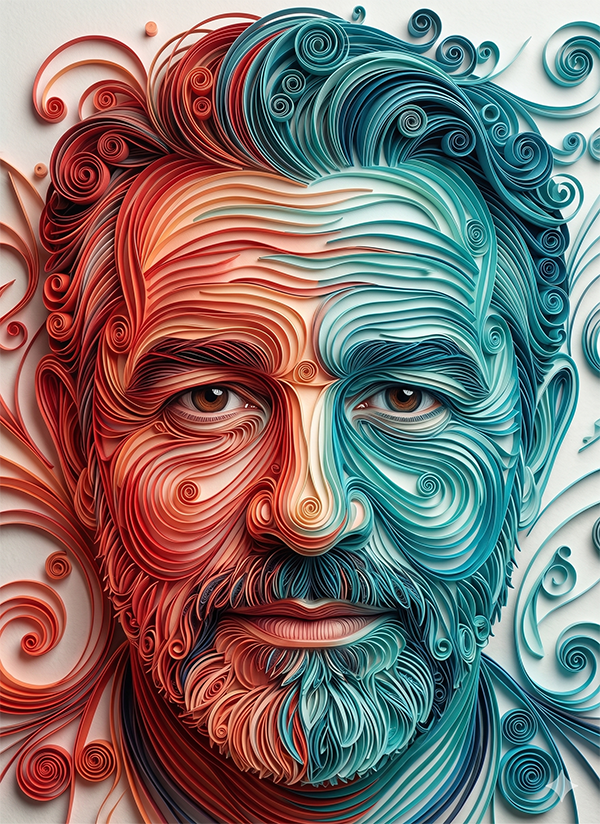
A highly detailed artistic portrait of the same person from the reference photo, facing forward with a calm, neutral expression, rendered entirely in quilling paper art style. The face, hair and background are built from tightly rolled and curved paper strips, forming coils, spirals and layered shapes that follow the natural contours of the face and head. Dual‑tone color scheme: cool teal and blue paper strips dominating one side and warm red and orange paper strips dominating the other side, blending smoothly across the features for a striking graphic look. Skin tones are suggested by carefully arranged thin paper coils, keeping the likeness realistic and recognizable, with intense, lifelike eyes constructed from fine paper details, gaze directed toward the viewer.
The hair becomes dynamic, flowing clusters of paper curls and scrolls radiating outward, gradually transitioning into abstract quilling patterns and decorative paper flourishes in the background. The composition mixes clean graphic shapes with handcrafted paper texture: visible edges, subtle shadows between layers, and slight imperfections that make the quilling effect feel tangible and three‑dimensional. Poster‑style composition with modern graphic design aesthetics, minimal flat background that lets the quilled portrait and color gradients stand out, combining realism and sculpted paper illustration in a bold, contemporary style, high resolution, sharp focus.
Negative prompt
Altered identity, changed facial structure, changed gender, younger or older face, plastic or airbrushed skin, heavy beauty filter, over‑smoothed texture, standard digital painting or photorealistic skin (no paper effect), cartoon or anime style, 3D CGI render, fabric or clay materials instead of paper, low detail, low resolution, blurry, pixelated, messy composition, realistic photographic background instead of abstract paper design, harsh or flat lighting, washed‑out or muddy colors, random text, logos, watermarks, frames or borders, extreme distortion of head shape, exaggerated caricature features.
Lighting
Soft, controlled portrait lighting with gentle directional light from one side to emphasize the relief and depth of the quilled paper layers. Smooth falloff to the opposite side, with enough contrast to make cast shadows between paper strips visible. Subtle highlights along the paper edges and curls, no harsh specular hotspots, soft shadows that keep all details readable. Overall clean, studio‑like illumination that supports the teal/blue and red/orange color design and gives a high‑end poster feel.
Camera and lens
Straight‑on portrait framing similar to a studio headshot or bust portrait, medium close‑up (head and upper shoulders), camera at eye level for a direct, engaging gaze. Natural perspective equivalent to a 50–85 mm portrait lens to keep facial proportions accurate, no wide‑angle distortion. Centered composition with enough negative space around the head to showcase the expanding quilling curls, spirals and paper textures in the background.
Extra detail / style tuning
Maintain strict identity lock: keep the same eye shape and spacing, nose structure, lips, jawline, and hairstyle silhouette as in the uploaded photo, but translated into layered paper strips and coils, with no reshaping or beautification. Emphasize the physical look of quilling: clear thickness to each strip, visible paper grain at close range, and small cast shadows between stacked layers. Ensure the dual‑tone color split is clearly expressed through the arrangement of paper colors, with ultra‑detailed curls, spirals and filigree around the hairline and in the background, creating a rich, handcrafted quilling paper portrait that still feels clean, readable and modern.
Keep the person’s identity 100% identical to the photo: same facial features, bone structure, skin tone, gender, perceived age, hairstyle shape, and overall facial proportions. Do not change the person’s gender and do not make the face younger or older. Preserve the exact facial expression, nose, eyes, lips, jawline, and any unique marks such as moles, freckles, scars, and skin texture. The generated character must look like the same real person from the reference photo, only translated into the creative quilling paper portrait style described below.
(If you use tokens, you can also add:)
“Keep the face identity exactly the same as Image 1, including facial structure, skin tone, age impression, hairstyle shape, expression, and unique marks.”
Positive prompt
A highly detailed artistic portrait of the same person from the reference photo, facing forward with a calm, neutral expression, rendered entirely in quilling paper art style. The face, hair and background are built from tightly rolled and curved paper strips, forming coils, spirals and layered shapes that follow the natural contours of the face and head. Dual‑tone color scheme: cool teal and blue paper strips dominating one side and warm red and orange paper strips dominating the other side, blending smoothly across the features for a striking graphic look. Skin tones are suggested by carefully arranged thin paper coils, keeping the likeness realistic and recognizable, with intense, lifelike eyes constructed from fine paper details, gaze directed toward the viewer.
The hair becomes dynamic, flowing clusters of paper curls and scrolls radiating outward, gradually transitioning into abstract quilling patterns and decorative paper flourishes in the background. The composition mixes clean graphic shapes with handcrafted paper texture: visible edges, subtle shadows between layers, and slight imperfections that make the quilling effect feel tangible and three‑dimensional. Poster‑style composition with modern graphic design aesthetics, minimal flat background that lets the quilled portrait and color gradients stand out, combining realism and sculpted paper illustration in a bold, contemporary style, high resolution, sharp focus.
Negative prompt
Altered identity, changed facial structure, changed gender, younger or older face, plastic or airbrushed skin, heavy beauty filter, over‑smoothed texture, standard digital painting or photorealistic skin (no paper effect), cartoon or anime style, 3D CGI render, fabric or clay materials instead of paper, low detail, low resolution, blurry, pixelated, messy composition, realistic photographic background instead of abstract paper design, harsh or flat lighting, washed‑out or muddy colors, random text, logos, watermarks, frames or borders, extreme distortion of head shape, exaggerated caricature features.
Lighting
Soft, controlled portrait lighting with gentle directional light from one side to emphasize the relief and depth of the quilled paper layers. Smooth falloff to the opposite side, with enough contrast to make cast shadows between paper strips visible. Subtle highlights along the paper edges and curls, no harsh specular hotspots, soft shadows that keep all details readable. Overall clean, studio‑like illumination that supports the teal/blue and red/orange color design and gives a high‑end poster feel.
Camera and lens
Straight‑on portrait framing similar to a studio headshot or bust portrait, medium close‑up (head and upper shoulders), camera at eye level for a direct, engaging gaze. Natural perspective equivalent to a 50–85 mm portrait lens to keep facial proportions accurate, no wide‑angle distortion. Centered composition with enough negative space around the head to showcase the expanding quilling curls, spirals and paper textures in the background.
Extra detail / style tuning
Maintain strict identity lock: keep the same eye shape and spacing, nose structure, lips, jawline, and hairstyle silhouette as in the uploaded photo, but translated into layered paper strips and coils, with no reshaping or beautification. Emphasize the physical look of quilling: clear thickness to each strip, visible paper grain at close range, and small cast shadows between stacked layers. Ensure the dual‑tone color split is clearly expressed through the arrangement of paper colors, with ultra‑detailed curls, spirals and filigree around the hairline and in the background, creating a rich, handcrafted quilling paper portrait that still feels clean, readable and modern.