Reflexo
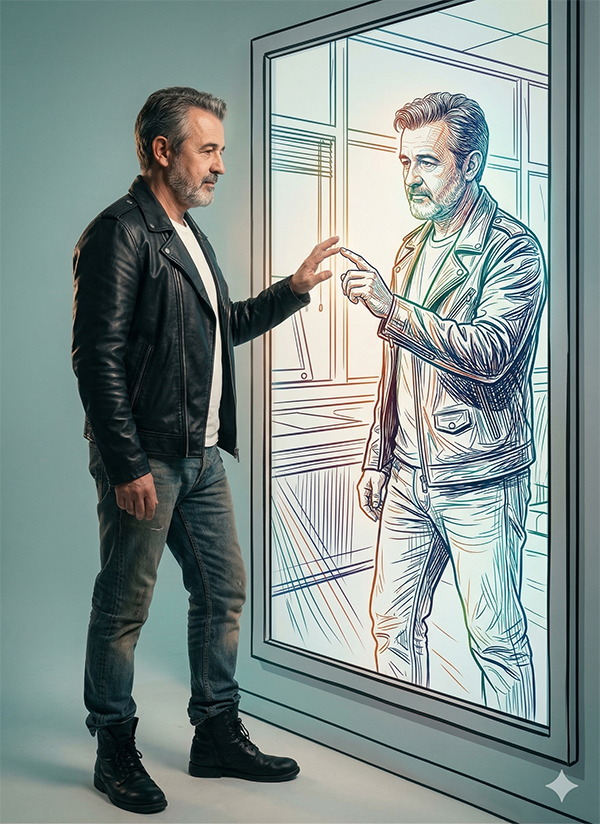
Using my uploaded reference photo as the primary face reference, keep the person’s identity 100% identical to the original image: same facial features, bone structure, skin tone, gender, perceived age, hairstyle shape and overall facial proportions, with no age‑regression or aging. Preserve the exact facial expression, nose, eyes, lips, jawline and any unique marks such as moles, freckles, scars or skin texture, as if it were the same person captured again. Create an ultra‑realistic 8K cinematic full‑body image inspired by 1980s music video aesthetics: the same man from the photo with slightly messy dark hair, wearing a black leather jacket over a white t‑shirt, worn old jeans and black boots, standing in a surreal environment where reality blends with sketch art.
He appears emotional and introspective, standing close to a vertical surface (like a mirror, glass panel or framed drawing) that contains his own stylized reflection. One hand is reaching out and touching the surface, while the reflection’s hand touches back, finger to finger, mirroring the pose. The reflection is a detailed line‑art version of the same man, integrated into a comic‑book‑like illustrated background, but drawn entirely with colored lines in varying thicknesses: rich blues, greens, oranges and reds, layered and crossing to build shading, contours and depth instead of plain graphite.
Lighting
Use soft yet cinematic 80s‑style lighting: gentle key light from one side, subtle rim light on the leather jacket and hair, and controlled contrast that sculpts the face while keeping natural skin tones on the real man. Let the colored line‑art reflection react to the same light direction, with brighter, more saturated lines in lit areas and darker, denser line clusters in shadow areas, so it feels like a glowing colored drawing inside the mirror. Add a faint nostalgic glow and mild bloom around highlights to evoke 1980s music‑video mood without overpowering the colored linework.
Camera, lens and composition
Use a medium full‑body framing: the man seen from head to boots, slightly off‑center, with the mirror or panel filling the opposite side of the frame so both the real figure and the colored‑line reflection are clearly visible. Simulate a cinematic lens equivalent around 35–50 mm to keep proportions natural with a slight depth enhancement, like a music‑video frame. Maintain shallow to moderate depth of field: the real man and the colored‑line reflection are sharply in focus; the illustrated background around the reflection falls slightly softer, all rendered in 8K resolution.
Style and detail
Contrast lifelike realism against vibrant line‑art illustration. The real man should have realistic skin texture, fabric folds in the leather jacket and jeans, worn boot details, and subtle 80s color grading (slightly muted teal‑and‑orange feel). The reflection and its world must be clearly drawn with multicolored lines: overlapping blue, green, orange and red strokes, cross‑hatching and contour lines, with visible variation in thickness to suggest volume and emotion; no flat fills or solid shading, everything built from colored lines. The overall atmosphere should feel dramatic, nostalgic and surreal, as if a real 1980s music‑video character is confronting a vibrant, hand‑drawn colored‑line version of himself.
Negative prompt
different person, altered identity, changed gender, younger or older face, changed nose, eyes, lips or jawline, different skin tone, different hairstyle, missing or altered moles, freckles or scars, reflection in grayscale pencil only, reflection with flat color fills and no colored lines, neon anime style, cartoon chibi style, fully illustrated scene with no realistic man, ultra‑bright rainbow background, cluttered crowd, heavy text, logos, watermarks, frames, low resolution, blurry details, pixelation or heavy compression artifacts.
He appears emotional and introspective, standing close to a vertical surface (like a mirror, glass panel or framed drawing) that contains his own stylized reflection. One hand is reaching out and touching the surface, while the reflection’s hand touches back, finger to finger, mirroring the pose. The reflection is a detailed line‑art version of the same man, integrated into a comic‑book‑like illustrated background, but drawn entirely with colored lines in varying thicknesses: rich blues, greens, oranges and reds, layered and crossing to build shading, contours and depth instead of plain graphite.
Lighting
Use soft yet cinematic 80s‑style lighting: gentle key light from one side, subtle rim light on the leather jacket and hair, and controlled contrast that sculpts the face while keeping natural skin tones on the real man. Let the colored line‑art reflection react to the same light direction, with brighter, more saturated lines in lit areas and darker, denser line clusters in shadow areas, so it feels like a glowing colored drawing inside the mirror. Add a faint nostalgic glow and mild bloom around highlights to evoke 1980s music‑video mood without overpowering the colored linework.
Camera, lens and composition
Use a medium full‑body framing: the man seen from head to boots, slightly off‑center, with the mirror or panel filling the opposite side of the frame so both the real figure and the colored‑line reflection are clearly visible. Simulate a cinematic lens equivalent around 35–50 mm to keep proportions natural with a slight depth enhancement, like a music‑video frame. Maintain shallow to moderate depth of field: the real man and the colored‑line reflection are sharply in focus; the illustrated background around the reflection falls slightly softer, all rendered in 8K resolution.
Style and detail
Contrast lifelike realism against vibrant line‑art illustration. The real man should have realistic skin texture, fabric folds in the leather jacket and jeans, worn boot details, and subtle 80s color grading (slightly muted teal‑and‑orange feel). The reflection and its world must be clearly drawn with multicolored lines: overlapping blue, green, orange and red strokes, cross‑hatching and contour lines, with visible variation in thickness to suggest volume and emotion; no flat fills or solid shading, everything built from colored lines. The overall atmosphere should feel dramatic, nostalgic and surreal, as if a real 1980s music‑video character is confronting a vibrant, hand‑drawn colored‑line version of himself.
Negative prompt
different person, altered identity, changed gender, younger or older face, changed nose, eyes, lips or jawline, different skin tone, different hairstyle, missing or altered moles, freckles or scars, reflection in grayscale pencil only, reflection with flat color fills and no colored lines, neon anime style, cartoon chibi style, fully illustrated scene with no realistic man, ultra‑bright rainbow background, cluttered crowd, heavy text, logos, watermarks, frames, low resolution, blurry details, pixelation or heavy compression artifacts.