Rosto_metal
Positive prompt (main description)
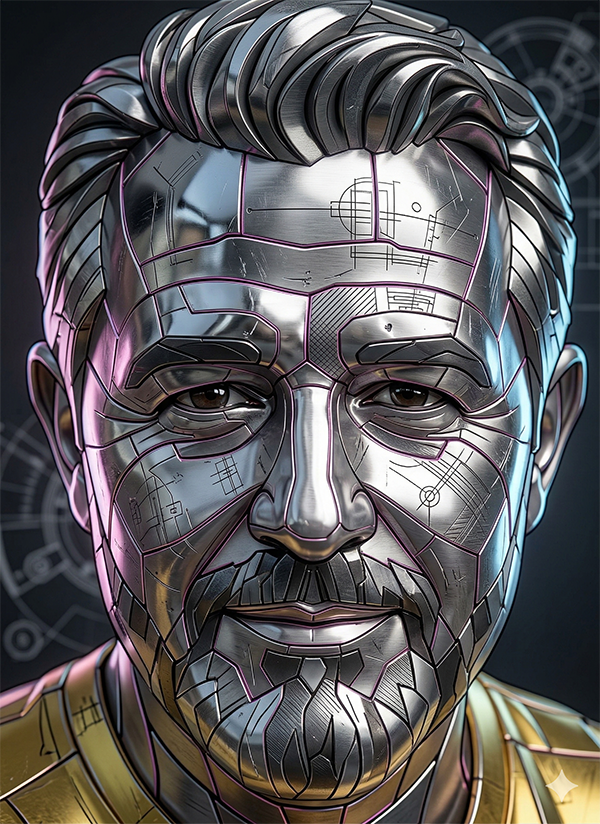
Using my uploaded reference photo as the primary face reference, keep the person’s identity 100% identical to the original image: same facial features, bone structure, skin tone, gender, perceived age, hairstyle shape and overall facial proportions, with no age-regression or aging. Preserve the exact facial expression, nose, eyes, lips, jawline and any unique marks like moles, freckles, scars or skin texture, as if it were the same person captured again. Transform this portrait into a semi-abstract 3D metallic artwork: intricate geometric line art fused with a three-dimensional sculptural look, as if the face were constructed from interlocking chrome and brushed-metal plates. Use fragmented polygonal composition and architectural, technical-drawing aesthetics mixed with comic ink illustration, but rendered as reflective metal surfaces with depth, highlights and shadows. The face and upper shoulders should look like a 3D metallic sculpture assembled from angular panels, beveled edges and overlapping plates, while the likeness of the person remains perfectly recognizable.
Metallic 3D style and detail
Simulate polished metal and brushed steel materials across the entire portrait: mirror-like chrome on convex areas, brushed or satin metal in recessed regions, with subtle micro-scratches and tiny imperfections enhancing realism. Add warped, dynamic reflections that follow the curvature of the facial planes and geometric plates, with sharp highlights on edges and deeper shadows in creases, as if lit like a premium 3D product render. Keep the line-art DNA: bold ink outlines, thin precision strokes, fine cross-hatching engraved into the metallic surfaces, blueprint-style overlays engraved like etchings on the metal. Use a controlled-chaos linework feeling, semi-abstract but still clearly a portrait. Color palette: cool silvers, gunmetal grays and dark steel tones, accented with strong magenta reflections or emissive edges along certain lines, plus occasional subtle paint-splatter textures on the metal to keep a graphic novel vibe.
Lighting
Cinematic 3D studio lighting with a strong key light from above and slightly to one side, producing bright metallic specular highlights and deep, crisp shadows in the gaps between plates. Add a faint rim light on the opposite edge of the face to create a thin glowing outline along the metallic contours, helping separate the subject from the background. Overall contrast should be high, with bright chrome highlights and dark steel shadows, like a dramatic product-render or Unreal/Octane-style 3D sculpture, on a dark, minimal, slightly gradient background.
Camera, lens and composition
Portrait framing with the subject centered, cropped from the chest or shoulders up, keeping the face large in frame so the 3D metallic details and geometric plates are clearly visible. Use a portrait lens equivalent around 85–105 mm to avoid distortion and preserve natural facial proportions, as if photographed with a high-end DSLR for a sculpture catalog. Simulate an ultra-high-resolution 8K render, with perfectly sharp facial planes and edges, shallow depth of field so only the metallic face and upper shoulders are fully focused, with the background smoothly blurred.
Negative prompt
different person, altered identity, changed gender, younger or older face, slimmed or widened face, changed nose, eyes, lips or jawline, different skin tone, different hairstyle, missing or altered moles, freckles or scars, flat 2D cartoon, anime, cel-shaded look, plastic toy, rubber, clay, marble or stone statue instead of metal, low-detail geometry, melted or deformed face, extreme fisheye or wide-angle distortion, low resolution, blurry image, pixelation, noisy artifacts, busy or colorful background, text, UI, logos, watermarks, frames.
Using my uploaded reference photo as the primary face reference, keep the person’s identity 100% identical to the original image: same facial features, bone structure, skin tone, gender, perceived age, hairstyle shape and overall facial proportions, with no age-regression or aging. Preserve the exact facial expression, nose, eyes, lips, jawline and any unique marks like moles, freckles, scars or skin texture, as if it were the same person captured again. Transform this portrait into a semi-abstract 3D metallic artwork: intricate geometric line art fused with a three-dimensional sculptural look, as if the face were constructed from interlocking chrome and brushed-metal plates. Use fragmented polygonal composition and architectural, technical-drawing aesthetics mixed with comic ink illustration, but rendered as reflective metal surfaces with depth, highlights and shadows. The face and upper shoulders should look like a 3D metallic sculpture assembled from angular panels, beveled edges and overlapping plates, while the likeness of the person remains perfectly recognizable.
Metallic 3D style and detail
Simulate polished metal and brushed steel materials across the entire portrait: mirror-like chrome on convex areas, brushed or satin metal in recessed regions, with subtle micro-scratches and tiny imperfections enhancing realism. Add warped, dynamic reflections that follow the curvature of the facial planes and geometric plates, with sharp highlights on edges and deeper shadows in creases, as if lit like a premium 3D product render. Keep the line-art DNA: bold ink outlines, thin precision strokes, fine cross-hatching engraved into the metallic surfaces, blueprint-style overlays engraved like etchings on the metal. Use a controlled-chaos linework feeling, semi-abstract but still clearly a portrait. Color palette: cool silvers, gunmetal grays and dark steel tones, accented with strong magenta reflections or emissive edges along certain lines, plus occasional subtle paint-splatter textures on the metal to keep a graphic novel vibe.
Lighting
Cinematic 3D studio lighting with a strong key light from above and slightly to one side, producing bright metallic specular highlights and deep, crisp shadows in the gaps between plates. Add a faint rim light on the opposite edge of the face to create a thin glowing outline along the metallic contours, helping separate the subject from the background. Overall contrast should be high, with bright chrome highlights and dark steel shadows, like a dramatic product-render or Unreal/Octane-style 3D sculpture, on a dark, minimal, slightly gradient background.
Camera, lens and composition
Portrait framing with the subject centered, cropped from the chest or shoulders up, keeping the face large in frame so the 3D metallic details and geometric plates are clearly visible. Use a portrait lens equivalent around 85–105 mm to avoid distortion and preserve natural facial proportions, as if photographed with a high-end DSLR for a sculpture catalog. Simulate an ultra-high-resolution 8K render, with perfectly sharp facial planes and edges, shallow depth of field so only the metallic face and upper shoulders are fully focused, with the background smoothly blurred.
Negative prompt
different person, altered identity, changed gender, younger or older face, slimmed or widened face, changed nose, eyes, lips or jawline, different skin tone, different hairstyle, missing or altered moles, freckles or scars, flat 2D cartoon, anime, cel-shaded look, plastic toy, rubber, clay, marble or stone statue instead of metal, low-detail geometry, melted or deformed face, extreme fisheye or wide-angle distortion, low resolution, blurry image, pixelation, noisy artifacts, busy or colorful background, text, UI, logos, watermarks, frames.