Surreal_create horizontal aspect ratio resolution
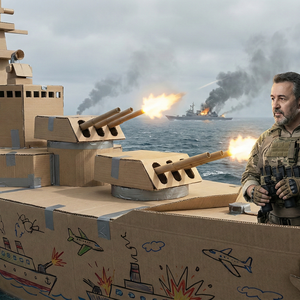
Create a horizontal 16:9 aspect ratio 4K resolution (3840x2160) cinematic composition, no vertical or square image. Ultra‑realistic cinematic war scene based on the uploaded image. The main subject is the person from the uploaded photo, now standing on the deck of a makeshift cardboard warship on a coastal battlefield at sea. Use the uploaded photo as the strict facial reference: the face must be 100% identical to the reference, with the same bone structure, nose, eyes, lips, jawline, cheekbones, forehead, hairstyle shape and hairline, same gender and age impression. Do not change the gender or make the face younger or older. Preserve the exact facial expression, gaze direction and all unique details such as moles, freckles, scars, wrinkles and skin texture. Match the skin tone precisely to the reference image, adapting only to the scene’s lighting and color grading so it looks natural.
The character is fully dressed in realistic modern war clothing: olive‑green combat shirt, tactical vest with pouches and straps, camouflage combat pants, sturdy military boots, and additional gear such as gloves, radio, and utility belt, all fitting naturally on the body. He is positioned on the upper deck or bridge area of a full‑size warship built entirely from rough brown cardboard, constructed in the same handmade style as the previous cardboard airplane. The proportions between the person and the ship must be realistic: the ship is huge compared to the person, with the deck stretching far to the left and right, the bridge structure towering well above the character’s head, railings reaching around the character’s waist, and large cardboard turrets and antennas clearly much bigger than the person. The warship has a long cardboard hull, multiple cardboard gun turrets with cylindrical cardboard barrels, simple cardboard radar masts and superstructure boxes, all clearly made from corrugated cardboard with visible cut edges and seams. Wide strips of silver duct tape hold the structure together, wrapped around corners and joints. Paint the sides of the cardboard superstructure and turrets with child‑like war drawings made using colorful felt‑tip markers: ships, explosions, tiny planes, missiles, stars and simple symbols, as if drawn by hand directly on the cardboard. The marker lines should be slightly imperfect, with visible strokes and overlapping colors, while still integrated into the realistic lighting and texture of the cardboard surface.
The cardboard warship is sailing on open sea, with its hull cutting through rough, dark blue waves, surrounded by choppy ocean water and white foam along the bow and sides. The ship is actively attacking other warships, also made of realistic metal or cardboard, visible at medium and far distance across the horizon. Bright muzzle flashes burst from the cardboard gun turrets and cannons of the main ship, firing glowing artillery shells toward the enemy ships, while some of those enemy vessels are already hit, burning and partially destroyed, with flames, smoke and secondary explosions coming from their decks. Splashes of water rise where shells impact the sea near the targets, enhancing the sense of dynamic naval combat. In the far background, a faint silhouette of the coastline may be visible under the stormy sky, but the focus is on the open‑sea battle. The overall mood is epic and slightly surreal: a serious naval war scene contrasted with the absurd, child‑like cardboard warship decorated with marker drawings.
Camera, lens and composition – Ultra‑wide horizontal 4K frame, 16:9 aspect ratio, final resolution 3840x2160. Cinematic landscape composition where a large portion of the cardboard warship is visible inside the frame to clearly show its size compared to the person: the character stands on the deck in the mid‑ground, while the bow extends toward one side of the frame and the superstructure and turrets extend toward the other side. The ship is framed diagonally so its length fits comfortably inside the horizontal image, with no cropping of the character or key ship structures near him. Virtual 24–35 mm wide‑angle cinema lens, giving a natural but expansive perspective that emphasizes the huge scale of the ship while keeping the person clearly readable. The warship occupies most of the mid‑ground; ocean, enemy ships, explosions and smoke fill the background and edges, creating strong depth and leading lines. Depth of field is moderate: the character and nearby sections of the ship are sharp, the distant enemy ships and explosions are slightly softer but still detailed and readable.
Lighting and color – Moody, overcast war‑movie lighting. Soft but directional daylight from the cloudy sky, creating gentle highlights on the character’s face, the top edges of the cardboard ship and gun turrets, with soft shadows along the hull and superstructure. Smoke plumes from burning ships partially filter the light, adding atmospheric depth over the sea. Color grading uses a cinematic teal‑and‑orange palette: cool bluish tones in the sea and sky, warm oranges and yellows in the explosions and fire, earthy browns and greys in the cardboard ship and uniforms, while keeping the skin tone realistic and faithful to the reference. Subtle film grain, slight vignette and contrast suitable for a movie poster.
Style and technical details – Photorealistic, hyper‑detailed rendering at 8K quality, downscaled to 4K 3840x2160. Fine detail in cardboard texture (fibers, dents, taped seams), tactical vest stitching, fabric wrinkles, salt spray on boots, individual smoke particles and debris from explosions. The cardboard warship must look physically present and massive, with realistic contact between the hull and the water and the character naturally standing on the deck in full war clothing. The marker drawings on the ship should look like real ink on cardboard, photographed on set, not digital stickers. The enemy ships, muzzle flashes, water splashes and explosions should feel like practical effects captured in‑camera, reinforcing the cinematic realism with the whimsical twist of the cardboard construction and hand‑drawn details.
Negative prompt – no change of identity, no different face, no wrong skin tone, no gender change, no age change, no beautified or plastic skin, no casual clothing, no cartoon or anime style, no illustration or painting style, no low‑poly or obvious 3D render look, no floating or disconnected limbs, no deformed hands, no unrealistic perspective, no bombs falling from the sky, no vertical or square image, no tiny ship in the distance as the only subject, no calm sunny beach scene, no neon colors, no futuristic sci‑fi elements, no modern HUD overlays, no text or logos, no watermarks, no heavy noise or pixelation, no fisheye or extreme wide‑angle distortion, no Dutch angle, no exaggerated lens flares.
The character is fully dressed in realistic modern war clothing: olive‑green combat shirt, tactical vest with pouches and straps, camouflage combat pants, sturdy military boots, and additional gear such as gloves, radio, and utility belt, all fitting naturally on the body. He is positioned on the upper deck or bridge area of a full‑size warship built entirely from rough brown cardboard, constructed in the same handmade style as the previous cardboard airplane. The proportions between the person and the ship must be realistic: the ship is huge compared to the person, with the deck stretching far to the left and right, the bridge structure towering well above the character’s head, railings reaching around the character’s waist, and large cardboard turrets and antennas clearly much bigger than the person. The warship has a long cardboard hull, multiple cardboard gun turrets with cylindrical cardboard barrels, simple cardboard radar masts and superstructure boxes, all clearly made from corrugated cardboard with visible cut edges and seams. Wide strips of silver duct tape hold the structure together, wrapped around corners and joints. Paint the sides of the cardboard superstructure and turrets with child‑like war drawings made using colorful felt‑tip markers: ships, explosions, tiny planes, missiles, stars and simple symbols, as if drawn by hand directly on the cardboard. The marker lines should be slightly imperfect, with visible strokes and overlapping colors, while still integrated into the realistic lighting and texture of the cardboard surface.
The cardboard warship is sailing on open sea, with its hull cutting through rough, dark blue waves, surrounded by choppy ocean water and white foam along the bow and sides. The ship is actively attacking other warships, also made of realistic metal or cardboard, visible at medium and far distance across the horizon. Bright muzzle flashes burst from the cardboard gun turrets and cannons of the main ship, firing glowing artillery shells toward the enemy ships, while some of those enemy vessels are already hit, burning and partially destroyed, with flames, smoke and secondary explosions coming from their decks. Splashes of water rise where shells impact the sea near the targets, enhancing the sense of dynamic naval combat. In the far background, a faint silhouette of the coastline may be visible under the stormy sky, but the focus is on the open‑sea battle. The overall mood is epic and slightly surreal: a serious naval war scene contrasted with the absurd, child‑like cardboard warship decorated with marker drawings.
Camera, lens and composition – Ultra‑wide horizontal 4K frame, 16:9 aspect ratio, final resolution 3840x2160. Cinematic landscape composition where a large portion of the cardboard warship is visible inside the frame to clearly show its size compared to the person: the character stands on the deck in the mid‑ground, while the bow extends toward one side of the frame and the superstructure and turrets extend toward the other side. The ship is framed diagonally so its length fits comfortably inside the horizontal image, with no cropping of the character or key ship structures near him. Virtual 24–35 mm wide‑angle cinema lens, giving a natural but expansive perspective that emphasizes the huge scale of the ship while keeping the person clearly readable. The warship occupies most of the mid‑ground; ocean, enemy ships, explosions and smoke fill the background and edges, creating strong depth and leading lines. Depth of field is moderate: the character and nearby sections of the ship are sharp, the distant enemy ships and explosions are slightly softer but still detailed and readable.
Lighting and color – Moody, overcast war‑movie lighting. Soft but directional daylight from the cloudy sky, creating gentle highlights on the character’s face, the top edges of the cardboard ship and gun turrets, with soft shadows along the hull and superstructure. Smoke plumes from burning ships partially filter the light, adding atmospheric depth over the sea. Color grading uses a cinematic teal‑and‑orange palette: cool bluish tones in the sea and sky, warm oranges and yellows in the explosions and fire, earthy browns and greys in the cardboard ship and uniforms, while keeping the skin tone realistic and faithful to the reference. Subtle film grain, slight vignette and contrast suitable for a movie poster.
Style and technical details – Photorealistic, hyper‑detailed rendering at 8K quality, downscaled to 4K 3840x2160. Fine detail in cardboard texture (fibers, dents, taped seams), tactical vest stitching, fabric wrinkles, salt spray on boots, individual smoke particles and debris from explosions. The cardboard warship must look physically present and massive, with realistic contact between the hull and the water and the character naturally standing on the deck in full war clothing. The marker drawings on the ship should look like real ink on cardboard, photographed on set, not digital stickers. The enemy ships, muzzle flashes, water splashes and explosions should feel like practical effects captured in‑camera, reinforcing the cinematic realism with the whimsical twist of the cardboard construction and hand‑drawn details.
Negative prompt – no change of identity, no different face, no wrong skin tone, no gender change, no age change, no beautified or plastic skin, no casual clothing, no cartoon or anime style, no illustration or painting style, no low‑poly or obvious 3D render look, no floating or disconnected limbs, no deformed hands, no unrealistic perspective, no bombs falling from the sky, no vertical or square image, no tiny ship in the distance as the only subject, no calm sunny beach scene, no neon colors, no futuristic sci‑fi elements, no modern HUD overlays, no text or logos, no watermarks, no heavy noise or pixelation, no fisheye or extreme wide‑angle distortion, no Dutch angle, no exaggerated lens flares.