Surreal_uploaded photo main reference face
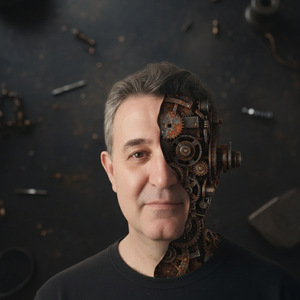
Use the uploaded photo as the main reference for face, skin tone, hair, and expression.
Preserve all facial features, human proportions, and realism, but transform only a portion of the face into an aged, corroded mechanical structure, with visible gears, pistons, and clockwork mechanisms beneath the skin.
The metallic transformation must be restricted exclusively to the face — neck, shoulders, and body remain completely natural and human.
🔩 Concept & Composition
Face Transformation:
An irregular, asymmetrical area of the face only reveals an intricate aged mechanical interior — a fusion of oxidized metal plates, rusted gears, and oil-stained pistons that move sluggishly, as if worn by time.
The skin appears torn or lifted around the exposed section, with realistic, rough edges and subtle redness, creating a strong contrast between flesh and decaying metal.
No metallic parts appear beyond the face — the rest of the head, neck, and shoulders remain fully human.
Expression:
Subtle, calm, or slightly tense — evoking a quiet awareness of the mechanical decay beneath the skin.
Composition:
Close-up or medium shot (face and upper shoulders), centered.
Background neutral or softly blurred to emphasize the facial transformation.
🛠️ Material & Texture
Exposed Mechanical Elements:
Aged, rusted, and weathered metal with visible corrosion, oil stains, grime, and pitted surfaces.
Gears, pistons, and axles appear worn, irregular, and slightly misaligned, coated in dark lubricant residue and oxidized edges.
Metal textures include matte iron, tarnished brass, and steel scarred by years of use.
Fine mechanical details still move subtly, but with the tension of age and wear.
All machinery is contained strictly within the face boundaries.
Skin & Transition Zone:
Realistic torn skin with jagged edges, faint discoloration, and subtle bruising near the metallic areas.
Organic transitions between flesh and corroded metal — shadows and grime blending the two materials seamlessly.
Shadows & Depth:
Deep, gritty shadows emphasizing corrosion and mechanical cavities.
Dirty, diffused reflections on metal — no shiny chrome surfaces.
💡 Lighting & Environment
Lighting:
Dramatic cinematic lighting — key light from the mechanical side to reveal texture and rust detail.
Soft fill light from the opposite side to preserve natural skin tone.
Optional rim light to enhance the silhouette of the torn skin and metal edges.
Background:
Neutral or dark industrial tone — softly textured but unobtrusive, to highlight the decayed metalwork.
Mood:
Industrial, dystopian, and atmospheric — a blend of sci-fi and post-apocalyptic decay.
🎨 Visual Style & Rendering
Style:
Ultra-realistic cinematic — with extremely detailed depiction of rust, grime, scratches, oil streaks, and oxidation.
Strong contrast between living flesh and decayed mechanical elements.
Camera:
35mm cinematic lens, close-up or medium portrait.
Slight angle to highlight the mechanical depth and shadow.
Color Palette:
Natural skin tones combined with rusty browns, burnt orange, dark grays, oily blacks, and hints of oxidized green.
Neutral or dark background to enhance dramatic realism.
Resolution:
8K or higher — maximum clarity and detail for rust, oil, and skin textures.
Emotional Tone:
Dramatic, melancholic, and gritty — blending human fragility with mechanical decay.
⚙️ Recommended Nano Banana Parameters
--ar 4:5 --v 6 --style cinematic_realism --theme rusted_mechanical_face_only --lighting dramatic_studio --camera close_up_or_medium --focus face_only_skin_and_rusted_detail --mood sci_fi_decay_industrial --quality ultra_detail --composition partial_face_transformation --scale human_proportions_equal --s 750 --uplight --q 2
🚫 Negative Prompt
cartoonish, exaggerated features, waxy skin, toy-like, unrealistic anatomy, 2D style, shiny chrome, clean metal, over-saturated colors, flat lighting, distorted proportions, plastic texture, visible metal on neck or body, watermark, text overlay, frame. Ver menos
Preserve all facial features, human proportions, and realism, but transform only a portion of the face into an aged, corroded mechanical structure, with visible gears, pistons, and clockwork mechanisms beneath the skin.
The metallic transformation must be restricted exclusively to the face — neck, shoulders, and body remain completely natural and human.
🔩 Concept & Composition
Face Transformation:
An irregular, asymmetrical area of the face only reveals an intricate aged mechanical interior — a fusion of oxidized metal plates, rusted gears, and oil-stained pistons that move sluggishly, as if worn by time.
The skin appears torn or lifted around the exposed section, with realistic, rough edges and subtle redness, creating a strong contrast between flesh and decaying metal.
No metallic parts appear beyond the face — the rest of the head, neck, and shoulders remain fully human.
Expression:
Subtle, calm, or slightly tense — evoking a quiet awareness of the mechanical decay beneath the skin.
Composition:
Close-up or medium shot (face and upper shoulders), centered.
Background neutral or softly blurred to emphasize the facial transformation.
🛠️ Material & Texture
Exposed Mechanical Elements:
Aged, rusted, and weathered metal with visible corrosion, oil stains, grime, and pitted surfaces.
Gears, pistons, and axles appear worn, irregular, and slightly misaligned, coated in dark lubricant residue and oxidized edges.
Metal textures include matte iron, tarnished brass, and steel scarred by years of use.
Fine mechanical details still move subtly, but with the tension of age and wear.
All machinery is contained strictly within the face boundaries.
Skin & Transition Zone:
Realistic torn skin with jagged edges, faint discoloration, and subtle bruising near the metallic areas.
Organic transitions between flesh and corroded metal — shadows and grime blending the two materials seamlessly.
Shadows & Depth:
Deep, gritty shadows emphasizing corrosion and mechanical cavities.
Dirty, diffused reflections on metal — no shiny chrome surfaces.
💡 Lighting & Environment
Lighting:
Dramatic cinematic lighting — key light from the mechanical side to reveal texture and rust detail.
Soft fill light from the opposite side to preserve natural skin tone.
Optional rim light to enhance the silhouette of the torn skin and metal edges.
Background:
Neutral or dark industrial tone — softly textured but unobtrusive, to highlight the decayed metalwork.
Mood:
Industrial, dystopian, and atmospheric — a blend of sci-fi and post-apocalyptic decay.
🎨 Visual Style & Rendering
Style:
Ultra-realistic cinematic — with extremely detailed depiction of rust, grime, scratches, oil streaks, and oxidation.
Strong contrast between living flesh and decayed mechanical elements.
Camera:
35mm cinematic lens, close-up or medium portrait.
Slight angle to highlight the mechanical depth and shadow.
Color Palette:
Natural skin tones combined with rusty browns, burnt orange, dark grays, oily blacks, and hints of oxidized green.
Neutral or dark background to enhance dramatic realism.
Resolution:
8K or higher — maximum clarity and detail for rust, oil, and skin textures.
Emotional Tone:
Dramatic, melancholic, and gritty — blending human fragility with mechanical decay.
⚙️ Recommended Nano Banana Parameters
--ar 4:5 --v 6 --style cinematic_realism --theme rusted_mechanical_face_only --lighting dramatic_studio --camera close_up_or_medium --focus face_only_skin_and_rusted_detail --mood sci_fi_decay_industrial --quality ultra_detail --composition partial_face_transformation --scale human_proportions_equal --s 750 --uplight --q 2
🚫 Negative Prompt
cartoonish, exaggerated features, waxy skin, toy-like, unrealistic anatomy, 2D style, shiny chrome, clean metal, over-saturated colors, flat lighting, distorted proportions, plastic texture, visible metal on neck or body, watermark, text overlay, frame. Ver menos