Tatuagem_na_coxa
Use the uploaded photo as the main reference for the male tattoo artist’s identity and appearance. Maintain 100% identity accuracy: same facial structure and bone structure, jawline, cheekbones, nose, lips, eyes, eyebrows, hairstyle shape and length, skin tone, age impression, gender presentation, and any unique marks such as moles, freckles, scars, or skin texture. Preserve the same overall facial expression style as in the reference, without making him younger or older or changing his gender.
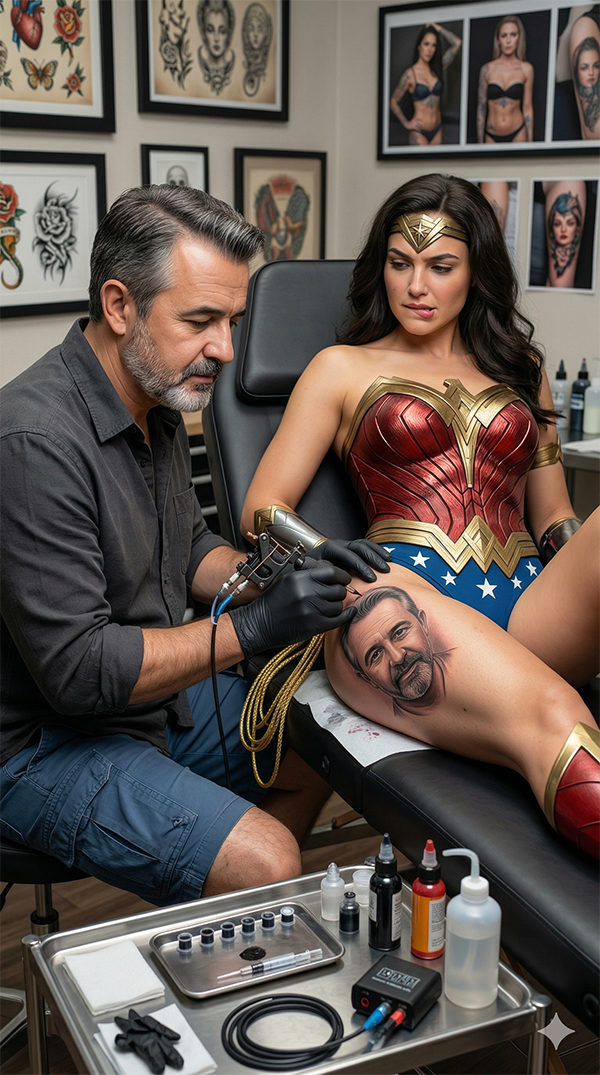
Create an ultra‑realistic 9:16 vertical portrait inside a modern tattoo studio. The man from the reference image appears as a professional tattoo artist, wearing a dark gray shirt and blue cargo shorts, looking serious and focused while tattooing. He is seated or slightly leaning forward beside a tattoo bed, holding a tattoo machine in one hand and gently stabilizing the client’s skin with the other in an anatomically correct way.
On the tattoo bed lies Wonder Woman in her classic superhero costume: red and gold armored bustier, blue bottom with stars, golden tiara, bracers, red boots, and her lasso visible on the side. She is positioned so that one side of her front hip is realistically exposed for tattooing, while the rest of her outfit remains in place, keeping the scene grounded and respectful. The artist is tattooing a highly detailed, realistic portrait of his own face (based exactly on the uploaded reference image) on Wonder Woman’s front hip. The tattoo is mid‑process but already clearly recognizable as his face, with accurate proportions, shading, and likeness—face only, with no text.
Wonder Woman bites her lower lip slightly, reacting to the mild pain, with a subtle expression of discomfort and strength: brows gently tensed, eyes directed toward her hip area or the artist’s hand. The contrast between the artist’s intense concentration and her controlled reaction creates a strong narrative moment.
The studio environment is realistic and detailed: professional tattoo bed, stainless steel tray with ink caps, bottles, paper towels, gloves, cleaning solution, power supply, and cables. The walls feature framed tattoo flash and sample photos (including tattooed female examples), giving the room an artistic and professional atmosphere. The overall mood is focused, clean, and cinematic, emphasizing the interaction between the artist and Wonder Woman during the tattoo session.
Lighting
Use soft, diffused indoor studio lighting with a slightly warm‑neutral tone, like a real tattoo parlor. A main key light illuminates the artist’s face, Wonder Woman’s face, and the hip area where the tattoo is being done. Add gentle fill light to avoid harsh shadows on skin and faces, plus subtle specular highlights on the tattoo machine, metal equipment, and fresh ink. Shadows should be soft and controlled, keeping all important details readable and realistic, without blown highlights or crushed blacks.
Lens and Camera
Set the image ratio to 9:16 vertical portrait. Simulate a natural lens around 35–50 mm on full‑frame. Frame the scene as a vertical medium shot: the tattoo artist and Wonder Woman both clearly visible, with special emphasis on the interaction between his hands, the tattoo machine, and her exposed front hip area where the portrait tattoo is being inked. Place the camera at about chest or eye level, slightly angled to capture the artist’s concentrated expression and Wonder Woman’s lip‑biting reaction. Use moderate shallow depth of field so the artist’s face, Wonder Woman’s face, and the tattooed hip area are in sharp focus, while the background studio elements are softly blurred but readable.
Visual Details
Render as an ultra‑high‑resolution 8K photorealistic image with a clean cinematic look. Emphasize realistic skin texture, pores, fine hair, and slight redness or irritation around the fresh tattoo. The portrait tattoo of the man’s face on Wonder Woman’s hip must be precise, clearly matching his real features from the uploaded image—correct structure, proportions, and expression. Show detailed tattoo equipment: needles, tubes, power cables, bottles, gloves, and paper towels with convincing materials (metal, plastic, rubber, fabric). Wonder Woman’s classic costume should have visible fabric texture, armor shine, and subtle wear, while the tattoo bed and furniture feel sturdy and real. Color grading should be natural and balanced, with realistic skin tones, slightly warm indoor lighting, and an editorial, cinematic feel without over‑saturation.
Negative Prompt
Do not change the tattoo artist’s identity, age, gender, skin tone, hairstyle shape, or facial proportions. No face swap, no de‑aging, no aging, no feminization, no masculinization, no caricature, no anime, no cartoon, no comic‑book rendering, no illustration, no 2D drawing, no painterly style.
Do not add any text inside the tattoo design; the tattoo on Wonder Woman’s hip must be only the realistic portrait of the man’s face, no “Rumar” or other words.
Do not change Wonder Woman into casual clothes, lingerie, or non‑hero outfits; keep her in her traditional Wonder Woman costume, with only the necessary hip area exposed for tattooing.
No extra characters besides the tattoo artist and Wonder Woman; no background crowd, no random people.
No unrealistic anatomy: no extra limbs, no extra fingers, no deformed hands, no twisted bodies, no impossible poses.
No wrong setting: no bedroom, no living room, no beach, no fantasy castle or street; it must be a modern, professional tattoo studio interior.
No low resolution, no blur, no motion blur, no pixelation, no heavy noise, no compression artifacts, no ghosting, no double faces, no warped faces.
No text overlays, no UI elements, no watermarks, no borders, no split screens, no collages.
Avoid extreme color filters or heavy stylization; no neon grading, no oversaturated HDR look, no flat gray wash that removes the studio atmosphere.
Create an ultra‑realistic 9:16 vertical portrait inside a modern tattoo studio. The man from the reference image appears as a professional tattoo artist, wearing a dark gray shirt and blue cargo shorts, looking serious and focused while tattooing. He is seated or slightly leaning forward beside a tattoo bed, holding a tattoo machine in one hand and gently stabilizing the client’s skin with the other in an anatomically correct way.
On the tattoo bed lies Wonder Woman in her classic superhero costume: red and gold armored bustier, blue bottom with stars, golden tiara, bracers, red boots, and her lasso visible on the side. She is positioned so that one side of her front hip is realistically exposed for tattooing, while the rest of her outfit remains in place, keeping the scene grounded and respectful. The artist is tattooing a highly detailed, realistic portrait of his own face (based exactly on the uploaded reference image) on Wonder Woman’s front hip. The tattoo is mid‑process but already clearly recognizable as his face, with accurate proportions, shading, and likeness—face only, with no text.
Wonder Woman bites her lower lip slightly, reacting to the mild pain, with a subtle expression of discomfort and strength: brows gently tensed, eyes directed toward her hip area or the artist’s hand. The contrast between the artist’s intense concentration and her controlled reaction creates a strong narrative moment.
The studio environment is realistic and detailed: professional tattoo bed, stainless steel tray with ink caps, bottles, paper towels, gloves, cleaning solution, power supply, and cables. The walls feature framed tattoo flash and sample photos (including tattooed female examples), giving the room an artistic and professional atmosphere. The overall mood is focused, clean, and cinematic, emphasizing the interaction between the artist and Wonder Woman during the tattoo session.
Lighting
Use soft, diffused indoor studio lighting with a slightly warm‑neutral tone, like a real tattoo parlor. A main key light illuminates the artist’s face, Wonder Woman’s face, and the hip area where the tattoo is being done. Add gentle fill light to avoid harsh shadows on skin and faces, plus subtle specular highlights on the tattoo machine, metal equipment, and fresh ink. Shadows should be soft and controlled, keeping all important details readable and realistic, without blown highlights or crushed blacks.
Lens and Camera
Set the image ratio to 9:16 vertical portrait. Simulate a natural lens around 35–50 mm on full‑frame. Frame the scene as a vertical medium shot: the tattoo artist and Wonder Woman both clearly visible, with special emphasis on the interaction between his hands, the tattoo machine, and her exposed front hip area where the portrait tattoo is being inked. Place the camera at about chest or eye level, slightly angled to capture the artist’s concentrated expression and Wonder Woman’s lip‑biting reaction. Use moderate shallow depth of field so the artist’s face, Wonder Woman’s face, and the tattooed hip area are in sharp focus, while the background studio elements are softly blurred but readable.
Visual Details
Render as an ultra‑high‑resolution 8K photorealistic image with a clean cinematic look. Emphasize realistic skin texture, pores, fine hair, and slight redness or irritation around the fresh tattoo. The portrait tattoo of the man’s face on Wonder Woman’s hip must be precise, clearly matching his real features from the uploaded image—correct structure, proportions, and expression. Show detailed tattoo equipment: needles, tubes, power cables, bottles, gloves, and paper towels with convincing materials (metal, plastic, rubber, fabric). Wonder Woman’s classic costume should have visible fabric texture, armor shine, and subtle wear, while the tattoo bed and furniture feel sturdy and real. Color grading should be natural and balanced, with realistic skin tones, slightly warm indoor lighting, and an editorial, cinematic feel without over‑saturation.
Negative Prompt
Do not change the tattoo artist’s identity, age, gender, skin tone, hairstyle shape, or facial proportions. No face swap, no de‑aging, no aging, no feminization, no masculinization, no caricature, no anime, no cartoon, no comic‑book rendering, no illustration, no 2D drawing, no painterly style.
Do not add any text inside the tattoo design; the tattoo on Wonder Woman’s hip must be only the realistic portrait of the man’s face, no “Rumar” or other words.
Do not change Wonder Woman into casual clothes, lingerie, or non‑hero outfits; keep her in her traditional Wonder Woman costume, with only the necessary hip area exposed for tattooing.
No extra characters besides the tattoo artist and Wonder Woman; no background crowd, no random people.
No unrealistic anatomy: no extra limbs, no extra fingers, no deformed hands, no twisted bodies, no impossible poses.
No wrong setting: no bedroom, no living room, no beach, no fantasy castle or street; it must be a modern, professional tattoo studio interior.
No low resolution, no blur, no motion blur, no pixelation, no heavy noise, no compression artifacts, no ghosting, no double faces, no warped faces.
No text overlays, no UI elements, no watermarks, no borders, no split screens, no collages.
Avoid extreme color filters or heavy stylization; no neon grading, no oversaturated HDR look, no flat gray wash that removes the studio atmosphere.