Tela_de_pintura
Use the uploaded photo as the ONLY and EXCLUSIVE identity reference.
The generated character must be the exact same real person from the uploaded photo, not a generic model or a different person.
Identity lock – 100% face, hair, gender
Preserve 100% of the person’s real appearance from the uploaded photo:
Facial structure and proportions, head shape, skull geometry, and real age (no de‑aging or aging).
Eye shape, eye color, eyelids, eyelashes, eyebrows, and the same gaze character.
Nose shape and proportions, lips shape and volume, cheekbones, jawline, chin, neck.
Ears: same shape, size, and position.
Natural skin tone and realistic skin texture, including pores, marks, and subtle imperfections.
Hair: keep the exact same hairstyle, hair length, hair volume, hairline, hair color and texture as in the photo, with no changes.
Gender: keep the same gender presentation as in the original photo; do not feminize a masculine face or masculinize a feminine face; do not alter ethnic traits.
Do NOT beautify, slim, smooth, or retouch the face in a way that changes identity.
Do NOT mix facial features from other people or average faces.
The viewer must instantly recognize that this is the same person from the uploaded photo, only translated into the described dark expressive style.
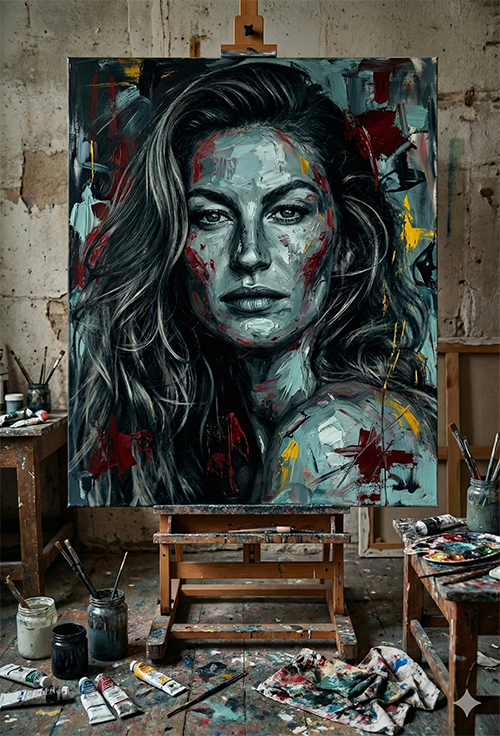
Style – dark expressive neo‑expressionist digital painting
Reimagine this same person as a character in a dark, expressive digital painting style with neo‑expressionist and graphic‑novel influences:
High‑contrast chiaroscuro lighting emphasizing dramatic facial and body planes, with deep shadows and intense emotional presence.
Bold, gestural brushstrokes combined with sharp angles, abstract splashes of color, and controlled chaos in the composition.
Stylized realism: the face remains clearly recognizable and structurally correct, but some proportions and shapes can be slightly distorted for emotional impact, while never losing the person’s identity.
Lighting adjustment
Slightly brighten the overall image while keeping the dark, dramatic mood.
Use a clearer, more readable contrast so facial features and brush textures are easier to see, with gently lifted midtones but still deep shadows.
Color palette
Use a limited but striking color palette:
Dominant tones of black, steel blue, and soft teal.
Aggressive color accents of deep red and bright yellow in selected areas (background streaks, shapes, highlights, or graphic elements).
Overall impression: raw, moody, high‑contrast, with colors used to amplify psychological tension and drama.
Impasto and paint layers
Increase the number of visible paint layers and make the impasto strokes even thicker and rougher.
Show heavy, chunky impasto throughout the painting, especially around the face contours, clothing, and background, with clear ridges, overlapping strokes, and layered paint buildup for a very tactile, physical surface.
Canvas, easel and rustic studio
Place the painted image clearly on a canvas mounted on a wooden easel.
Set the scene in a rustic art studio:
Old wooden floor and slightly worn, rough walls.
A chaotic, creative workspace around the easel, with many paint tubes, open jars, brushes, palettes, rags, and splatters of paint scattered on small tables, stools, and on the floor.
The studio should feel raw, messy, and full of color and materials, matching the expressive, neo‑expressionist energy of the painting.
Composition and pose
Focus on a striking portrait or mid‑torso figure of the same person from the uploaded photo.
The face and upper body dominate the frame, with dramatic lighting and expressive angles.
The background and surroundings stay abstract and painterly, reinforced by the canvas‑on‑easel and studio elements, keeping the psychological and emotional focus on the subject.
Overall mood and aesthetic
Stylized realism with slight distortion for emotional impact, but with a clearly recognizable identity.
Modern poster‑art aesthetic, strong visual tension, and strong psychological depth.
The image should look like a dark, expressive, high‑end digital painting suitable for an album cover, graphic novel cover, or gallery print.
Quality and rendering
High‑resolution, professional‑quality artwork.
Crisp facial definition (within the painterly style), strong brushstroke detail, no blur, no unwanted noise or compression artifacts.
Clean edges where needed, with deliberate roughness only as part of the artistic style, not as a technical flaw.
Negative prompt (constraints)
photorealism, soft pastel colors, subtle airbrushing, flat low‑contrast lighting, low contrast overall, anime style, cute cartoon, kawaii look, chibi, smooth pastel illustration, soft watercolor, flat 2D vector art, over‑clean polished surfaces, generic face, different person, wrong gender, changed age, changed ethnicity, beauty‑filtered skin, plastic skin, low detail, blur, noise, pixelation, artifacts, watermark, logo, UI elements, random text in the image.
The generated character must be the exact same real person from the uploaded photo, not a generic model or a different person.
Identity lock – 100% face, hair, gender
Preserve 100% of the person’s real appearance from the uploaded photo:
Facial structure and proportions, head shape, skull geometry, and real age (no de‑aging or aging).
Eye shape, eye color, eyelids, eyelashes, eyebrows, and the same gaze character.
Nose shape and proportions, lips shape and volume, cheekbones, jawline, chin, neck.
Ears: same shape, size, and position.
Natural skin tone and realistic skin texture, including pores, marks, and subtle imperfections.
Hair: keep the exact same hairstyle, hair length, hair volume, hairline, hair color and texture as in the photo, with no changes.
Gender: keep the same gender presentation as in the original photo; do not feminize a masculine face or masculinize a feminine face; do not alter ethnic traits.
Do NOT beautify, slim, smooth, or retouch the face in a way that changes identity.
Do NOT mix facial features from other people or average faces.
The viewer must instantly recognize that this is the same person from the uploaded photo, only translated into the described dark expressive style.
Style – dark expressive neo‑expressionist digital painting
Reimagine this same person as a character in a dark, expressive digital painting style with neo‑expressionist and graphic‑novel influences:
High‑contrast chiaroscuro lighting emphasizing dramatic facial and body planes, with deep shadows and intense emotional presence.
Bold, gestural brushstrokes combined with sharp angles, abstract splashes of color, and controlled chaos in the composition.
Stylized realism: the face remains clearly recognizable and structurally correct, but some proportions and shapes can be slightly distorted for emotional impact, while never losing the person’s identity.
Lighting adjustment
Slightly brighten the overall image while keeping the dark, dramatic mood.
Use a clearer, more readable contrast so facial features and brush textures are easier to see, with gently lifted midtones but still deep shadows.
Color palette
Use a limited but striking color palette:
Dominant tones of black, steel blue, and soft teal.
Aggressive color accents of deep red and bright yellow in selected areas (background streaks, shapes, highlights, or graphic elements).
Overall impression: raw, moody, high‑contrast, with colors used to amplify psychological tension and drama.
Impasto and paint layers
Increase the number of visible paint layers and make the impasto strokes even thicker and rougher.
Show heavy, chunky impasto throughout the painting, especially around the face contours, clothing, and background, with clear ridges, overlapping strokes, and layered paint buildup for a very tactile, physical surface.
Canvas, easel and rustic studio
Place the painted image clearly on a canvas mounted on a wooden easel.
Set the scene in a rustic art studio:
Old wooden floor and slightly worn, rough walls.
A chaotic, creative workspace around the easel, with many paint tubes, open jars, brushes, palettes, rags, and splatters of paint scattered on small tables, stools, and on the floor.
The studio should feel raw, messy, and full of color and materials, matching the expressive, neo‑expressionist energy of the painting.
Composition and pose
Focus on a striking portrait or mid‑torso figure of the same person from the uploaded photo.
The face and upper body dominate the frame, with dramatic lighting and expressive angles.
The background and surroundings stay abstract and painterly, reinforced by the canvas‑on‑easel and studio elements, keeping the psychological and emotional focus on the subject.
Overall mood and aesthetic
Stylized realism with slight distortion for emotional impact, but with a clearly recognizable identity.
Modern poster‑art aesthetic, strong visual tension, and strong psychological depth.
The image should look like a dark, expressive, high‑end digital painting suitable for an album cover, graphic novel cover, or gallery print.
Quality and rendering
High‑resolution, professional‑quality artwork.
Crisp facial definition (within the painterly style), strong brushstroke detail, no blur, no unwanted noise or compression artifacts.
Clean edges where needed, with deliberate roughness only as part of the artistic style, not as a technical flaw.
Negative prompt (constraints)
photorealism, soft pastel colors, subtle airbrushing, flat low‑contrast lighting, low contrast overall, anime style, cute cartoon, kawaii look, chibi, smooth pastel illustration, soft watercolor, flat 2D vector art, over‑clean polished surfaces, generic face, different person, wrong gender, changed age, changed ethnicity, beauty‑filtered skin, plastic skin, low detail, blur, noise, pixelation, artifacts, watermark, logo, UI elements, random text in the image.