Tinta_splash
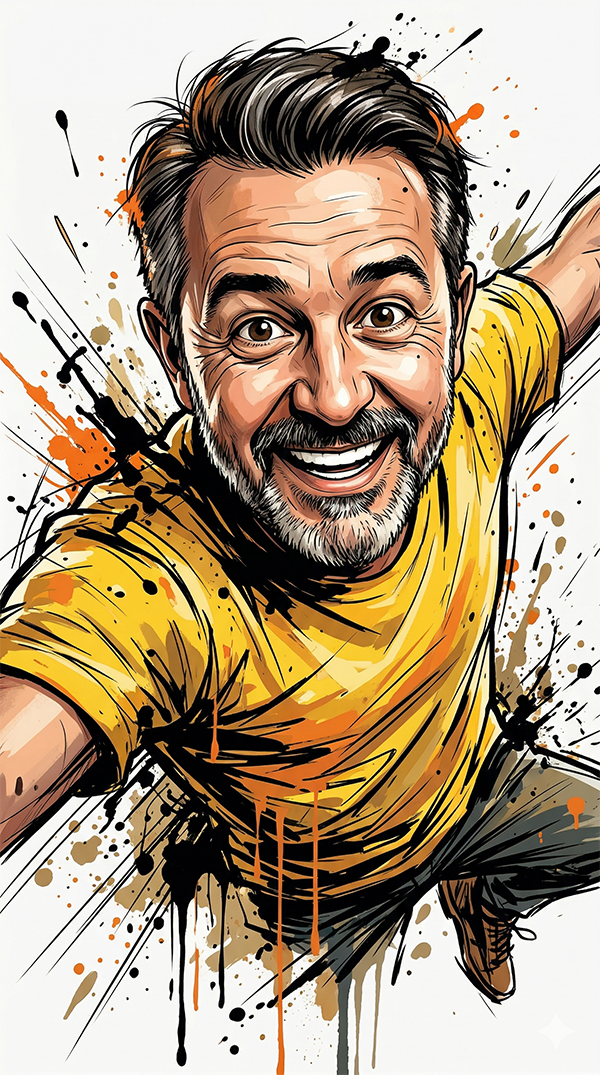
Using my uploaded reference photo as the primary face reference, keep the person’s identity 100% identical to the original image: same facial features, bone structure, skin tone, gender, perceived age, hairstyle shape and overall facial proportions, with no age‑regression or aging. Preserve the exact nose, eyes, lips, jawline and any unique marks such as moles, freckles, scars or skin texture, as if it were the same person captured again. Turn this input photo into a dynamic cartoon‑style full‑body illustration in a 9:16 vertical format, with semi‑realistic rendering and exaggerated expressiveness: slightly enlarged eyes and mouth, stronger facial expression and more energetic body language, while keeping the face clearly recognizable as the same person.
Apply a high‑energy ink and paint‑splatter style: chaotic brushstrokes, dripping paint, and dynamic motion lines radiating around the character. Use a mix of semi‑realistic rendering and cartoon distortion, with detailed textures and highlights on the eyes, mouth, teeth and skin, contrasted with simplified, stylized shapes in hair and clothing. Add abstract splashes and streaks of black, orange and earthy tones around and partially over the character, clearly separated from a clean, high‑contrast background.
Lighting
Use cinematic, directional lighting: a clear key light from one side or slightly above, creating strong highlights on the forehead, nose, cheeks and lips, and defined shadows on the opposite side for depth. Let some of the ink and paint splatters catch light and cast subtle shadows, enhancing the feeling of physical paint thrown across the image. Overall contrast should be high, with bright highlights and deep shadows, but colors still rich and saturated.
Camera, lens and composition
Use a 9:16 vertical composition with the character centered or slightly off‑center, framed from head to about mid‑thigh or full‑body depending on the original pose, filling most of the frame. Simulate a portrait‑style lens equivalent around 35–50 mm to keep proportions believable while allowing a bit of dramatic perspective, as if this were a stylized poster frame. Maintain sharp focus on the face and upper body, with paint splatters and background gradually softening, rendered in highly detailed 4K–8K quality.
Style and detail
Cartoon‑meets‑semi‑realism style: thick, confident outlines around the figure, with varied line weight, combined with painterly shading inside the forms. Skin should show subtle pores and specular highlights, while eyes and mouth are highly detailed, glossy and expressive. Hair can be slightly simplified with bold shapes and a few detailed strands. Surround the subject with abstract black, orange and earth‑tone splashes, drips and dynamic strokes that suggest motion and emotion, but keep the background itself clean, bright and uncluttered to preserve strong contrast and readability.
Negative prompt
different person, altered identity, changed gender, younger or older face, changed nose, eyes, lips or jawline, different skin tone, different hairstyle, missing or altered moles, freckles or scars, flat vector emoji style, simple 2D doodle, anime chibi, 3D plastic toy look, hyper‑realistic photo with no cartoon exaggeration, pastel low‑contrast palette, busy detailed scene behind the subject, messy background elements competing with the character, low resolution, blurry lines, pixelation, heavy compression artifacts, large text, logos, watermarks, frames.
Apply a high‑energy ink and paint‑splatter style: chaotic brushstrokes, dripping paint, and dynamic motion lines radiating around the character. Use a mix of semi‑realistic rendering and cartoon distortion, with detailed textures and highlights on the eyes, mouth, teeth and skin, contrasted with simplified, stylized shapes in hair and clothing. Add abstract splashes and streaks of black, orange and earthy tones around and partially over the character, clearly separated from a clean, high‑contrast background.
Lighting
Use cinematic, directional lighting: a clear key light from one side or slightly above, creating strong highlights on the forehead, nose, cheeks and lips, and defined shadows on the opposite side for depth. Let some of the ink and paint splatters catch light and cast subtle shadows, enhancing the feeling of physical paint thrown across the image. Overall contrast should be high, with bright highlights and deep shadows, but colors still rich and saturated.
Camera, lens and composition
Use a 9:16 vertical composition with the character centered or slightly off‑center, framed from head to about mid‑thigh or full‑body depending on the original pose, filling most of the frame. Simulate a portrait‑style lens equivalent around 35–50 mm to keep proportions believable while allowing a bit of dramatic perspective, as if this were a stylized poster frame. Maintain sharp focus on the face and upper body, with paint splatters and background gradually softening, rendered in highly detailed 4K–8K quality.
Style and detail
Cartoon‑meets‑semi‑realism style: thick, confident outlines around the figure, with varied line weight, combined with painterly shading inside the forms. Skin should show subtle pores and specular highlights, while eyes and mouth are highly detailed, glossy and expressive. Hair can be slightly simplified with bold shapes and a few detailed strands. Surround the subject with abstract black, orange and earth‑tone splashes, drips and dynamic strokes that suggest motion and emotion, but keep the background itself clean, bright and uncluttered to preserve strong contrast and readability.
Negative prompt
different person, altered identity, changed gender, younger or older face, changed nose, eyes, lips or jawline, different skin tone, different hairstyle, missing or altered moles, freckles or scars, flat vector emoji style, simple 2D doodle, anime chibi, 3D plastic toy look, hyper‑realistic photo with no cartoon exaggeration, pastel low‑contrast palette, busy detailed scene behind the subject, messy background elements competing with the character, low resolution, blurry lines, pixelation, heavy compression artifacts, large text, logos, watermarks, frames.