Varal_6_fotos
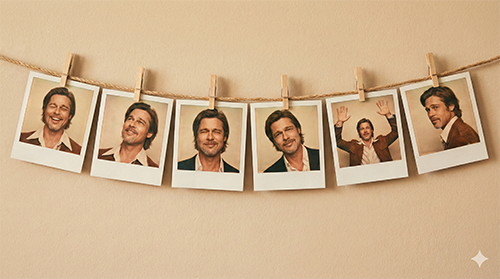
Use the uploaded photo as the primary face and character reference. Keep the person’s identity 100% identical to the uploaded photo: same facial features, bone structure, skin tone, gender, perceived age, hairstyle shape and overall facial proportions. Do not change the person’s gender or age impression. Preserve the exact nose, eyes, lips, jawline and any unique marks such as moles, freckles, scars or skin texture patterns. The model in every photo must clearly be the same person.
Create a horizontal scene showing one decorative hemp rope stretched across the image, like a clothesline, with 6 vintage Polaroid photos hanging from it using mini wooden clothespins. The rope should run roughly from left to right, slightly curved by gravity, occupying the central band of the image. The background is a soft pastel textured wall in warm tones.
Polaroid layout and scene
Landscape (horizontal) image, with the rope spanning from the left side to the right side.
Exactly 6 Polaroid frames clipped along the rope, evenly spaced but with slight random rotations for a natural look.
Classic white instant-film borders on each Polaroid, slightly aged with subtle paper texture and soft fading.
Background: soft pastel wall (warm beige, blush or light peach), with gentle texture and soft shadows behind the photos.
The composition must clearly show all 6 photos on the same rope within a single horizontal frame.
Poses inside the 6 Polaroids
Each Polaroid shows a different candid pose of the same model, always maintaining facial identity:
Laughing with eyes closed, natural joyful expression.
Dreamy upward gaze, soft subtle smile.
Playful wink, one eye closed, light mischievous smile.
Calm head-tilt smile, gentle closed-mouth smile.
Energetic hands raised high, lively, expressive pose.
Romantic over-the-shoulder glance, body turned slightly away, head turned back to camera with a soft look.
All six portraits are framed as single-person shots and keep the same skin tone, facial structure and hairstyle silhouette as the uploaded photo.
Styling, fashion and era
1970s fashion style in every Polaroid: retro tops, blouses or shirts, possible high-waisted pieces, warm earthy palettes.
No modern logos or obvious contemporary fashion.
Hair remains consistent with the uploaded reference, only arranged to suit each pose while preserving overall shape.
Lighting, color and mood
Inside each Polaroid, use soft diffused golden-hour lighting:
Warm, gentle light, no harsh shadows.
Muted warm tones, slight film fade, nostalgic art-retro feeling.
Subtle film grain and a hint of vignetting for vintage instant-film aesthetics.
Overall mood: cozy, nostalgic, creative wall display of cherished memories.
Texture, realism and quality
Photographic realism with a vintage film look, not CGI.
Visible but subtle film grain on the Polaroids, light fading and mild discoloration on borders.
High resolution, clean but soft rendering of the wall, rope, clothespins and frames.
Landscape aspect ratio with all 6 photos clearly visible in one shot.
Reference and identity instructions
In every Polaroid:
Use the uploaded photo as the main identity reference.
Maintain exact facial structure, jawline, nose, lips, eyes, skin tone and age impression.
Do not change gender, do not make the model younger or older.
Keep hairstyle silhouette consistent with the reference image.
Only expressions and poses change from frame to frame.
Negative prompt
portrait in vertical canvas, square canvas, only 1 or 2 photos, more than 6 photos, collage without rope, photos not hanging, low quality, low resolution, blurry faces, different people in each photo, changed gender, changed age, anime style, cartoon style, 3D render look, plastic skin, harsh studio flash, strong shadows, neon or cold blue color grading, modern streetwear, visible brand logos, oversaturated colors, no film grain, no vintage effect, futuristic or cluttered background, text printed on Polaroid frames.
Create a horizontal scene showing one decorative hemp rope stretched across the image, like a clothesline, with 6 vintage Polaroid photos hanging from it using mini wooden clothespins. The rope should run roughly from left to right, slightly curved by gravity, occupying the central band of the image. The background is a soft pastel textured wall in warm tones.
Polaroid layout and scene
Landscape (horizontal) image, with the rope spanning from the left side to the right side.
Exactly 6 Polaroid frames clipped along the rope, evenly spaced but with slight random rotations for a natural look.
Classic white instant-film borders on each Polaroid, slightly aged with subtle paper texture and soft fading.
Background: soft pastel wall (warm beige, blush or light peach), with gentle texture and soft shadows behind the photos.
The composition must clearly show all 6 photos on the same rope within a single horizontal frame.
Poses inside the 6 Polaroids
Each Polaroid shows a different candid pose of the same model, always maintaining facial identity:
Laughing with eyes closed, natural joyful expression.
Dreamy upward gaze, soft subtle smile.
Playful wink, one eye closed, light mischievous smile.
Calm head-tilt smile, gentle closed-mouth smile.
Energetic hands raised high, lively, expressive pose.
Romantic over-the-shoulder glance, body turned slightly away, head turned back to camera with a soft look.
All six portraits are framed as single-person shots and keep the same skin tone, facial structure and hairstyle silhouette as the uploaded photo.
Styling, fashion and era
1970s fashion style in every Polaroid: retro tops, blouses or shirts, possible high-waisted pieces, warm earthy palettes.
No modern logos or obvious contemporary fashion.
Hair remains consistent with the uploaded reference, only arranged to suit each pose while preserving overall shape.
Lighting, color and mood
Inside each Polaroid, use soft diffused golden-hour lighting:
Warm, gentle light, no harsh shadows.
Muted warm tones, slight film fade, nostalgic art-retro feeling.
Subtle film grain and a hint of vignetting for vintage instant-film aesthetics.
Overall mood: cozy, nostalgic, creative wall display of cherished memories.
Texture, realism and quality
Photographic realism with a vintage film look, not CGI.
Visible but subtle film grain on the Polaroids, light fading and mild discoloration on borders.
High resolution, clean but soft rendering of the wall, rope, clothespins and frames.
Landscape aspect ratio with all 6 photos clearly visible in one shot.
Reference and identity instructions
In every Polaroid:
Use the uploaded photo as the main identity reference.
Maintain exact facial structure, jawline, nose, lips, eyes, skin tone and age impression.
Do not change gender, do not make the model younger or older.
Keep hairstyle silhouette consistent with the reference image.
Only expressions and poses change from frame to frame.
Negative prompt
portrait in vertical canvas, square canvas, only 1 or 2 photos, more than 6 photos, collage without rope, photos not hanging, low quality, low resolution, blurry faces, different people in each photo, changed gender, changed age, anime style, cartoon style, 3D render look, plastic skin, harsh studio flash, strong shadows, neon or cold blue color grading, modern streetwear, visible brand logos, oversaturated colors, no film grain, no vintage effect, futuristic or cluttered background, text printed on Polaroid frames.